Supreme Court orders crackdown on factories polluting Rajasthan's Bandi, Luni, Jojari rivers
Synopsis
The Supreme Court has handed Rajasthan a sweeping enforcement mandate — sealing illegal discharge points, recovering environmental compensation, building permanent district-level monitoring, and probing the financial networks behind factories poisoning the Bandi, Luni, and Jojari rivers. With a 15-day reporting cycle and a 15 October mining-data deadline, the order is unusually operational in detail, leaving the state little room to defer action.
Key Takeaways
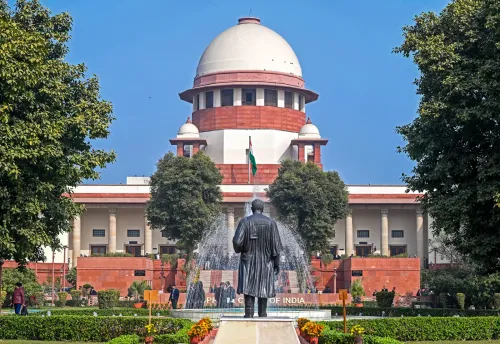
The Supreme Court directed the Rajasthan government to act against industrial units polluting the Bandi , Luni , and Jojari rivers, including removal of illegally operating factories.
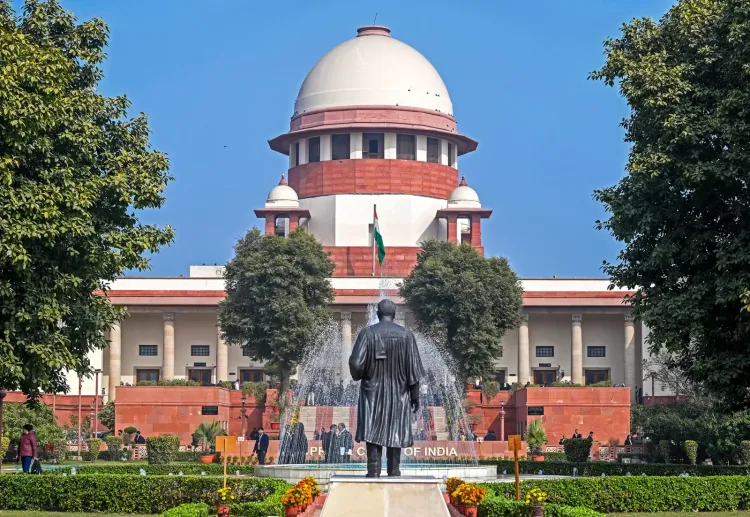
A Bench of Justice Vikram Nath and Justice Sandeep Mehta issued the directions, covering pollution, land-use violations, and illegal industrial operations.
An Action Taken Report must be submitted every 15 days ; authorities cannot wait for a detailed survey before acting.
The Rajasthan State Pollution Control Board must assess and recover environmental compensation from responsible units, reporting outstanding balances to the court.
Authorities must establish a permanent district-level monitoring mechanism involving police, revenue, transport, and local bodies to prevent future violations.
Officials must submit comprehensive illegal mining data — areas, leases, extracted quantities, depths — to the High-Powered Ecosystem Oversight Committee by 15 October .
The Supreme Court of India has directed the Rajasthan government to take immediate and comprehensive action against industrial units polluting the Bandi, Luni, and Jojari rivers, ordering the removal of factories found to be operating illegally and mandating a sweeping investigation into illegal industries running on residential and agricultural land.
Key Directions from the Bench
A Bench comprising Justice Vikram Nath and Justice Sandeep Mehta issued the directions to the Rajasthan government and all concerned authorities, addressing a cluster of overlapping violations — industrial pollution, illegal operations, and land-use breaches — affecting the three river systems. The court made clear that authorities must not wait for a detailed survey to conclude before acting; immediate sealing or removal of identified illegal discharge points, bypass arrangements, manholes, chambers, pipelines, and drains must proceed without delay.
An Action Taken Report must be filed every 15 days to track progress. The court further directed that investigations extend beyond the polluting units themselves to scrutinise associated financial transactions, job-work arrangements, raw material supply chains, transportation networks, and the ultimate beneficiaries of these illegal operations.
Permanent Monitoring Mechanism Mandated
In a significant structural directive, the Supreme Court ordered the Rajasthan government to establish a permanent district-level monitoring mechanism across every district to prevent illegal industrial activity contributing to river pollution. The mechanism will draw in the Rajasthan State Pollution Control Board (RSPCB), district administrations, police, revenue and transport departments, local bodies, and other relevant agencies. The court emphasised regular inspections, the appointment of designated nodal officers, and swift action against violations.
Environmental Compensation and Effluent Treatment
The RSPCB has been directed to assess and recover environmental compensation from responsible industrial units and individuals for the period during which violations occurred. The Board must report the compensation assessed, amounts recovered, and outstanding balances. Separately, authorities have been ordered to take time-bound decisions on expanding existing Common Effluent Treatment Plants (CETPs), establishing new facilities, and upgrading industrial units' Effluent Treatment Plants (ETPs) to Zero Liquid Discharge systems — all aimed at stopping untreated effluents from reaching the rivers.
Illegal Mining in River Beds Under Scrutiny
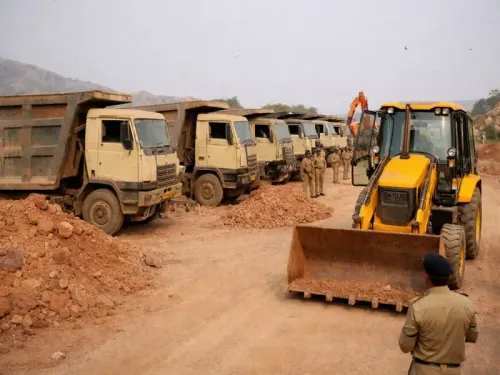
The court also trained its attention on illegal gravel and sand mining that damages riverbeds, banks, and natural water flows. Officials have been instructed to submit comprehensive data on mining areas, leases, extracted quantities, and mining depths to the High-Powered Ecosystem Oversight Committee by 15 October. Immediate action against unauthorised mining operations has been ordered alongside the industrial crackdown.
What This Means for Rajasthan's Rivers
The Bandi, Luni, and Jojari rivers run through heavily industrialised zones in Rajasthan, with textile dyeing and chemical processing units long accused of discharging untreated effluents. The court observed that the crisis extends well beyond individual units — it reflects inadequate treatment capacity, systemic illegal operations, irregular land use, and ineffective monitoring. This order, with its fortnightly reporting requirement and multi-agency enforcement structure, represents one of the more operationally detailed environmental mandates the court has issued for Rajasthan's river systems in recent years.
With the 15 October deadline for mining data and the first action reports due within a fortnight, the pace at which state agencies respond will determine whether this order produces on-ground change or joins a pattern of directives that go only partially implemented.
Point of View
Probe into financial beneficiaries, and a hard deadline on mining data. That granularity suggests the court has lost patience with broad-brush compliance affidavits. The real test is whether Rajasthan's multi-agency enforcement structure, which has historically been fragmented, can hold together under judicial scrutiny. The order's sweep — from discharge points to supply chains to land-use records — implies the court sees this less as an environmental case and more as an organised-crime-adjacent industrial problem, which is a significant escalation in framing.
NationPress
9 Oct 2026
Frequently Asked Questions
What has the Supreme Court ordered regarding Rajasthan's Bandi, Luni, and Jojari rivers?
The Supreme Court has directed the Rajasthan government to immediately act against industrial units polluting the Bandi, Luni, and Jojari rivers, including sealing or removing illegal discharge points and factories operating without authorisation. The court also mandated a comprehensive investigation into illegal industries on residential and agricultural land, with an Action Taken Report due every 15 days.
Which judges issued the river pollution order against Rajasthan?
The directions were issued by a Supreme Court Bench comprising Justice Vikram Nath and Justice Sandeep Mehta. The Bench addressed industrial pollution, illegal operations, and land-use violations affecting the three river systems.
What is the role of the Rajasthan State Pollution Control Board in this order?
The Rajasthan State Pollution Control Board (RSPCB) has been directed to assess and recover environmental compensation from responsible industrial units and individuals for the period violations occurred. It must also report the amounts assessed, recovered, and outstanding to the court, and participate in the permanent district-level monitoring mechanism.
What action has the Supreme Court ordered on illegal sand and gravel mining?
The court ordered immediate action against illegal gravel and sand mining that damages riverbeds and disrupts natural water flows. Officials must submit comprehensive data on mining areas, leases, extracted quantities, and mining depths to the High-Powered Ecosystem Oversight Committee by 15 October.
What is the Zero Liquid Discharge requirement mentioned in the order?
The Supreme Court has directed authorities to take time-bound decisions on upgrading industrial units' Effluent Treatment Plants (ETPs) to Zero Liquid Discharge systems, which recycle all wastewater internally so that no untreated effluent enters river systems. Expanding existing Common Effluent Treatment Plants and establishing new facilities are also part of the mandate.