CM Bhajanlal Orders District-Wise Mining Dispute Registry in Rajasthan
Synopsis
Rajasthan CM Bhajan Lal Sharma's office has ordered a district-by-district inventory of all pending mining and land disputes, directing administrations to build and execute effective resolution plans — a push to clear case backlogs in one of India's most mineral-rich states.
Key Takeaways
The Chief Minister's Office of Rajasthan issued a directive on October 14, 2026 ordering a district-wise list of all mining and land disputes.
District administrations must prepare an 'effective action plan' and begin executing it after compiling the list.
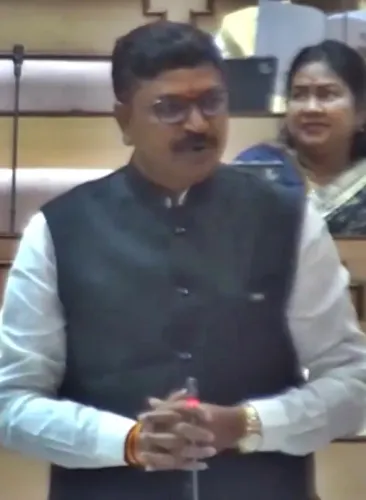
Chief Minister Bhajan Lal Sharma of the BJP was directly tagged in the directive.
Rajasthan is India's largest state by area and a major producer of marble, sandstone, limestone, and zinc — making mining-land conflicts a recurring governance challenge.
Key stakeholders include district collectors, mining lease holders, and landowners with competing land claims.
The next accountability milestone is district collectors submitting compiled lists and a subsequent departmental or cabinet review of resulting action plans.
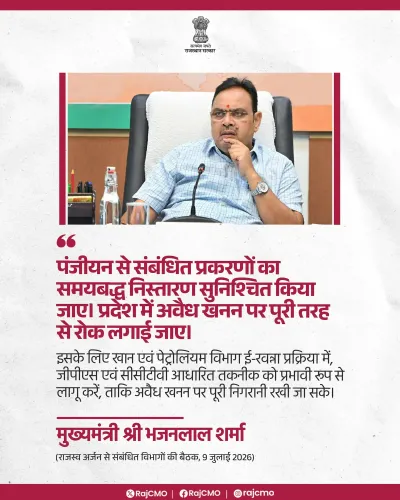
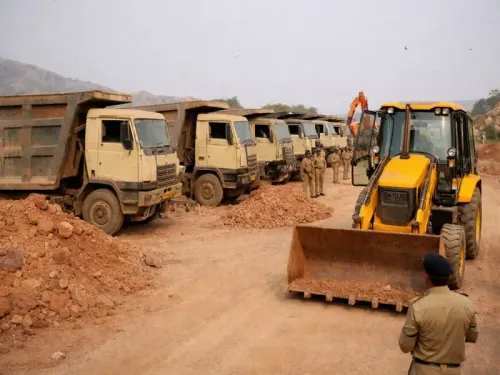
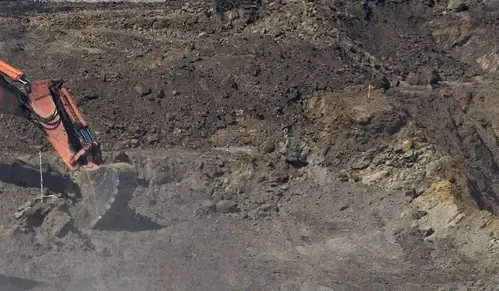
Rajasthan's sprawling mineral wealth — marble quarries, zinc deposits, sandstone belts — has long generated a tangle of land and mining disputes that quietly erode both revenue and investor confidence. On Wednesday, October 14, 2026, the Chief Minister's Office of Rajasthan issued a sharp administrative directive: compile a detailed, district-by-district list of all pending mining and land disputes — and build an effective action plan to resolve them.
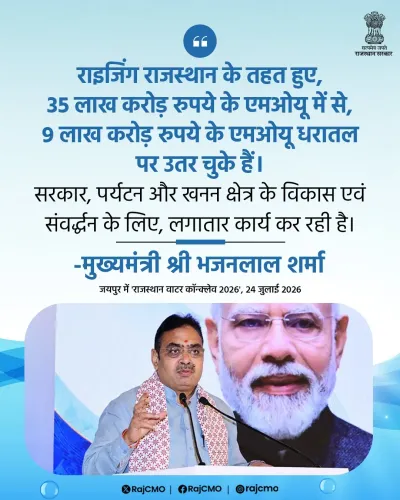
The directive, shared on X and tagged to Chief Minister Bhajan Lal Sharma, carries the hashtag #आपणो_अग्रणी_राजस्थान ('Our leading Rajasthan') — the BJP government's governance signature. The order calls for 'प्रभावी कार्ययोजना बनाकर कार्रवाई' — a 'concrete action plan to be built and executed' — leaving district administrations no room for ambiguity.
Why Rajasthan's Mining Disputes Have Piled Up
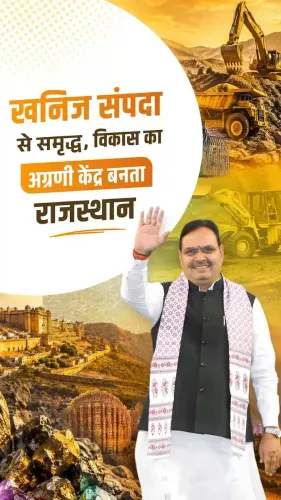
Rajasthan is India's largest state by area and among its richest in mineral resources — accounting for significant national output of marble, sandstone, limestone, and zinc. That abundance comes with persistent friction: lease renewals stall in litigation, illegal extraction encroaches on agricultural land, and competing claims between miners and landowners queue up in district offices for years.
The result is a dual drag — state royalty revenues leak through unresolved cases while genuine investors hesitate when title clarity is uncertain. District-level pendency mapping is a proven administrative tool to break this cycle, and the BJP-led government under Sharma is now deploying it with a formal directive rather than ad hoc follow-up.
What the Order Asks District Administrations to Do
The instruction is two-part and sequential: first, generate a comprehensive, district-wise enumeration of disputes — mining-related and land-related — so the scale of the problem is visible in one place. Second, build an 'effective action plan' tailored to that list and begin executing it. The sequencing matters: without an accurate inventory, action plans remain generic and accountability evades measurement.
District collectors and their revenue officers are the primary executors. Mining lease holders and landowners — the two stakeholder groups most directly caught in these disputes — stand to gain or face scrutiny depending on which side of a pending case they sit on.
The Governance Pattern Behind This Push
Mineral-rich states across India periodically launch exactly this kind of district-level audit when dispute pendency begins to surface in ease-of-doing-business rankings or revenue shortfall reports. What makes this directive worth watching is the next step: whether district collectors submit compiled lists within a fixed deadline and whether those lists feed into a cabinet or departmental review with public accountability markers attached.
If the action plans remain internal documents, the directive stays procedural. If they surface in a departmental review or assembly question session, the pressure to perform becomes real and measurable — and Rajasthan's mining governance story will have a concrete scorecard to track.
Point of View
Which came to power on a governance-efficiency platform, clearing mining dispute backlogs serves a dual purpose: it signals administrative seriousness to investors eyeing Rajasthan's mineral sector, and it reduces the political liability of protracted land conflicts that often fuel local discontent. The real test, however, lies downstream — in whether the district-wise lists produce binding timelines and measurable clearance rates, or simply accumulate as another layer of paperwork. Ease-of-doing-business and mining-revenue metrics will ultimately judge this directive's worth.
NationPress
14 Oct 2026
Frequently Asked Questions
What did Rajasthan CMO order on October 14 2026?
The Chief Minister's Office of Rajasthan directed all district administrations to prepare a detailed, district-wise list of pending mining and land disputes and to build effective action plans for their resolution.
Why are mining disputes common in Rajasthan?
Rajasthan is India's largest state by area and a major mineral producer — including marble, sandstone, limestone, and zinc — making conflicts over lease renewals, land use, and illegal mining a recurring issue between miners, landowners, and the state.
Who is responsible for implementing this mining dispute directive?
District collectors and their revenue officers are the primary executors, with mining lease holders and landowners being the key stakeholders directly affected by the pending cases.
What is the hashtag Aapno Agrani Rajasthan used for?
आपणो अग्रणी राजस्थान ('Our Leading Rajasthan') is the BJP-led Rajasthan government's governance campaign hashtag, used to brand official initiatives under Chief Minister Bhajan Lal Sharma.
What happens after district-wise mining dispute lists are compiled in Rajasthan?
The next expected step is district collectors submitting compiled lists, followed by a departmental or cabinet review of the resulting action plans — which will determine whether the directive translates into measurable case clearances.