CM Bhajanlal Govt Pushes Tourism, Mining Growth in Rajasthan
Synopsis
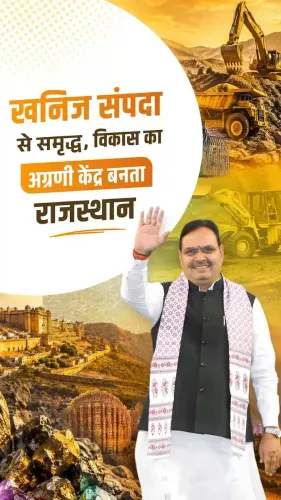
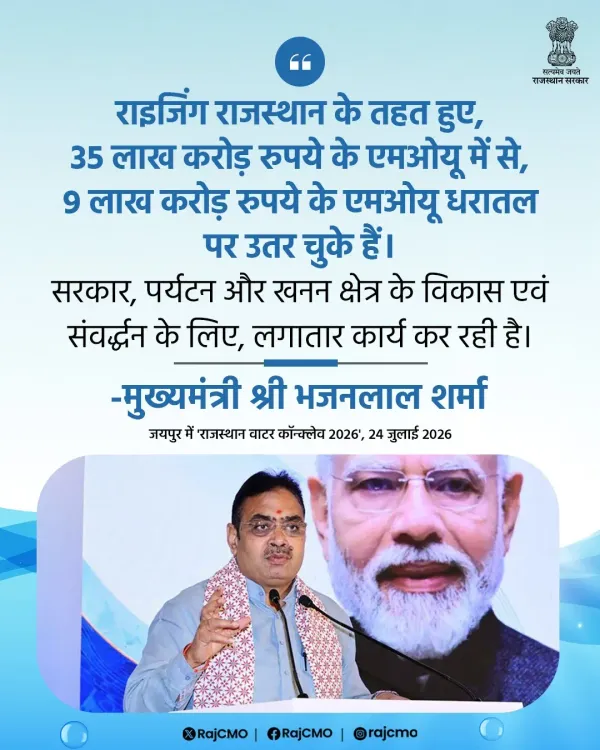
The Chief Minister's Office of Rajasthan on 25 July 2026 reaffirmed that the Bhajan Lal Sharma government is continuously working to develop and promote the state's tourism and mining sectors, signalling a sustained dual-sector economic push under the 'Our Leading Rajasthan' campaign.
Key Takeaways
The Rajasthan CMO officially reaffirmed on 25 July 2026 the government's commitment to developing both the tourism and mining sectors .
Chief Minister Bhajan Lal Sharma , in office since December 2023 , was directly tagged in the announcement.
The post was made under the campaign hashtag #आपणो_अग्रणी_राजस्थान ('Our Leading Rajasthan'), reflecting the administration's branding of its development agenda.
Rajasthan is among India's most mineral-rich states and hosts major heritage tourism destinations, making both sectors central to state revenue and employment.
The Rajasthan Tourism Development Corporation , established in 1979 , remains the institutional backbone for tourism promotion in the state.
Upcoming legislative sessions and budget allocations will be watched for concrete scheme launches in both sectors.
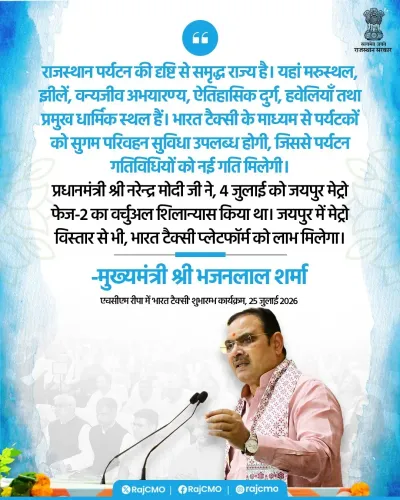
The Chief Minister's Office of Rajasthan reaffirmed on Saturday, 25 July 2026 that the state government is continuously working to develop and promote both the tourism and mining sectors, tagging Chief Minister Bhajan Lal Sharma in the official post under the campaign hashtag #आपणो_अग्रणी_राजस्थान ('Our Leading Rajasthan').
Context
The post, shared from the official Rajasthan CMO handle, states: 'सरकार, पर्यटन और खनन क्षेत्र के विकास एवं संवर्द्धन के लिए, लगातार कार्य कर रही है' — translated as 'The government is continuously working for the development and promotion of the tourism and mining sectors.' The message positions both sectors as twin engines of the state's economic growth agenda under the BJP government led by CM Bhajan Lal Sharma, who assumed office in December 2023.
Policy Backdrop
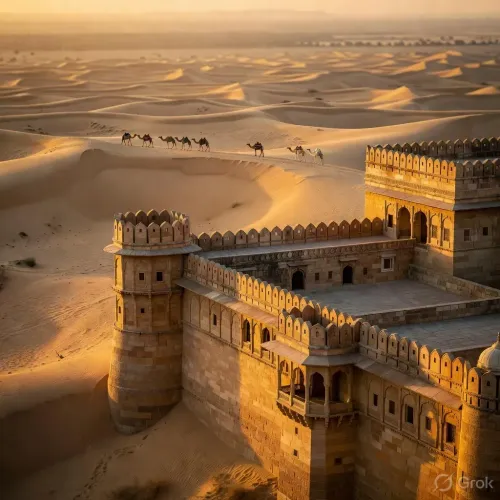
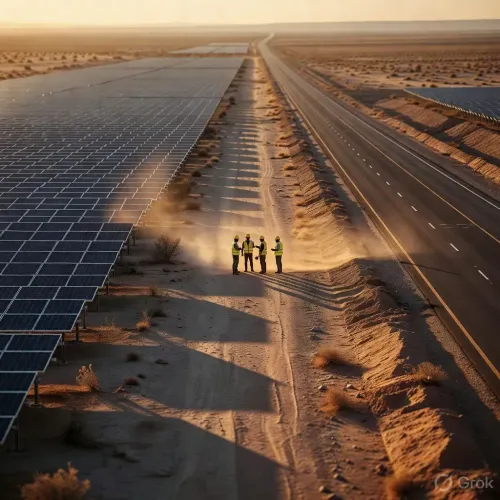
Rajasthan has historically relied on tourism and mineral extraction as major revenue streams. The Rajasthan Tourism Development Corporation, established in 1979, has long anchored state efforts to develop infrastructure and promote destinations ranging from the forts of Jaipur to the desert landscapes of Jaisalmer. On the mining front, the state is among India's most mineral-rich, with significant reserves of limestone, marble, sandstone, and copper, making it a key stakeholder in national mineral policy frameworks including the auction-based allocation system introduced under the Mines and Minerals (Development and Regulation) Act amendments of 2015.
Successive state governments have pursued parallel tracks of tourism promotion and mining regulation, both featuring prominently in state budget priorities and employment generation strategies. The current administration has continued this dual-sector focus as part of its broader vision articulated under the #आपणो_अग्रणी_राजस्थान campaign.
Stakeholders and Impact
The sectors directly affect a wide range of stakeholders across the state. Tourism operators, hoteliers, and heritage-site managers stand to benefit from any policy push to increase footfall and infrastructure investment, while mining lease holders and ancillary industries watch for regulatory clarity and new project approvals. Local communities in both tourist districts and mineral-belt regions have a direct stake in employment generation and environmental safeguards that accompany development in these sectors.
Rajasthan's economy, with its large rural workforce, depends significantly on the downstream employment that both sectors generate — from hospitality and handicrafts linked to tourism to transportation and processing industries tied to mining output.
What's Next
Observers will watch the Rajasthan state legislature's next session and upcoming budget allocations for project-specific announcements in tourism infrastructure and mining policy. Any new scheme launches, investment targets, or regulatory changes in either sector will test whether this stated commitment translates into measurable policy action. The government's ability to balance mining revenue with environmental obligations and tourism appeal — many of Rajasthan's top destinations are ecologically and heritage-sensitive — will be a key indicator of the administration's long-term development strategy.
Point of View
The government is tying sector-specific development to a broader aspirational brand — a pattern common among state governments seeking to project momentum between major announcements. Tourism and mining together represent two of Rajasthan's most politically and economically significant sectors, and keeping them in the public messaging cycle helps the BJP administration demonstrate continuity with its development promises. The absence of specific figures or scheme names, however, means the post functions more as a positioning statement than a policy disclosure.
NationPress
23 Oct 2026
Frequently Asked Questions
What did the Rajasthan CMO post about tourism and mining?
The Rajasthan Chief Minister's Office posted on 25 July 2026 that the state government is continuously working for the development and promotion of the tourism and mining sectors, tagging CM Bhajan Lal Sharma in the message.
Who is the Chief Minister of Rajasthan in 2026?
Bhajan Lal Sharma of the BJP has been serving as Chief Minister of Rajasthan since December 2023.
Why are tourism and mining important to Rajasthan's economy?
Rajasthan is one of India's most mineral-rich states and a top heritage tourism destination, with both sectors contributing significantly to state revenue and employment for local communities.
What is the 'Aapno Agrani Rajasthan' campaign?
The hashtag #आपणो_अग्रणी_राजस्थान, meaning 'Our Leading Rajasthan,' is a campaign branding used by the Bhajan Lal Sharma government to communicate its development agenda across sectors including tourism and mining.
What is the Rajasthan Tourism Development Corporation?
The Rajasthan Tourism Development Corporation is a state body established in 1979 to develop tourism infrastructure and promote destinations across Rajasthan, and it remains central to the state's tourism promotion efforts.