SC orders CCTV, prosecution crackdown on Chambal sand mining in 3 states
Synopsis
The Supreme Court has gone well beyond routine compliance nudges — it has ordered CCTV grids, prosecution of mining financiers, statutory protection for forest guards, and even livelihood schemes for affected communities. With Madhya Pradesh's Morena district reportedly defying earlier orders in real time, the bench's patience is visibly thinning, and the next hearing could bring contempt proceedings closer.
Key Takeaways
The Supreme Court issued fresh directions on 27 May 2025 to Rajasthan , Madhya Pradesh , and Uttar Pradesh on illegal sand mining in the National Chambal Gharial Sanctuary .
States must operationalise CCTV surveillance and control centres in vulnerable areas within six months .
Criminal prosecution must target not just drivers but also owners, financiers, and contractors of illegal mining operations.
Recruitment of vacant forest guard posts must be completed 'as far as practicable' within one year .
The Union Ministry of Jal Shakti and Central Water Commission were impleaded to address ecological flows in the Chambal River .
A media report of continuing violations in Morena district was taken on record; ASG S.
Raju directed to file urgent response.
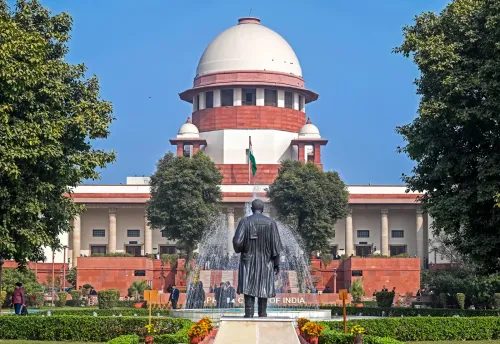
The Supreme Court on Tuesday, 27 May 2025, issued a sweeping set of fresh directions to Rajasthan, Madhya Pradesh, and Uttar Pradesh to rein in rampant illegal sand mining in and around the National Chambal Gharial Sanctuary, warning that unchecked extraction poses a grave threat to wildlife habitats, river ecosystems, and critical public infrastructure. The bench, led by Justice Vikram Nath and Justice Sandeep Mehta, is hearing the matter suo motu.
Key Directions Issued
Invoking powers under Article 142 of the Constitution, the apex court directed the three states to operationalise CCTV surveillance systems, integrated monitoring mechanisms, and control centres in vulnerable regions within six months. It also ordered the completion of recruitment to vacant posts of forest guards and frontline enforcement personnel — 'as far as practicable' — within one year.
The court further directed the National Highways Authority of India (NHAI) to install high-resolution, night-vision CCTV cameras on the National Highway-44 bridge near the Morena-Dholpur border, with surveillance feeds to be shared with police and forest authorities of Rajasthan and Madhya Pradesh for coordinated enforcement.
Crackdown on Organised Mining Networks
In a significant order, the bench directed stringent action against vehicles — including tractors, excavators, dredgers, and dumpers — operating with fake or tampered registration plates. Crucially, criminal prosecution must extend beyond drivers to owners, financiers, contractors, and all others involved in organising, facilitating, or benefiting from illegal mining operations.
'The concerned states shall ensure that all FIRs and criminal proceedings relating to illegal mining and transportation activities are effectively and comprehensively investigated not merely against the drivers of the vehicles involved, but also against the owners, financiers, operators, contractors and all other persons involved in organising, facilitating, financing or otherwise benefiting from such illegal mining operations,' the bench stated.
Protection for Forest Personnel
Taking note of escalating attacks on forest staff engaged in anti-mining operations, the court directed the three states to examine granting statutory protection to forest guards and frontline personnel for bona fide actions taken during official duties. The Madhya Pradesh Forest Employees Association, through advocates Rohit Kumar and Akanksha Singh, had filed an intervention highlighting the absence of a uniform policy on compensation, insurance, and ex gratia payments for personnel killed or injured on duty. The court issued notice and directed all three states to place existing welfare policies on record.
Ecological Flows and Community Involvement
Expressing concern over the ecological health of the Chambal River, the court impleaded the Union Ministry of Jal Shakti and the Central Water Commission as party respondents, directing them and the three states to file affidavits on measures being taken to preserve and augment environmental flows. The bench also asked states to explore livelihood and skill development schemes for economically vulnerable communities in mining-affected areas, and to involve local populations in conservation, eco-tourism, and afforestation linked to the sanctuary.
Defiance Noted, Fresh Response Sought
Shortly after dictating the order, the bench took on record a media report — placed before it by amicus curiae, senior advocate Nikhil Goel — indicating that illegal sand mining and transportation were continuing unabated in villages of Morena district, Madhya Pradesh, despite earlier court directions. Additional Solicitor General S. V. Raju, appearing for Madhya Pradesh, was directed to file an urgent response. The matter has been posted for further hearing on Friday on the fresh allegations, with the next full hearing listed for 22 July.
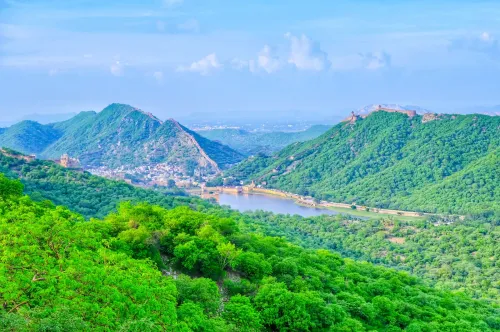
These directions build on the court's earlier ruling, which had characterised rampant illegal mining in the Chambal sanctuary as a 'systemic and institutional failure' causing 'severe disruption of riverine and ecological systems' and posing a direct threat to critically endangered gharials and other aquatic wildlife.
Point of View
Prosecution chains that reach financiers, livelihood schemes — suggesting the bench no longer trusts executive discretion alone. The fact that a newspaper report of fresh violations was placed before the court the very day it issued directions is a damning indicator of how little deterrence earlier orders have achieved. The real accountability test will come on 22 July: whether the compliance affidavits show genuine action, or whether the court is forced to consider contempt as the only remaining lever.
NationPress
10 Oct 2026
Frequently Asked Questions
What are the Supreme Court's latest directions on Chambal sand mining?
The Supreme Court on 27 May 2025 directed Rajasthan, Madhya Pradesh, and Uttar Pradesh to install CCTV surveillance networks within six months, prosecute mining financiers and contractors alongside drivers, recruit forest guards within one year, and take steps to preserve ecological flows in the Chambal River. The NHAI was also directed to install night-vision cameras on the NH-44 bridge near the Morena-Dholpur border.
Why is the National Chambal Gharial Sanctuary significant?
The National Chambal Gharial Sanctuary is one of the last strongholds of the critically endangered gharial, a fish-eating crocodilian, as well as other aquatic wildlife. Illegal sand mining disrupts the riverbed and riverine ecosystem on which these species depend, making enforcement in this zone especially ecologically consequential.
Who is being targeted in the Supreme Court's crackdown?
The court has directed prosecution to extend beyond vehicle drivers to include owners, financiers, operators, and contractors — essentially the entire organised network behind illegal mining. Vehicles with fake or tampered registration plates are also to face stringent action.
What protections are being sought for forest guards?
The Madhya Pradesh Forest Employees Association highlighted that despite deaths and injuries among forest personnel on anti-mining duty, no uniform policy exists for compensation, insurance, or ex gratia payments. The Supreme Court issued notice and directed all three states to detail existing welfare policies and propose stronger protections.
When is the next hearing in the Chambal mining case?
The Supreme Court has posted the matter for further hearing on Friday to address fresh allegations from a media report about continuing violations in Morena district, Madhya Pradesh. The next full hearing on compliance is listed for 22 July.