Uttarakhand CM Office: State Schemes Empowering Rural Women in Chamoli
Synopsis
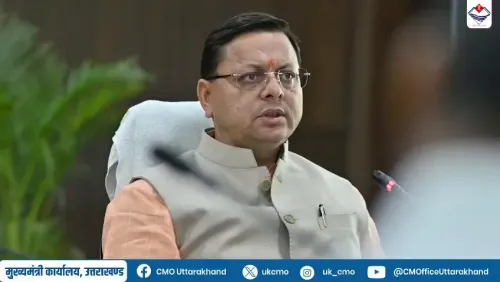
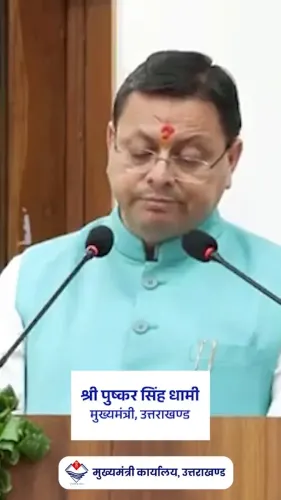
The Chief Minister's Office of Uttarakhand on 15 October 2026 spotlighted state schemes empowering rural women in Chamoli district, sharing a video that frames self-reliance as a key development outcome in one of the state's most migration-affected hill districts.
Key Takeaways
The Chief Minister's Office of Uttarakhand posted on 15 October 2026 about state schemes making rural women self-reliant.
The post is specifically tagged to Chamoli district in the Garhwal division — a migration-affected hill region.
A video was attached to the post, suggesting on-ground documentation of welfare scheme impact.
Chamoli has a history of featuring in state communications on rural development due to out-migration and difficult terrain.
Self-help groups are the primary delivery mechanism for livelihood support in Uttarakhand's hill districts.
District-level progress reports and block-level data will be the critical next markers to watch.
In the terraced villages and forested valleys of Chamoli, where out-migration has long hollowed out household incomes, the Uttarakhand government says its welfare schemes are turning rural women into self-reliant earners — and on Thursday, 15 October 2026, the Chief Minister's Office put that claim front and centre.
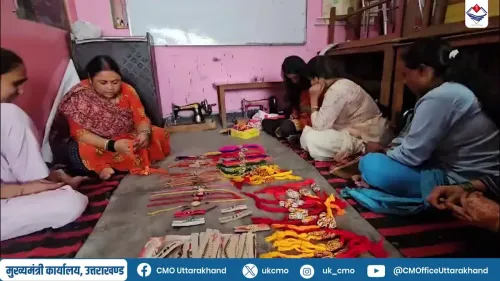
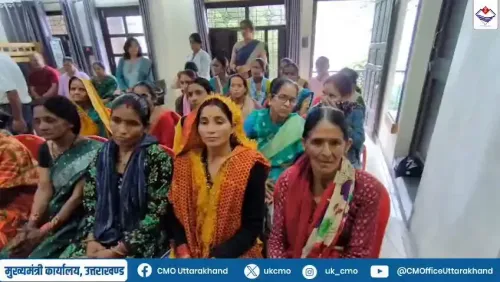
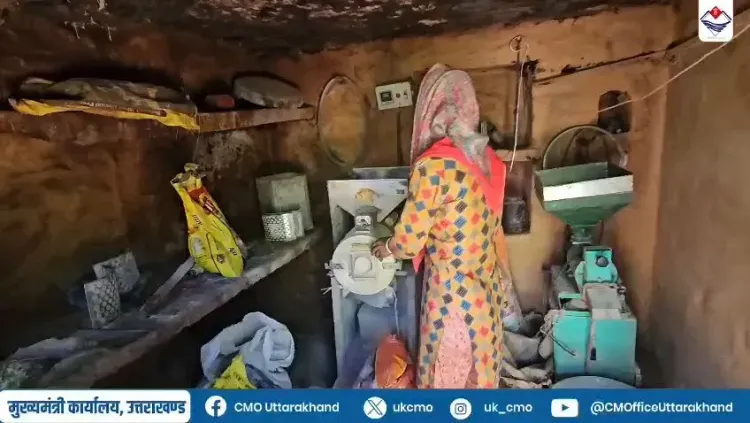
The official post, shared in Hindi, states: 'Uttarakhand mein gramin mahilaon ko swavalambi bana rahi hain rajya sarkar ki yojanaen' — 'The state government's schemes are making rural women self-reliant in Uttarakhand.' The message was paired with a video and tagged specifically to Chamoli district, signalling a ground-level focus rather than a broad statewide declaration.
Chamoli's Rural Challenge and the Self-Reliance Push
Chamoli, nestled in the Garhwal division of Uttarakhand, has one of the state's most pronounced migration problems — working-age men leaving for plains cities, leaving women to anchor households, farms, and local economies. It is precisely this demographic reality that has made the district a recurring focus in state communications on rural livelihood.
Uttarakhand's hill geography compounds the challenge: fragmented landholdings, seasonal agriculture, and limited market access mean that women's economic participation requires institutional support — through self-help groups, skill training, micro-enterprise linkages, and direct-benefit transfers — rather than geography-blind schemes designed for the plains.
State Schemes and the Self-Help Group Ecosystem
Uttarakhand has periodically foregrounded women-focused livelihood programmes across its hilly districts, often channelled through self-help groups affiliated with state and central government frameworks. These groups serve as the primary delivery mechanism for everything from micro-credit to market linkages for local produce — wool, herbs, handicrafts, and organic agriculture.
The Chief Minister's Office video accompanying the post appears aimed at documenting on-ground impact in Chamoli, a format the state administration has used before to build narrative momentum around welfare delivery ahead of district-level reviews.
What the Focus on Chamoli Signals
Singling out Chamoli — rather than a larger urban centre — is a deliberate communication choice. It anchors the empowerment message in one of Uttarakhand's most visibly underserved terrains, lending the claim geographic specificity. Whether district-level progress reports will follow to substantiate the assertion is the next marker worth watching.
For rural women already enrolled in state schemes, the spotlight on their district is a moment of official recognition. For policymakers, it raises the bar: a public claim of self-reliance now demands verifiable follow-through at the block and gram-panchayat level.
Chamoli's women are being cast as the story of Uttarakhand's development — now the state must make the data match the narrative.
Point of View
Easier-to-showcase district — reflects a calculated political and policy choice: demonstrating impact precisely where the challenge is most acute. This fits a broader pattern among hill-state administrations of using welfare-scheme visibility to counter narratives of migration-driven decline. The real test, however, will come when district-level outcome data is placed against the self-reliance claim — because in Uttarakhand's rugged hinterland, the gap between scheme enrolment and genuine economic independence has historically been wide.
NationPress
15 Oct 2026
Frequently Asked Questions
Which district in Uttarakhand is being highlighted for women empowerment schemes?
Chamoli district in the Garhwal division of Uttarakhand has been specifically highlighted by the Chief Minister's Office for state welfare schemes empowering rural women.
What are the main challenges rural women face in Chamoli, Uttarakhand?
Chamoli's rural women face significant challenges including out-migration of working-age men, fragmented agricultural landholdings, seasonal farming, and limited access to markets — making institutional livelihood support essential.
How do Uttarakhand's schemes support rural women's self-reliance?
Uttarakhand's schemes typically work through self-help groups, providing micro-credit, skill training, and market linkages for local produce such as wool, herbs, handicrafts, and organic agriculture in hill districts.
Why does Uttarakhand focus welfare schemes on hilly districts like Chamoli?
Hilly districts like Chamoli face unique development barriers — terrain, migration, and lack of plains-style infrastructure — that require specially designed women-focused livelihood programmes to achieve meaningful economic inclusion.
What should citizens watch for after Uttarakhand's women empowerment announcement for Chamoli?
District-level progress reports, block-level enrolment data, and gram-panchayat outcome reviews will be the key indicators of whether the state's self-reliance claim translates into verifiable ground-level impact.