NGT quashes Rajasthan groundwater guidelines for bypassing Central rules
Synopsis
The National Green Tribunal has struck down Rajasthan's groundwater guidelines, ruling the state bypassed mandatory Central Ground Water Authority approvals and violated Supreme Court conservation orders. The ruling sets a binding precedent that states cannot dilute national water-protection frameworks — and could trigger a nationwide audit of similar state-level groundwater rules.
Key Takeaways
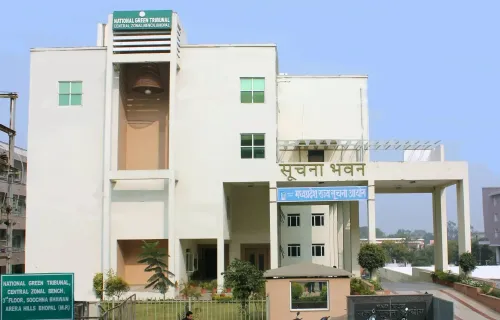
The NGT Central Zone Bench, Bhopal quashed Rajasthan 's groundwater regulation guidelines on 14 May .
The bench found the state guidelines violated the Central Ground Water Authority (CGWA) framework under the Environment (Protection) Act, 1986 .
Rajasthan issued the guidelines without prior CGWA consultation or mandatory review — a procedural breach cited by the Tribunal.
The state had already withdrawn the notifications before the order, but the NGT formally quashed them to establish legal precedent.
The ruling reinforces that illegal groundwater extraction is a punishable offence and that states cannot bypass national safeguards.
The judgment could prompt a broader CGWA compliance audit of groundwater frameworks in other states.
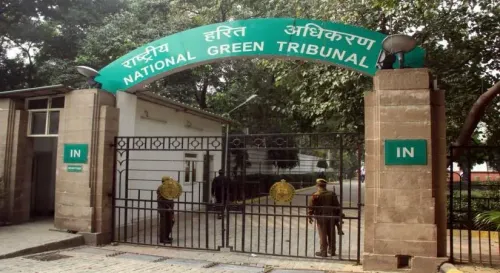
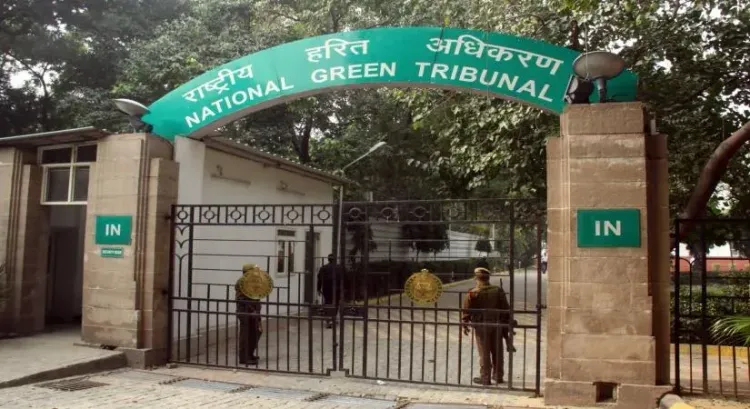
The National Green Tribunal (NGT), Central Zone Bench, Bhopal, on Thursday, 14 May struck down the groundwater regulation guidelines issued by the Government of Rajasthan, ruling that the state's framework violated the regulatory architecture established by the Central Ground Water Authority (CGWA) under the Environment (Protection) Act, 1986. The bench, comprising Justice Sheo Kumar Singh (Judicial Member) and Dr Afroz Ahmad (Expert Member), allowed the appeal and formally quashed the impugned notifications.
What the Tribunal Found
The NGT held that Rajasthan's groundwater guidelines were not in conformity with the regulatory framework prescribed by the CGWA. The bench further noted that the state's directions were inconsistent with the Supreme Court's binding orders in the landmark case of M.C. Mehta versus Union of India, which lays down standards for groundwater conservation and environmental protection.
Crucially, the CGWA informed the Tribunal that Rajasthan had issued the contested guidelines without prior consultation with the authority and without securing its mandatory review and acceptance — a procedural requirement under the existing national framework. The Tribunal emphasised that states cannot dilute or bypass the safeguards framed by the CGWA for sustainable groundwater management.
State's Position Before the Bench
Notably, the state government's counsel submitted during proceedings that the impugned notifications had already been withdrawn by the Government of Rajasthan before the order was passed. Despite this, the Tribunal proceeded to formally quash the guidelines, underscoring the legal importance of placing the ruling on record as a binding precedent on state compliance obligations.
Why Groundwater Governance Matters
The bench reiterated that groundwater depletion has become a serious environmental concern nationwide, and that the illegal extraction of groundwater constitutes a punishable offence under Indian environmental law. Rajasthan, one of India's most water-stressed states, has faced persistent challenges around aquifer depletion, particularly in districts dependent on the overexploited Thar Desert belt. This ruling arrives against a backdrop of growing alarm over India's groundwater crisis — the country is the world's largest groundwater user, according to global water data.
This is not the first time a state government has been pulled up for framing groundwater rules outside the national framework. Several states have previously attempted to ease extraction norms for agriculture and industry, only to face legal challenge. The NGT's order reinforces that environmental regulation in this domain is a concurrent but nationally anchored responsibility.
Legal and Policy Implications
The judgment is being viewed as a significant reaffirmation of the primacy of statutory environmental safeguards and the binding nature of CGWA directives on state governments. Legal experts say the ruling sets a clear boundary: states may supplement but not supplant central groundwater regulations. With several other states operating under guidelines of uncertain conformity with CGWA norms, this order could trigger a broader review of state-level groundwater frameworks across India.
The NGT's order is expected to prompt the CGWA to audit compliance by other state governments, with implications for industries, agriculture, and urban water boards operating under state-issued extraction permits.
Point of View
The Tribunal has made unmistakably clear that unilateral state departures from CGWA norms will not be allowed to slip away quietly. India's groundwater crisis is acute: the country draws more groundwater annually than the US and China combined, yet regulatory oversight at the state level remains patchy and frequently industry-friendly. The deeper question this ruling raises is systemic — how many other states are operating under groundwater frameworks that have never been reviewed or approved by the CGWA? Without a proactive national audit, this judgment risks being a one-off corrective rather than the structural reset the sector urgently needs.
NationPress
30 Sept 2026
Frequently Asked Questions
What did the NGT rule regarding Rajasthan's groundwater guidelines?
The National Green Tribunal, Central Zone Bench, Bhopal struck down groundwater regulation guidelines issued by the Government of Rajasthan on 14 May, ruling they were not in conformity with the Central Ground Water Authority framework under the Environment (Protection) Act, 1986, and were inconsistent with Supreme Court orders in M.C. Mehta versus Union of India.
Why were Rajasthan's groundwater guidelines quashed?
The CGWA informed the Tribunal that Rajasthan had issued the guidelines without prior consultation with the authority and without obtaining its mandatory review and acceptance. The NGT held that states cannot dilute or bypass the safeguards established by the CGWA for sustainable groundwater management.
Had Rajasthan already withdrawn the guidelines before the order?
Yes. The state government's counsel submitted during proceedings that the impugned notifications had already been withdrawn by the Government of Rajasthan. Despite this, the NGT formally quashed them to place the ruling on record as a binding legal precedent.
What is the Central Ground Water Authority and why does it matter?
The Central Ground Water Authority (CGWA) is a statutory body constituted under the Environment (Protection) Act, 1986, empowered to regulate and control groundwater development across India. State governments are required to consult the CGWA and obtain its review before issuing their own groundwater guidelines.
What are the broader implications of this NGT judgment?
The ruling sets a clear legal boundary that states may supplement but not supplant central groundwater regulations. It could trigger a CGWA audit of groundwater frameworks in other states and has implications for industries, agriculture, and urban water boards operating under state-issued extraction permits.