Will New Waste Management Rules Transform Ground Realities?
Synopsis
The Supreme Court emphasizes the need for stronger waste management infrastructure to truly benefit from the new Solid Waste Management Rules, set to take effect in 2026. This highlights the crucial gap between legislation and practical implementation.
Key Takeaways
Supreme Court calls for stronger waste management infrastructure.
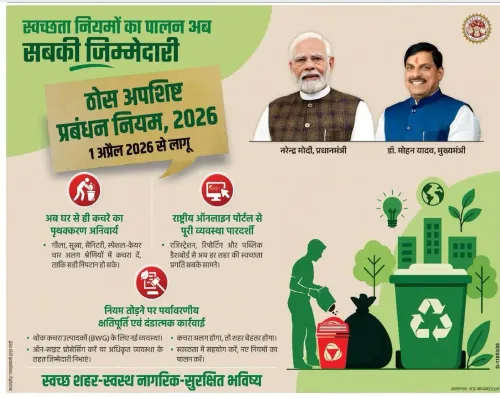
New rules set to take effect on April 1, 2026 .
Implementation gap noted at the local level.
Environmental compensation for Bhopal Municipal Corporation challenged.
Broadening of proceedings to include officials from the Centre and Madhya Pradesh .
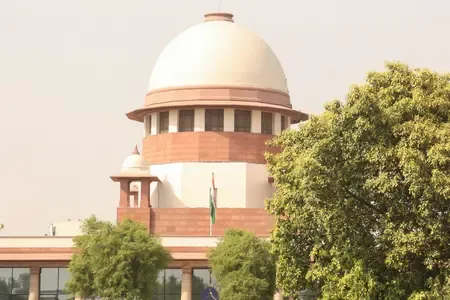
New Delhi, Feb 13 (NationPress) The Supreme Court has pointed out that ongoing alterations in solid waste management regulations will not enhance practical conditions unless the relevant authorities bolster waste management infrastructure in alignment with the forthcoming Solid Waste Management Rules, 2026.
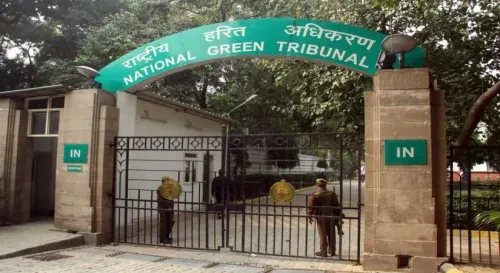
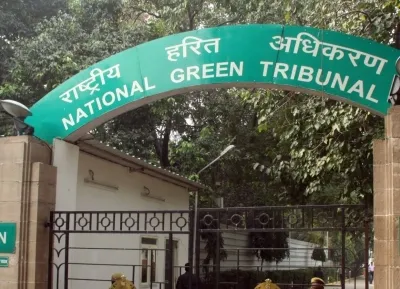
A panel comprising Justices Pankaj Mithal and S.V.N. Bhatti made this remark while reviewing appeals from the Bhopal Municipal Corporation contesting the substantial environmental compensation mandated by the National Green Tribunal (NGT), Central Zonal Bench, Bhopal.
In decisions issued on July 31, 2023, and August 11, 2023, the green tribunal instructed the municipal entity to remit environmental compensation amounting to Rs 1.80 crore and Rs 121 crore, respectively.
In its ruling, acknowledging the evolving legal framework surrounding municipal waste management, the Supreme Court noted that the Municipal Solid Waste (Management and Handling) Rules, 2000 were succeeded by the Solid Waste Management Rules, 2016, which will be replaced by the Solid Waste Management Rules, 2026, set to take effect on April 1, 2026. Nevertheless, the Justice Mithal-led panel expressed unease regarding the implementation gap at the local level.
“The Court believes that the statutory framework is not producing the expected outcomes due to numerous factors on the ground,” the ruling asserted.
While calling the launch of the new regulations a “positive initiative,” the apex court warned that simply announcing new rules would not be enough unless the necessary groundwork is completed promptly.
“The introduction of new rules is a positive initiative; however, authorities must finalize the preparatory tasks before the effective date, or else the 2026 Rules will not alter ground realities,” remarked the Justice Mithal-led panel.
Emphasizing the need for adequate infrastructure in accordance with the upcoming 2026 Rules, the Supreme Court stated: “Thus, it is imperative to ensure that waste management infrastructure is developed in compliance with the 2026 Rules.”
After extensive discussions with counsels for the parties, the Justice Mithal-led panel suggested broadening the proceedings by requiring senior officials from the Centre and the Madhya Pradesh government to be included as respondents in both appeals.
The panel ordered the inclusion of the following officials as respondents: the Secretary, Ministry of Environment, Forest and Climate Change; the Secretary, Ministry of Housing and Urban Affairs; the Secretary, Ministry of Panchayati Raj; the Chief Secretary of Madhya Pradesh; the Additional Chief Secretary, Urban Development and Housing Department of Madhya Pradesh; and the Principal Secretary, Housing and Environment Department of Madhya Pradesh.
“The appellant is instructed to make the amendment and submit the revised cause title by the next hearing day,” the apex court ordered.
Additionally, the appellant's counsel was permitted to distribute copies of the appeals to the Central Agency Section for the Union of India. The matter is scheduled for further hearing on February 19.
Point of View
I believe the Supreme Court's observations shed light on the critical need for tangible changes in waste management practices. Regulations alone won’t create a sustainable environment; we must focus on building the necessary infrastructure to support these laws effectively.
NationPress
14 Oct 2026
Frequently Asked Questions
What are the Solid Waste Management Rules, 2026?
The Solid Waste Management Rules, 2026, are the upcoming regulations designed to improve waste management practices across India, set to come into effect on April 1, 2026.
Why does the Supreme Court emphasize infrastructure?
The Supreme Court emphasizes infrastructure because effective implementation of waste management rules relies on having the necessary facilities and systems in place at the local level.
What was the outcome of the appeal by the Bhopal Municipal Corporation?
The appeal by the Bhopal Municipal Corporation was in response to significant environmental compensation mandated by the National Green Tribunal, which the court is currently reviewing.
When is the next hearing for this case scheduled?
The next hearing for this case is scheduled for February 19.
What is the significance of the Supreme Court's ruling?
The ruling highlights the gap between legislation and practical application, stressing the need for groundwork to support new waste management regulations.