CM Bhajan Lal Sharma Reaffirms 'Vikas Bhi, Virasat Bhi' Governance Mantra
Synopsis
The Chief Minister's Office of Rajasthan on 25 June 2026 reaffirmed CM Bhajan Lal Sharma's 'Vikas Bhi, Virasat Bhi' governance mantra, underscoring the BJP-led state government's commitment to pursuing economic development and cultural heritage preservation simultaneously under the #AapnoAgraniRajasthan banner.
Key Takeaways
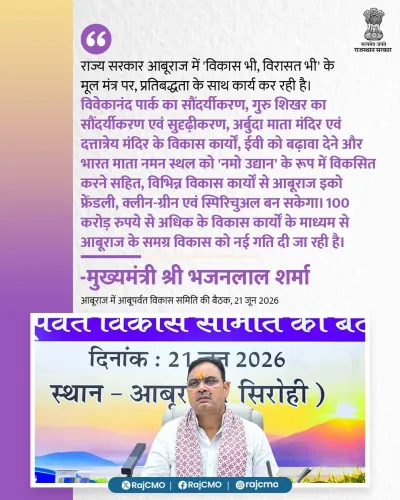
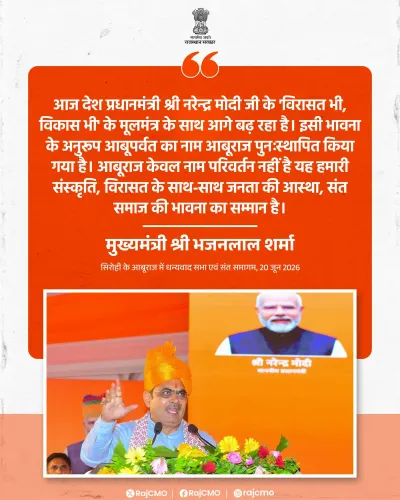
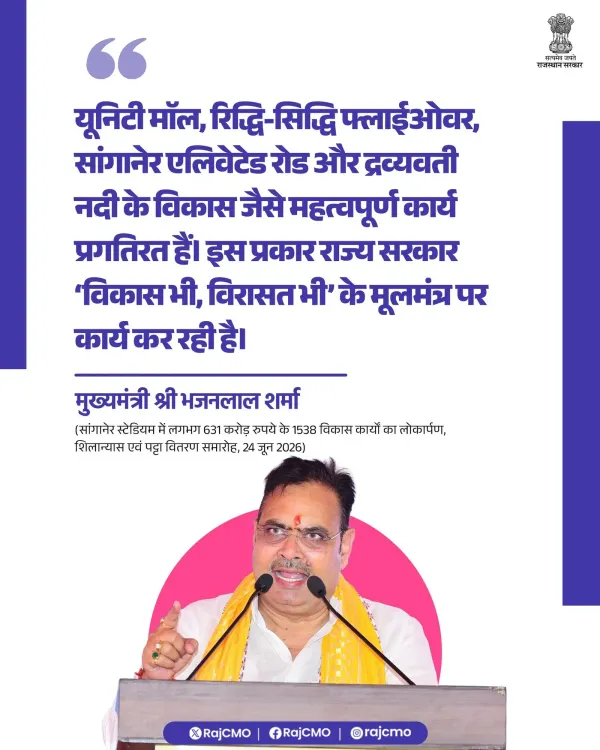
The Rajasthan CMO on 25 June 2026 posted a reaffirmation of the state government's core governance slogan 'Vikas Bhi, Virasat Bhi' (Development too, Heritage too).
Chief Minister Bhajan Lal Sharma was sworn in on 25 December 2023 after the BJP's Rajasthan assembly election victory.
The slogan is rooted in the BJP's 2023 Rajasthan election manifesto , which committed to infrastructure growth alongside monument and cultural preservation.
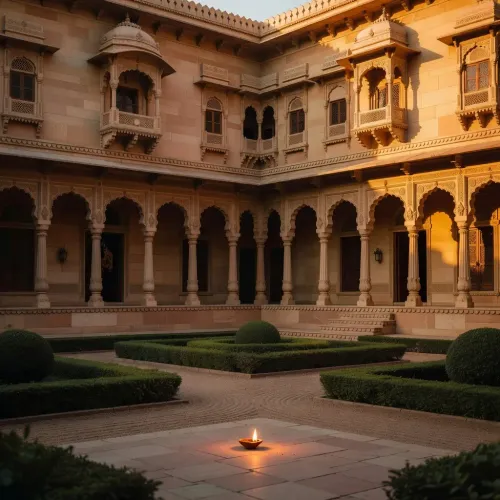
Rajasthan is India's largest state by area and relies heavily on heritage tourism anchored by forts, palaces and stepwells in cities like Jaipur, Jodhpur and Udaipur .
Key stakeholders include the tourism sector, heritage conservation bodies and urban local bodies in historic cities.
Future state budget presentations and assembly debates on heritage-zone development rules will be the real test of the policy's implementation.
The Chief Minister's Office of Rajasthan on Thursday, 25 June 2026, reiterated the state government's twin-track governance philosophy of simultaneous development and heritage preservation, quoting Chief Minister Bhajan Lal Sharma and anchoring the message to the hashtag #आपणो_अग्रणी_राजस्थान ('Our Leading Rajasthan').
Context
The post carries the Hindi phrase 'Vikas bhi, Virasat bhi' — meaning 'Development too, Heritage too' — which the Rajasthan government has adopted as a core governance mantra. The statement positions the ruling administration's agenda as one that refuses to treat economic growth and cultural conservation as competing priorities. Chief Minister Bhajan Lal Sharma, who was sworn into office on 25 December 2023 following the Bharatiya Janata Party's assembly election victory, has consistently invoked this framing in official communications.Policy Backdrop
The slogan draws directly from the BJP's 2023 Rajasthan election manifesto, which explicitly committed to infrastructure expansion while pledging to protect the state's historical monuments and cultural identity. Rajasthan, India's largest state by area, is home to numerous UNESCO-recognised forts, palaces and living cultural traditions that form the backbone of its tourism economy. The BJP's national governance approach has broadly paired large-scale infrastructure and economic programmes with visible investment in heritage restoration and cultural tourism, and the Rajasthan government's messaging mirrors that framework. Cities such as Jaipur, Jodhpur and Udaipur have historically seen efforts to upgrade connectivity and civic amenities around historic cores while restoring forts and stepwells.Stakeholders and Impact
The philosophy directly concerns multiple constituencies. The tourism sector stands to benefit from policies that maintain Rajasthan's heritage appeal while improving access infrastructure. Heritage conservation bodies watch for budget allocations and regulatory protections for monument zones. Urban local bodies in historic cities face the practical challenge of balancing modern civic development with preservation mandates. For ordinary residents, the dual agenda holds the promise of economic opportunity through tourism and cultural pride through protected monuments. Comparable framing has appeared in other BJP-ruled states, suggesting a coordinated national template for heritage-linked development.What's Next
The signal to watch is whether the rhetoric translates into measurable allocations. Future state budget presentations and tourism policy updates will indicate the funding levels directed at heritage-linked infrastructure projects. Assembly debates on urban development rules for heritage zones are also expected to test how firmly the government holds the line between construction and conservation. As Rajasthan positions itself as a leading state — the literal meaning of #आपणो_अग्रणी_राजस्थान — the credibility of the 'Vikas bhi, Virasat bhi' mantra will ultimately be measured in project outcomes on the ground, not in social media affirmations.Point of View
Virasat Bhi' slogan in public circulation between major policy announcements. For the BJP, the mantra serves a dual political purpose: it appeals to aspirational voters who want modern infrastructure and to cultural-conservative voters who prize heritage identity, making it an unusually broad-tent message in a state where tourism is both economy and identity. The hashtag #आपणो_अग्रणी_राजस्थान signals an effort to build a regional pride narrative around the Sharma administration ahead of future electoral cycles. Whether the slogan hardens into funded policy or remains a rhetorical anchor will depend on what the next state budget reveals about actual allocations to heritage-linked infrastructure and conservation.
NationPress
23 Sept 2026
Frequently Asked Questions
What does 'Vikas Bhi, Virasat Bhi' mean?
'Vikas Bhi, Virasat Bhi' is a Hindi phrase meaning 'Development too, Heritage too.' It is the governance mantra of the Rajasthan state government under Chief Minister Bhajan Lal Sharma, signalling a dual commitment to economic development and cultural heritage preservation.
Who is Bhajan Lal Sharma?
Bhajan Lal Sharma is the Chief Minister of Rajasthan from the Bharatiya Janata Party. He was sworn into office on 25 December 2023 after the BJP won the Rajasthan assembly elections.
What is #AapnoAgraniRajasthan?
#आपणो_अग्रणी_राजस्थान , transliterated as #AapnoAgraniRajasthan, means 'Our Leading Rajasthan.' It is a social media campaign hashtag used by the Rajasthan government to promote its vision of the state as a progressive and leading region in India.
What is the BJP's heritage policy in Rajasthan?
The BJP's 2023 Rajasthan election manifesto committed to expanding infrastructure while protecting the state's historical monuments and cultural identity. In practice, this has involved projects aimed at upgrading connectivity and civic amenities around historic cities like Jaipur, Jodhpur and Udaipur while restoring forts and stepwells.
How does Rajasthan balance development and heritage conservation?
Rajasthan, India's largest state by area, relies on heritage tourism from UNESCO-recognised forts and palaces. The state government attempts to balance modern development with conservation by working with urban local bodies and heritage conservation bodies to regulate construction in historic zones while improving tourist infrastructure.