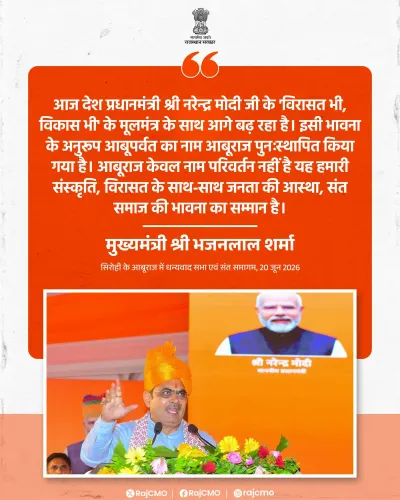
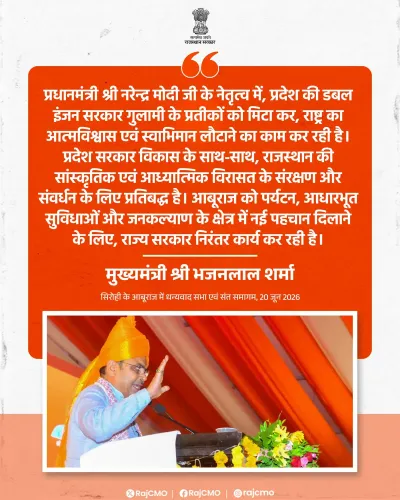
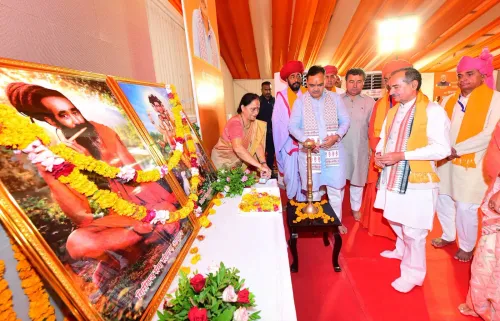
Rajasthan CM Office Reaffirms 'Vikas Bhi, Virasat Bhi' Vision for Abu Road
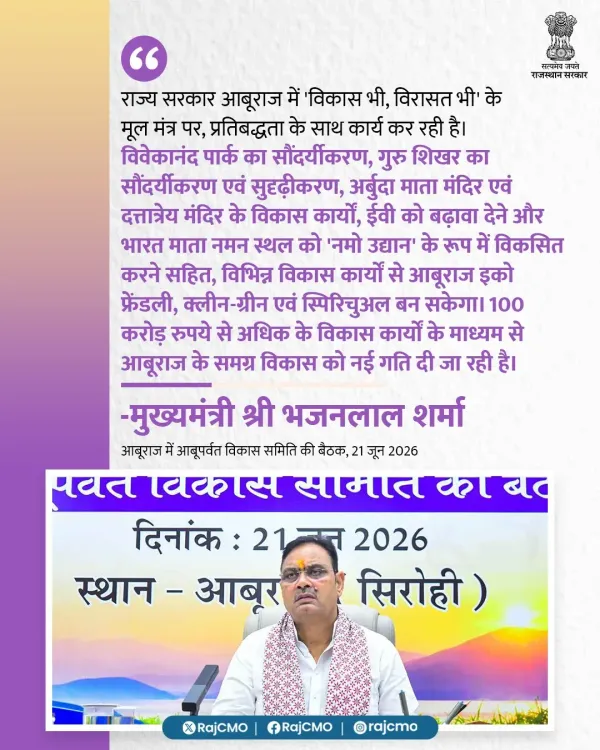
Synopsis
The Chief Minister's Office of Rajasthan declared on 21 June 2026 that the state government is committed to the 'Vikas Bhi, Virasat Bhi' principle in Abu Road, blending infrastructure growth with cultural and heritage preservation under CM Bhajan Lal Sharma.
Key Takeaways
The Rajasthan CMO posted on 21 June 2026 reaffirming the government's commitment to Abu Road (Aburaj) under the 'Vikas Bhi, Virasat Bhi' framework.
Chief Minister Bhajan Lal Sharma has anchored the BJP government's development agenda to this dual mandate of growth and heritage protection since taking office in December 2023 .
Abu Road in Sirohi district is a gateway to Mount Abu , Rajasthan's only hill station and a major religious and tourism hub.
The policy mirrors BJP-led approaches in Madhya Pradesh and Uttar Pradesh that link tourism infrastructure with cultural site preservation.
Key stakeholders include local communities, the tourism and hospitality sector, Jain pilgrimage institutions, and environmental groups.
Specific project details and budget allocations are awaited in upcoming Rajasthan assembly sessions .
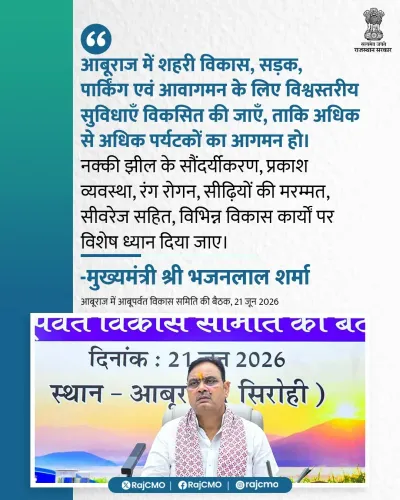
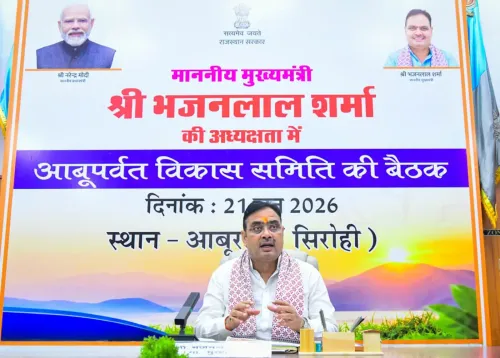
The Chief Minister's Office of Rajasthan reaffirmed on Sunday, 21 June 2026 that the state government is working with full commitment in Abu Road (Aburaj) under its guiding principle of 'Vikas Bhi, Virasat Bhi' — 'Development as well as Heritage.' The post, attributed to Chief Minister Bhajan Lal Sharma, signals a continued policy push to balance economic growth with the preservation of the region's cultural and natural legacy.
Context
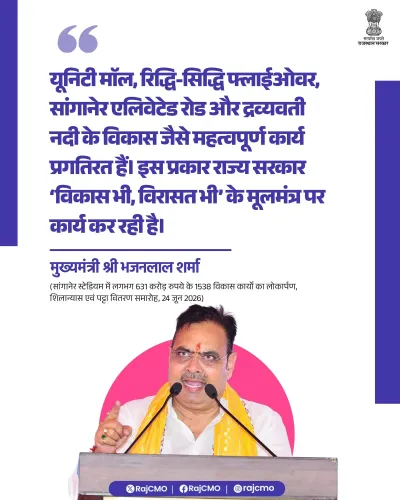
The phrase 'Vikas Bhi, Virasat Bhi' ('Development too, Heritage too') has served as a cornerstone of the Rajasthan BJP government's messaging since Chief Minister Bhajan Lal Sharma assumed office in December 2023. The slogan encapsulates an intent to pursue infrastructure-led growth without displacing the cultural, historical, and ecological identity of Rajasthan's towns and regions. The official post uses the hashtag #आपणो_अग्रणी_राजस्थान — loosely translated as 'Our Leading Rajasthan' — underscoring the government's branding of the state as a front-runner in balanced development.
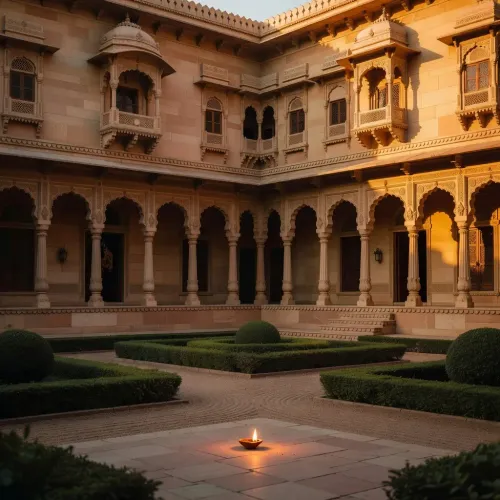
Abu Road, situated in the Sirohi district of southern Rajasthan, is a gateway to Mount Abu, the state's only hill station and a site of significant religious, ecological, and tourism importance. The area holds heritage value for multiple communities and is a noted destination on Rajasthan's tourism circuit.
Policy Backdrop
Following the 2023 Rajasthan assembly elections, the incoming BJP administration outlined an agenda that explicitly tied infrastructure investment to cultural preservation — a framework mirroring similar approaches adopted by BJP-led governments in Madhya Pradesh and Uttar Pradesh, where heritage corridors and tourism infrastructure have been developed in tandem. The 'Vikas Bhi, Virasat Bhi' formulation gives the state government a dual mandate: accelerating physical development while acting as a steward of Rajasthan's rich architectural, artistic, and natural heritage.
Rajasthan's tourism sector is among the most significant in India, and regions like Abu Road and Mount Abu represent intersections of ecological sensitivity and visitor footfall. Any policy framework applied here must navigate the tension between expanding tourism infrastructure and protecting the fragile hill ecosystem and heritage sites.
Stakeholders and Impact
The communities most directly affected by this policy orientation include local residents of the Sirohi-Abu Road belt, traders and hospitality businesses dependent on the tourism economy, and religious institutions — particularly Jain pilgrimage centres — that have a historic presence in the Mount Abu area. Environmental stakeholders and conservationists also have a direct interest, given the ecological sensitivity of the region's forests and wildlife sanctuary.
For the broader tourism sector, a government commitment to heritage-alongside-development signals potential investment in site maintenance, connectivity, and visitor infrastructure — outcomes that could benefit local livelihoods. At the same time, civil society groups in hill and heritage zones typically monitor such commitments for follow-through in the form of budget allocations and project execution.
What's Next
Observers and stakeholders will look to upcoming Rajasthan assembly sessions and state budget announcements for specifics — including allocations for heritage zone development, eco-tourism projects, and connectivity upgrades in the Abu Road corridor. The government's ability to translate the 'Vikas Bhi, Virasat Bhi' slogan into measurable on-ground outcomes in ecologically and culturally sensitive areas like Mount Abu will be a key test of its development agenda in the months ahead.
Point of View
Virasat Bhi' for Abu Road is consistent with a broader BJP pattern of packaging development initiatives within a cultural-heritage narrative — a strategy that has proven politically effective in tourism-heavy states. By naming Abu Road specifically, the Chief Minister's Office signals that this is not merely a rhetorical posture but an area of active policy attention. However, the statement's impact will ultimately be judged by what follows in terms of budget lines and project execution, particularly in an ecologically sensitive hill zone where development and conservation often pull in opposite directions. The post also reinforces CM Bhajan Lal Sharma's positioning as a hands-on administrator attentive to regional development priorities across the state.
NationPress
20 Sept 2026
Frequently Asked Questions
What does 'Vikas Bhi, Virasat Bhi' mean in Rajasthan?
'Vikas Bhi, Virasat Bhi' translates to 'Development as well as Heritage' and is the guiding principle of the Rajasthan BJP government under Chief Minister Bhajan Lal Sharma, aiming to balance infrastructure growth with the preservation of the state's cultural and natural legacy.
What is Abu Road and why is it significant?
Abu Road is a town in Sirohi district, southern Rajasthan, and serves as the main gateway to Mount Abu — the state's only hill station. It holds religious importance, particularly for Jain pilgrims, and is a key stop on Rajasthan's tourism circuit.
Who is Bhajan Lal Sharma?
Bhajan Lal Sharma is the BJP Chief Minister of Rajasthan, having taken office in December 2023 following the party's victory in the state assembly elections. He has made balanced development and heritage protection central themes of his administration.
What projects are planned for Abu Road under this policy?
Specific project details have not yet been announced. Observers are watching for budget allocations and project announcements in upcoming Rajasthan assembly sessions that would give concrete shape to the government's 'Vikas Bhi, Virasat Bhi' commitment in the Abu Road region.
How does Rajasthan's heritage-development approach compare to other BJP-ruled states?
Rajasthan's approach mirrors similar frameworks in Madhya Pradesh and Uttar Pradesh, where BJP governments have developed heritage corridors and tourism infrastructure alongside economic projects, linking cultural identity with growth agendas.