CM Bhajan Lal Hails Mount Abu as Cultural and Spiritual Heritage

Synopsis
Rajasthan Chief Minister Bhajan Lal Sharma on 20 June 2026 celebrated Mount Abu as an invaluable cultural, spiritual, and historical treasure, calling the land sanctified by ancient saints and sages a symbol of India's unbroken civilisational consciousness.
Key Takeaways
CM Bhajan Lal Sharma posted a tribute to Mount Abu (referred to as Aaburaaj ) on 20 June 2026 .
He described it as an invaluable repository of cultural, spiritual, and historical heritage .
The post calls the land sanctified by saints, sages, and great souls a symbol of Indian civilisation's unbroken consciousness.
Mount Abu in Sirohi district, Rajasthan is home to the famed Dilwara Jain Temples and multiple sites of spiritual significance.
The statement aligns with BJP 's broader emphasis on linking governance with India's ancient civilisational roots.
Possible follow-up announcements on heritage conservation or cultural festivals at Mount Abu may follow.
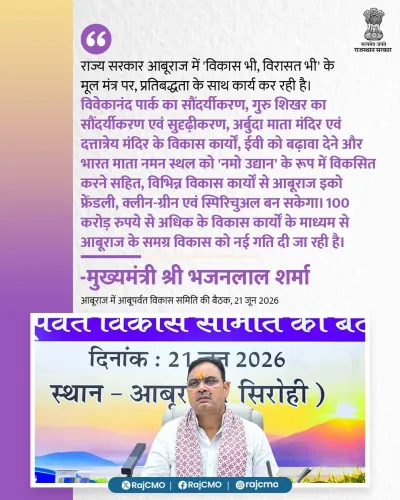
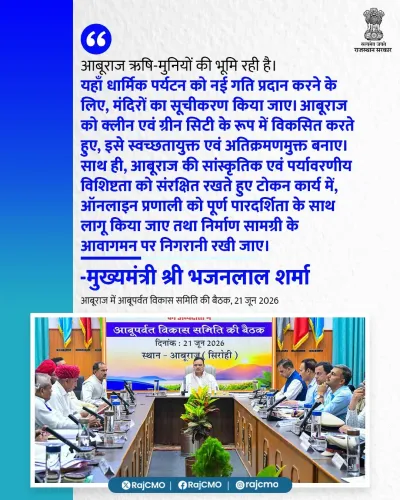
Rajasthan Chief Minister Bhajan Lal Sharma on Saturday, 20 June 2026, paid tribute to Mount Abu — referred to as Aaburaaj — describing it as an invaluable repository of the state's cultural, spiritual, and historical legacy.
Context
In his post, CM Sharma wrote: 'आबूराज हमारी सांस्कृतिक, आध्यात्मिक और ऐतिहासिक विरासत की अमूल्य धरोहर है' — 'Aaburaaj is the priceless heritage of our cultural, spiritual, and historical legacy.' He further described the land as sanctified by the spiritual practices of saints, sages, and great souls, calling it a symbol of the unbroken consciousness of Indian civilisation and a source of inspiration to stay connected with one's roots.
Mount Abu, located in the Sirohi district of Rajasthan, is the state's only hill station and is home to the celebrated Dilwara Jain Temples, among other sites of deep religious and historical significance. The region has long been associated with ancient sages and spiritual traditions across multiple faiths.
Policy Backdrop
BJP-led state governments have consistently highlighted India's temple, ashram, and pilgrimage ecosystems as pillars of civilisational continuity. CM Sharma's remarks fit within a broader pattern of state-level cultural messaging that links contemporary governance with India's ancient heritage, reinforcing regional pride and identity.
Rajasthan, as a state rich in forts, temples, and UNESCO-recognised sites, has positioned heritage tourism as a key pillar of its economic and cultural agenda. Statements of this nature often precede or accompany formal announcements from the state's tourism or archaeology departments regarding site conservation, festivals, or development projects.
Stakeholders and Impact
The message resonates with Rajasthan's residents, pilgrims, and heritage tourists who visit Mount Abu in significant numbers each year. The Dilwara Temples alone draw Jain devotees and history enthusiasts from across the country and abroad.
For the local communities in and around Sirohi district, heightened political attention to the region can translate into infrastructure upgrades, conservation funding, and promotional campaigns that support livelihoods tied to tourism and pilgrimage.
What's Next
Observers will watch for follow-up action from Rajasthan's tourism or archaeology departments — such as heritage conservation drives, cultural festivals, or development allocations for Mount Abu — that could give institutional weight to CM Sharma's remarks.
The statement also signals that Mount Abu may feature more prominently in the state government's cultural and tourism calendar in the months ahead, potentially drawing fresh attention to the region's spiritual and historical assets.
Point of View
Where spiritual geography is deployed to reinforce cultural identity. By framing the hill station through the lens of saints and sages rather than purely as a tourist destination, the statement elevates the site's symbolic capital ahead of any potential policy announcement. This kind of cultural signalling from a sitting chief minister typically precedes tangible administrative action — conservation budgets, festival calendars, or infrastructure allocations — making it worth watching for follow-through. It also reflects a wider national template of anchoring contemporary governance in ancient Indian traditions.
NationPress
19 Sept 2026
Frequently Asked Questions
What did Rajasthan CM Bhajan Lal Sharma say about Mount Abu?
CM Bhajan Lal Sharma described Mount Abu, referred to as Aaburaaj, as an invaluable repository of Rajasthan's cultural, spiritual, and historical heritage, calling it a symbol of India's unbroken civilisational consciousness.
Where is Mount Abu located?
Mount Abu is located in the Sirohi district of Rajasthan and is the state's only hill station, known for the Dilwara Jain Temples and its association with ancient saints and sages.
Why is Mount Abu considered spiritually significant?
Mount Abu has been a site of spiritual practice across multiple faiths for centuries, associated with sages and saints, and is home to the celebrated Dilwara Jain Temples, making it a major pilgrimage and heritage destination.
What is the BJP government's stance on heritage sites in Rajasthan?
The BJP-led Rajasthan government under CM Bhajan Lal Sharma has consistently emphasised the cultural and spiritual importance of the state's heritage sites, aligning with the party's broader national agenda of linking governance with India's ancient civilisational roots.
Will there be any government projects announced for Mount Abu?
No formal announcement has been made yet, but observers expect possible follow-up action from Rajasthan's tourism or archaeology departments on conservation, festivals, or development at Mount Abu following the Chief Minister's statement.