CM Bhajanlal Sharma chairs Abu Raj meet, orders Mount Abu blueprint
Synopsis
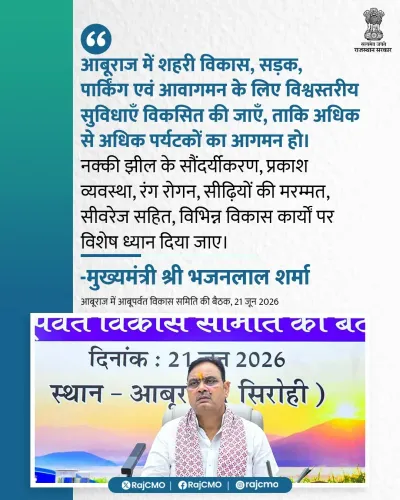
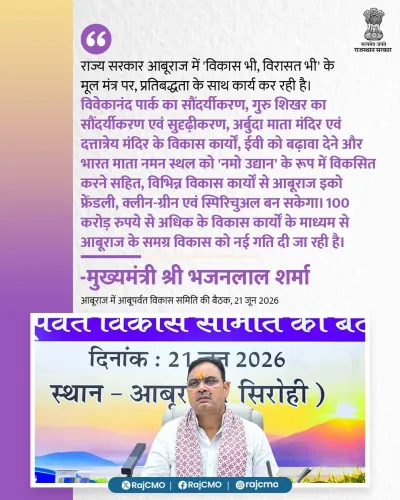
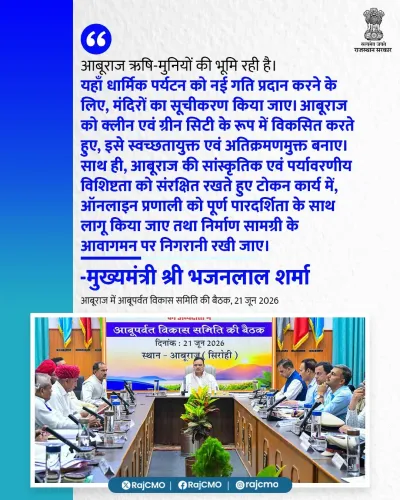
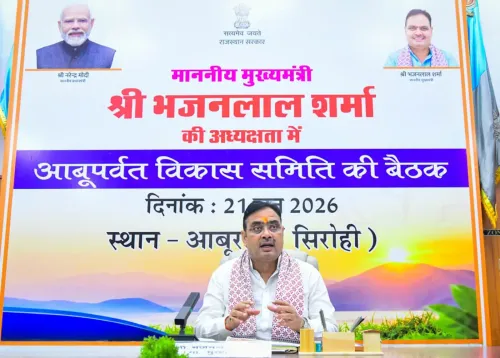
Chief Minister Bhajanlal Sharma chaired the Abu Raj Development Committee meeting on 21 June 2026, directing officials to draft a comprehensive blueprint for Mount Abu's tourism, spiritual, and environmental development, with the Chief Secretary and Divisional Commissioner tasked with continuous monitoring.
Key Takeaways
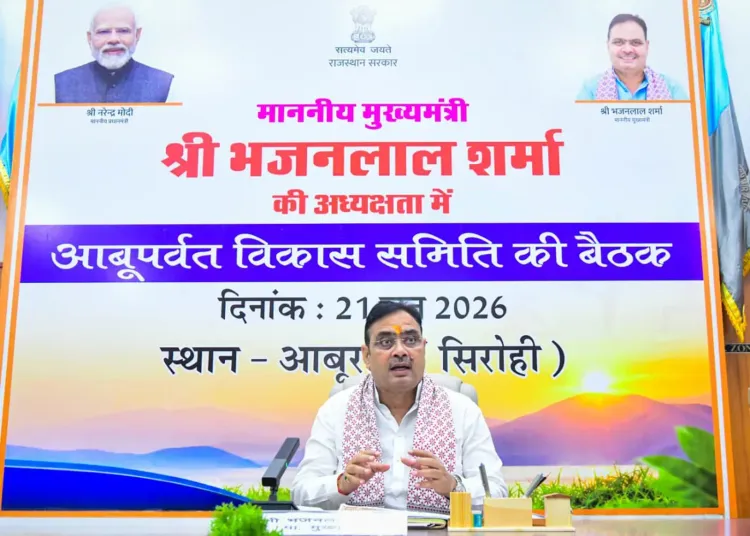
CM Bhajanlal Sharma chaired the Abu Raj Development Committee meeting at Abu Raj on 21 June 2026 .
Officials were directed to prepare a holistic development blueprint tailored to Mount Abu's tourism, spiritual, and environmental character.
All development works must be completed in a time-bound manner with inter-departmental coordination.
Both the Divisional Commissioner and the Chief Secretary have been tasked with continuous monitoring of implementation.
Mount Abu in Sirohi district is Rajasthan's only hill station and an ecologically sensitive area home to the Dilwara Jain Temples .
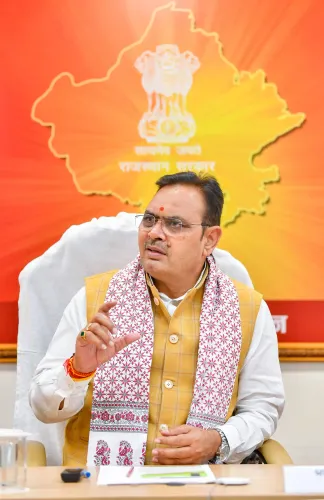
The Chief Minister's Office of Rajasthan announced on Sunday, 21 June 2026 that Chief Minister Bhajanlal Sharma chaired a meeting of the Abu Raj Development Committee at Abu Raj, directing officials to prepare a comprehensive development blueprint aligned with Mount Abu's tourism, spiritual, and environmental character.
Context
Chairing the committee meeting at Abu Raj, CM Bhajanlal Sharma instructed that the blueprint for Mount Abu must reflect the region's three defining pillars: its identity as a tourist destination, its significance as a spiritual centre — home to the celebrated Dilwara Jain Temples — and its status as an ecologically sensitive hill ecosystem. The directive signals that development plans will not be generic infrastructure pushes but must be tailored to the hill station's unique character.
The Chief Minister also ordered that all development works be completed in a time-bound manner with inter-departmental coordination, underscoring a recurring concern in hill-station governance where multiple agencies often work at cross-purposes, causing delays and environmental damage.
Policy Backdrop
Mount Abu, located in Sirohi district of Rajasthan, is the state's only hill station and carries significant ecological fragility alongside its tourism and pilgrimage draw. Rajasthan governments have periodically constituted committees and master plans for the region since the early 2000s, each attempting to balance revenue-generating tourism infrastructure with conservation mandates.
The Abu Raj Development Committee is the state body specifically tasked with planning and executing development activities for the Mount Abu region under government oversight. Its periodic activation typically signals a fresh push to clear pending works or launch a new phase of upgrades. Such efforts in Rajasthan have historically linked to central schemes promoting sustainable tourism and pilgrimage infrastructure.
Stakeholders and Impact
The primary beneficiaries of a well-executed blueprint would be Mount Abu's permanent residents, the thousands of domestic tourists who visit the hill station annually, and pilgrims travelling to the Dilwara Temples and other spiritual sites in the area. Environmental groups and conservationists also have a direct stake, given the region's ecological sensitivity.
In a notable administrative step, CM Sharma directed both the Divisional Commissioner and the Chief Secretary to carry out continuous monitoring of the development works — an unusual dual-accountability mechanism that suggests the government intends to keep implementation under close watch at the highest levels of the bureaucracy.
What's Next
The immediate deliverable from this meeting is the preparation of a holistic development blueprint that officials are now mandated to draft. Observers will watch for the release of that document, subsequent budget allocations to back it, and the periodic monitoring reports that the Chief Secretary has been tasked to produce.
If the coordination and monitoring directives are followed through, Mount Abu could see a more integrated approach to tourism and conservation planning — one that may serve as a model for other ecologically sensitive destinations across Rajasthan under the Aapno Agrani Rajasthan ('Our Frontline Rajasthan') vision the government has espoused.
Point of View
Suggesting the government is aware of the historical gap between committee directives and on-ground execution in Mount Abu. The emphasis on aligning development with the hill station's tourism, spiritual, and environmental identity also reflects a national trend of branding pilgrimage and eco-tourism destinations as integrated circuits rather than standalone infrastructure projects. Whether the blueprint translates into budgeted, time-bound action will be the real test of this directive's political and administrative weight.
NationPress
19 Sept 2026
Frequently Asked Questions
What was decided at the Abu Raj Development Committee meeting on 21 June 2026?
Chief Minister Bhajanlal Sharma directed officials to prepare a comprehensive development blueprint for Mount Abu aligned with its tourism, spiritual, and environmental identity, and ordered time-bound completion of all works with inter-departmental coordination.
Who is responsible for monitoring Mount Abu development works?
CM Sharma specifically directed both the Divisional Commissioner and the Chief Secretary to carry out continuous monitoring of development works in the Mount Abu region.
What is the Abu Raj Development Committee?
The Abu Raj Development Committee is a Rajasthan state body specifically constituted to plan and execute development activities for the Mount Abu region under government oversight.
Why is Mount Abu development significant?
Mount Abu is Rajasthan's only hill station, located in Sirohi district, and is ecologically sensitive. It is also a major pilgrimage and tourism destination, home to the historic Dilwara Jain Temples, making balanced development a complex policy challenge.
What is the 'Aapno Agrani Rajasthan' initiative?
'Aapno Agrani Rajasthan' — meaning 'Our Frontline Rajasthan' — is a vision articulated by the Bhajanlal Sharma government for accelerated, coordinated development across the state, under which regional committees and blueprints like the one for Mount Abu are being pursued.