CM Bhajan Lal shares Amit Shah's rebuke of Rahul Gandhi on 1984 anniversary
Synopsis
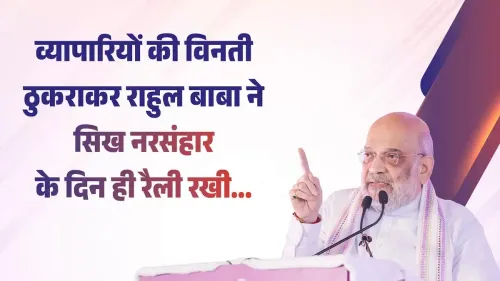
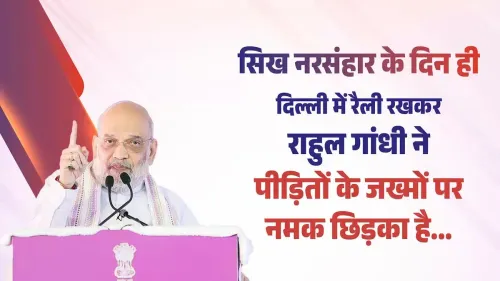
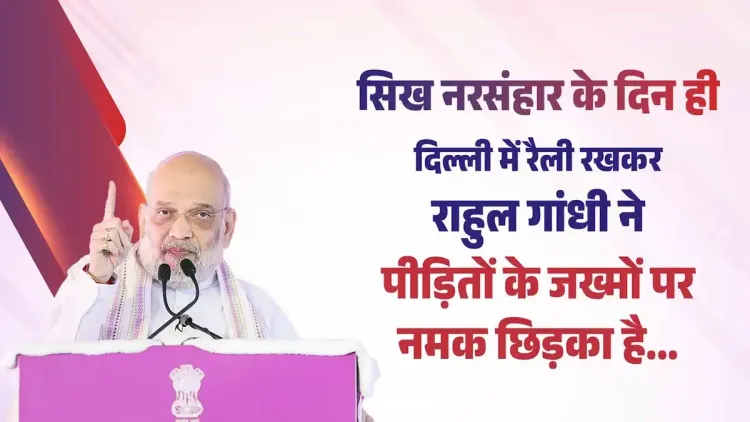
Rajasthan CM Bhajan Lal Sharma amplified Union Home Minister Amit Shah's attack on Rahul Gandhi, accusing him of organising a Delhi event on the 1984 anti-Sikh riots anniversary and thereby 'reopening the wounds' of victim families.
Key Takeaways
Bhajan Lal Sharma shared a statement by Union Home Minister Amit Shah on 1 November 2026 , the anniversary of the 1984 anti-Sikh violence.
Amit Shah accused Rahul Gandhi of holding a public gathering ( jalsa ) in Delhi on the day marking the riots, calling it an act that 're-opens the wounds of victim families.' The 1984 anti-Sikh riots broke out after PM Indira Gandhi's assassination on 31 October 1984 , killing thousands across India.
The Nanavati Commission is among the multiple inquiry bodies that examined the violence in subsequent decades.
BJP leaders routinely invoke November 1984 to challenge Congress's record on communal violence — a pattern that intensifies each year on the anniversary.
Congress had not issued a formal response to Shah's specific charges at the time of publication.
On the 42nd anniversary of the 1984 anti-Sikh riots, Rajasthan Chief Minister Bhajan Lal Sharma amplified a sharp political broadside by Union Home Minister Amit Shah, accusing Rahul Gandhi of staging a public event in Delhi on the very date that marks one of independent India's darkest communal tragedies — and doing so, Shah charged, at the cost of reopening the wounds of survivor families.
Amit Shah's charge: a celebration on a day of mourning
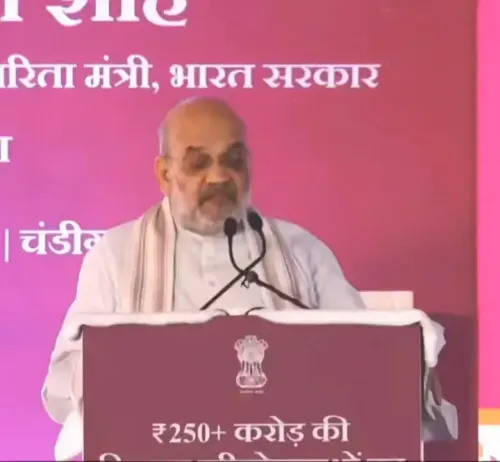
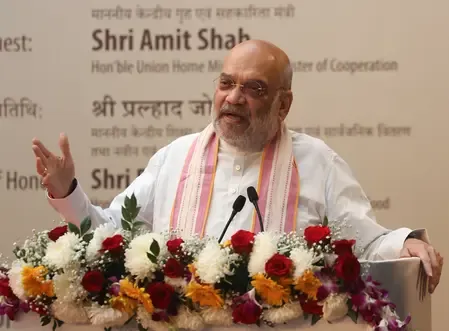
The post, shared by CM Sharma on 1 November 2026, quotes Amit Shah directly: '1984 ke Sikh virodhi dange Congress ke itihas ka woh kala adhyay hain' — '1984 anti-Sikh riots are that dark chapter of Congress's history in which thousands of innocents were brutally killed and countless families were devastated.' Shah's statement goes further, accusing Gandhi of organising a jalsa — a public gathering or celebration — in Delhi on the anniversary itself, which Shah frames as 'freshly reopening the wounds of victim families.'
The explicit pairing of the event's timing with the anniversary is the core of the attack: not merely what Gandhi allegedly did, but when he did it.
What happened in November 1984 — and why it still burns
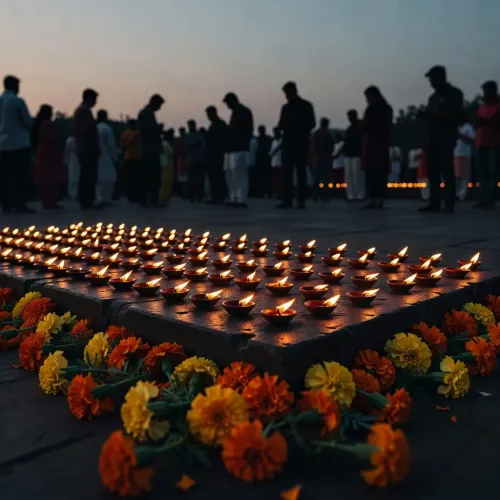
The 1984 anti-Sikh violence erupted across India following the assassination of Prime Minister Indira Gandhi on 31 October 1984. Mobs targeted Sikh communities in Delhi and other cities over several days, resulting in what official and independent estimates put at thousands of deaths. Entire neighbourhoods were destroyed, and families were displaced for years. The Nanavati Commission, one of several inquiry bodies established in subsequent decades, examined the riots and the role of political figures — its findings kept the subject alive as a live fault line in Indian politics long after the events themselves.
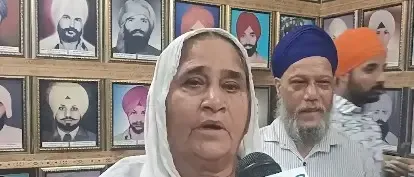
For BJP leaders, the riots have become a recurring point of contrast: Congress's governance record on communal violence versus its current political positioning. For Sikh victims and their descendants, the anniversary is a day of grief and remembrance — making the choice of date for any political event especially sensitive.
BJP's long-running political use of 1984
Shah's statement, amplified by CM Sharma, fits a well-established pattern in BJP political communication: invoking November 1984 to challenge Congress's moral authority on minority rights and rule of law. The strategy sharpens every year around the anniversary, when the historical memory is freshest and the emotional temperature highest. By sharing the quote, Sharma signals that Rajasthan's ruling establishment is aligned with the national BJP leadership's messaging on the issue — and that the party intends to keep the accountability question firmly in public debate.
Congress has not yet issued a formal response to Shah's specific charges about the Delhi event.
Point of View
Both of which carry costs. By amplifying Shah's statement, CM Sharma links Rajasthan's state leadership to a national BJP narrative that frames Congress as unfit to speak on minority rights. The specific charge — that Gandhi held a festive event on a day of Sikh mourning — is designed to maximise emotional contrast, regardless of the event's actual nature. Until Congress responds with specifics, the charge occupies the news cycle unchallenged.
NationPress
1 Nov 2026
Frequently Asked Questions
What were the 1984 anti-Sikh riots?
The 1984 anti-Sikh riots were large-scale mob attacks on Sikh communities across India, erupting on 31 October 1984 after the assassination of Prime Minister Indira Gandhi . Thousands of Sikhs were killed and many families were displaced over several days of violence, particularly in Delhi.
What did Amit Shah say about Rahul Gandhi and the 1984 anniversary?
Amit Shah accused Rahul Gandhi of organising a public event or celebration ( jalsa ) in Delhi on the anniversary of the 1984 anti-Sikh riots, calling it an act that 'freshly reopens the wounds' of victim families.
Why did CM Bhajan Lal Sharma share Amit Shah's statement?
CM Bhajan Lal Sharma shared the statement on 1 November 2026 as part of BJP's broader political messaging, aligning Rajasthan's state leadership with the national party's position criticising Congress over the 1984 violence legacy.
What is the Nanavati Commission on 1984 riots?
The Nanavati Commission was one of several official inquiry bodies set up to investigate the 1984 anti-Sikh riots. Its reports, released over subsequent decades, examined the violence and the role of political figures and have remained a reference point in ongoing political and legal debates.
Has Congress responded to Amit Shah's 1984 anniversary charges?
As of the time of this report, Congress had not issued a formal response to Amit Shah's specific charges about the Delhi event attributed to Rahul Gandhi on the 1984 riots anniversary.