CM Bhajan Lal Sharma Greets Rajasthan on Gopashtami
Synopsis
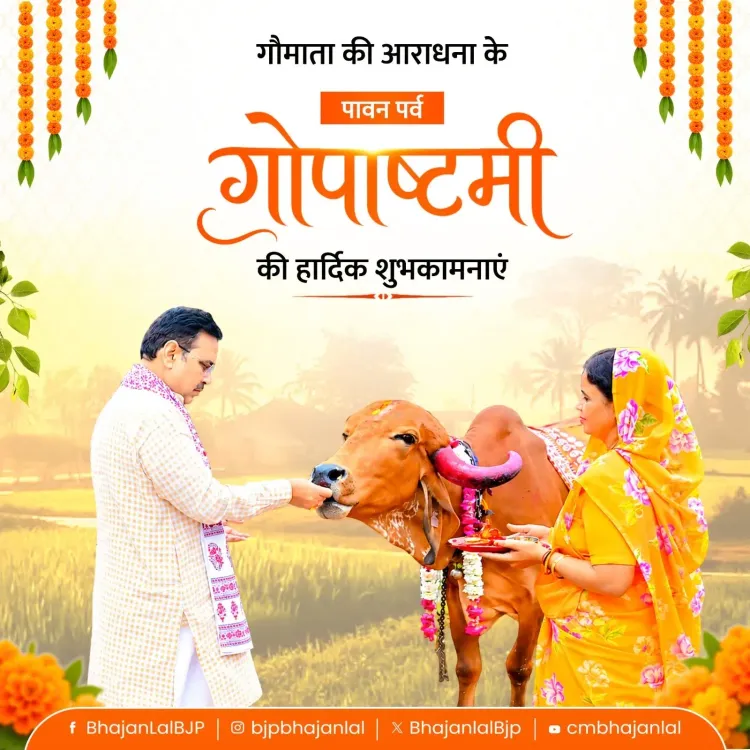
Rajasthan Chief Minister Bhajan Lal Sharma marked Gopashtami on 17 November 2026 by urging citizens to pledge service and conservation of cows, calling them the bedrock of culture, religion and the rural economy.
Key Takeaways
Bhajan Lal Sharma posted Gopashtami greetings on 17 November 2026 , addressed to all residents of Rajasthan.
He described the cow as the foundation of culture, religion and the rural economy .
The CM urged citizens to take a 'sacred pledge' of cow service and conservation on the occasion.
Gopashtami falls on the eighth day of Kartik's bright fortnight and is linked to Lord Krishna's life as a cowherd.
Rajasthan maintains an extensive network of government-supported gaushalas and cow-protection legislation.
The message reflects a consistent BJP pattern of connecting Hindu cultural festivals with rural agricultural themes.
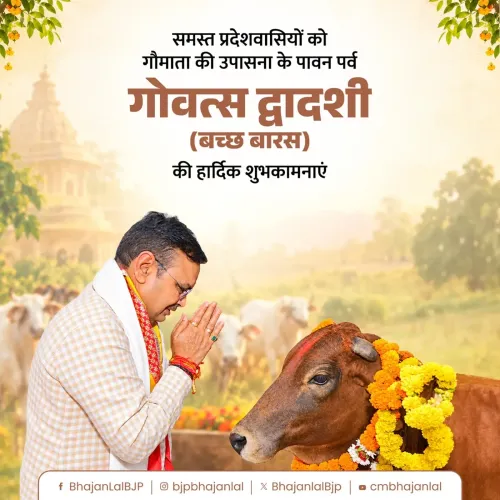
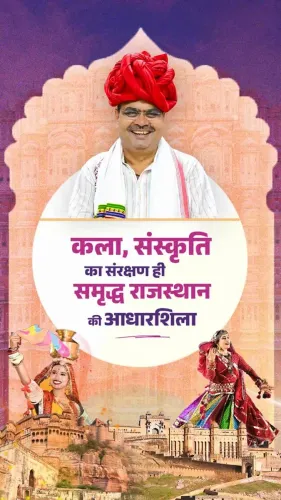
On the morning of Gopashtami, 17 November 2026, Rajasthan Chief Minister Bhajan Lal Sharma extended warm wishes to every resident of the state, calling the sacred cow the foundation of culture, faith, and the rural economy — and urging citizens to renew their commitment to cow welfare on this auspicious day.
Posting in Hindi, the Chief Minister wrote: 'गौमाता हमारी संस्कृति, धर्म और ग्रामीण अर्थव्यवस्था का आधार हैं' — 'The cow is the foundation of our culture, religion and rural economy.' He called upon people to take a 'sacred pledge' of seva (service) and संवर्धन (conservation) of the cow on this 'pious occasion.'
What Gopashtami marks — and why it resonates in Rajasthan
Gopashtami falls on the eighth day of the bright fortnight of the Hindu month of Kartik and is dedicated to the worship of cows, rooted in the legend of Lord Krishna beginning his life as a cowherd on this day. Across Rajasthan — a state with one of India's largest livestock populations and an extensive network of government-supported gaushalas (cow shelters) — the festival carries both devotional and practical resonance for rural farming communities.
The state has long maintained cow-protection legislation and gaushala support programmes, with dairy and livestock forming a vital pillar of the rural economy for farmers and herders across its districts. The festival, then, is not merely ceremonial: it lands at the intersection of faith and livelihood for a significant share of Rajasthan's population.
BJP's consistent thread: tradition, faith, and agriculture in one frame
Bhajan Lal Sharma, who assumed office as Chief Minister in December 2023, has consistently framed cultural and religious occasions within the language of rural welfare — a pattern common across BJP-led state governments. Linking the sanctity of the cow to the health of the village economy is a messaging approach that speaks simultaneously to devotional sentiment and to the practical concerns of Rajasthan's livestock-dependent rural households.
The post signals that any state-level observances or updates to gaushala and livestock support programmes during this festive window will carry both political and policy weight. For now, the Chief Minister's message is a call to conscience as much as a seasonal greeting — a reminder, delivered to an entire state, that the cow stands at the crossroads of culture and commerce in Rajasthan.
How that pledge translates into policy action in the weeks ahead will be the story worth watching.
Point of View
Rural livelihoods and governance identity. By anchoring the greeting in economic language — 'rural economy' — alongside cultural and religious framing, the CM signals that cow welfare is not just a cultural position but a policy priority. This messaging strategy is especially potent in a state like Rajasthan, where livestock dependence is high and gaushala networks are both a welfare mechanism and a political touchstone. The real test will come if Gopashtami triggers any tangible announcement on gaushala funding or livestock support in the days that follow.
NationPress
17 Nov 2026
Frequently Asked Questions
What is Gopashtami and when is it celebrated?
Gopashtami is an annual Hindu festival dedicated to cows, observed on the eighth day of the bright fortnight of the month of Kartik. It commemorates the day Lord Krishna is said to have begun his life as a cowherd.
What did Rajasthan CM Bhajan Lal Sharma say on Gopashtami 2026?
CM Bhajan Lal Sharma extended greetings to all Rajasthan residents on 17 November 2026 , calling the cow the foundation of culture, religion and the rural economy, and urged citizens to pledge service and conservation of cows.
What is Rajasthan's policy on cow protection and gaushalas?
Rajasthan has maintained cow-protection legislation and a network of government-supported gaushalas across successive governments, recognising livestock and dairy as key pillars of the state's rural economy.
Who is Bhajan Lal Sharma?
Bhajan Lal Sharma is the Chief Minister of Rajasthan and a BJP leader who assumed office in December 2023.
Why do BJP-led state governments post cow-related messages on festivals like Gopashtami?
BJP-led state governments consistently use Hindu festival occasions like Gopashtami to link cultural and religious symbolism with rural agricultural welfare themes, reflecting a broader political messaging pattern across BJP-ruled states.