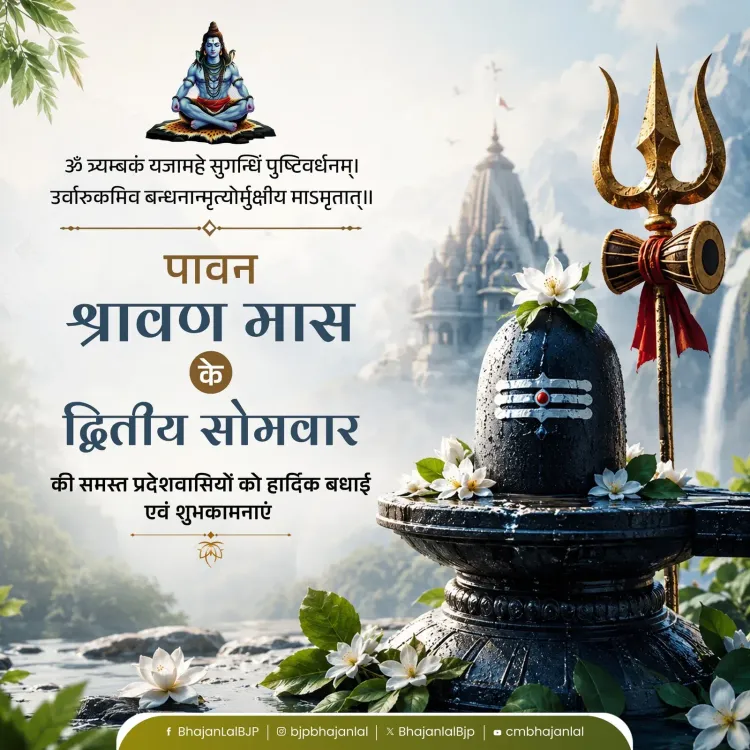
CM Bhajan Lal Sharma greets Rajasthan on Shravana Somwar
Synopsis
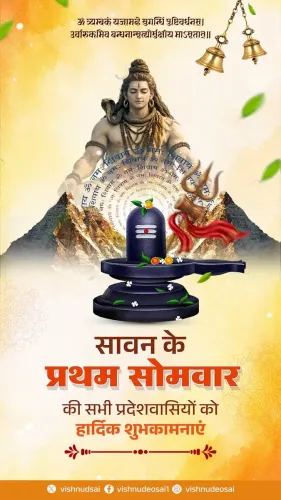
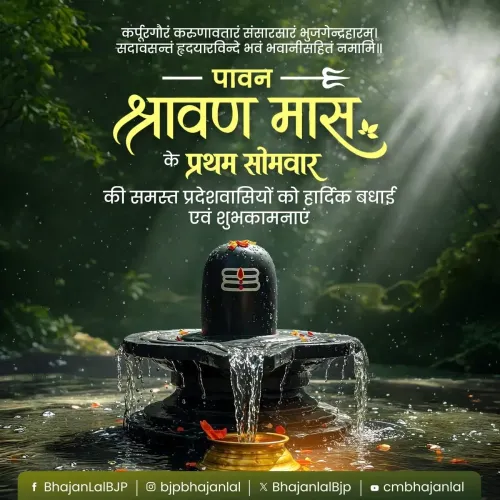
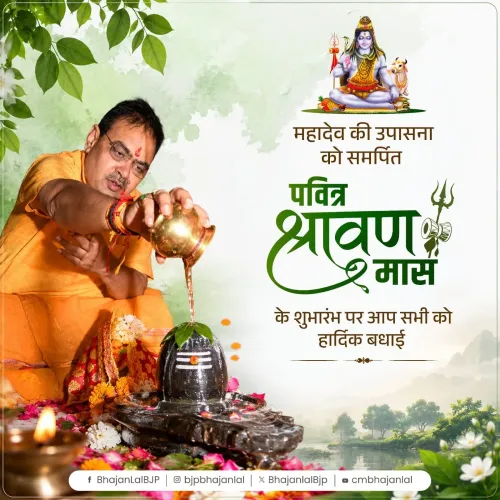
Rajasthan Chief Minister Bhajan Lal Sharma marked the second Shravana Somwar on August 10, 2026, with a heartfelt message invoking Lord Shiva and Mata Parvati's blessings for the state's people, praying for happiness, health, prosperity, and Rajasthan's continued development.
Key Takeaways
Rajasthan CM Bhajan Lal Sharma posted Shravana Somwar greetings on August 10, 2026 .
The message invoked blessings of Lord Shiva (Mahadev) and Mata Parvati for all residents of Rajasthan.
Sharma prayed for happiness, peace, good health, prosperity, and spiritual energy for every family in the state.
He expressed hope that Rajasthan would continue progressing on the path of development and peace.
The post closed with the traditional Shaivite salutation Har-Har Mahadev .
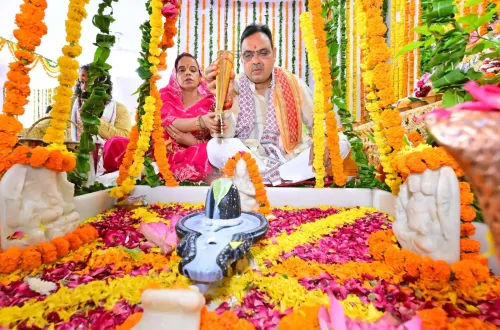
On the second Monday of the sacred month of Shravana, Rajasthan Chief Minister Bhajan Lal Sharma extended warm wishes to the people of the state, invoking the blessings of Lord Shiva and Mata Parvati for peace, health, prosperity, and spiritual energy.
In his message posted on Monday, August 10, 2026, the Chief Minister wrote: 'हर-हर महादेव!' — 'Hail Lord Mahadev!' — closing with the traditional Shaivite salutation that resonates deeply across Rajasthan's devotional culture. He prayed that every family in the state be filled with happiness and good fortune, and that Rajasthan continue to advance on the path of prosperity, peace, and development.
Shravana Somwar and its devotional significance
Shravana, the fifth month of the Hindu lunar calendar, is considered one of the holiest periods of the year for devotees of Lord Shiva. Each Monday — Somwar — within this month draws millions of worshippers to temples across India, particularly in states like Rajasthan where Shaivite traditions run deep. Fasting, ritual bathing, and the offering of water and bel leaves at Shiva shrines mark the day's observance.BJP's cultural outreach through festival greetings
Sharma's message follows a well-established pattern among BJP-governed states, where chief ministers and senior leaders use social media to mark Hindu festivals with greetings that weave together religious sentiment and aspirations for state progress. The practice serves as a form of cultural connect with constituents in Hindi-speaking states, reinforcing the party's identification with mainstream Hindu observance. Sharma, who assumed office in December 2023, has continued this tradition across major festivals since taking charge.Point of View
The messaging subtly fuses cultural belonging with administrative ambition. It reinforces Sharma's positioning as a chief minister rooted in the state's majority religious sensibility, a profile the party has consciously cultivated since his December 2023 appointment. Across BJP-ruled states, such festival messaging has become a consistent, low-friction form of political communication that keeps leaders visible during non-legislative periods.
NationPress
10 Aug 2026
Frequently Asked Questions
What is Shravana Somwar and why is it celebrated?
Shravana Somwar refers to the Mondays that fall within the Hindu lunar month of Shravana, considered especially auspicious for devotees of Lord Shiva. Worshippers fast, visit Shiva temples, and offer ritual items like water and bel leaves as acts of devotion.
What did Rajasthan CM Bhajan Lal Sharma say on Shravana Somwar 2026?
CM Sharma extended heartfelt greetings to all residents of Rajasthan, praying that Lord Shiva and Mata Parvati bless every family with happiness, peace, good health, and prosperity, and that Rajasthan continue to progress on the path of development.
When did Bhajan Lal Sharma become Chief Minister of Rajasthan?
Bhajan Lal Sharma assumed office as Chief Minister of Rajasthan in December 2023 as a BJP leader.
Why do BJP leaders post religious festival greetings on social media?
BJP leaders routinely post festival greetings as part of cultural outreach, particularly in Hindi-speaking states. It reinforces the party's connection with mainstream Hindu observance and keeps leaders visible and relatable to constituents during non-legislative periods.