H-1B grace period elimination: Trump admin reviews rule that could uproot Indian professionals
Synopsis
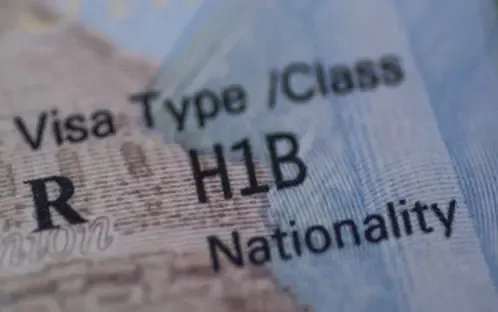
The Trump administration is quietly reviewing a DHS rule that would eliminate the 60-day grace period for H-1B, L-1, and O-1 visa holders after job loss — a change that could force thousands of Indian professionals and their families to leave the US virtually overnight, with no buffer to find new work or settle their affairs.
Key Takeaways
The Trump administration is reviewing a DHS proposal (RIN 1615-AD22) to eliminate the 60-day grace period for laid-off H-1B , L-1 , and O-1 visa holders.
The rule is under Office of Management and Budget (OMB) review and has not yet taken effect ; it must be published in the Federal Register before public comment opens.
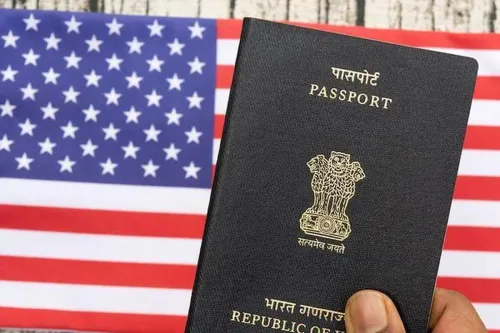
Indian nationals are the largest group of H-1B visa holders in the US, concentrated in technology, engineering, and healthcare .
Former AANHPI Commission member Ajay Bhutoria condemned the proposal as 'inhumane and unworkable' and called for a 180-day grace period instead.
Bhutoria warned that affected workers would have no time to sell homes, manage leases, or transition children out of schools.
The Trump administration is reportedly considering scrapping the 60-day grace period that currently allows laid-off H-1B, L-1, and O-1 visa holders to find new employment or adjust their immigration status while remaining lawfully in the United States. The proposed regulation, identified as RIN 1615-AD22, is under review by the federal Office of Management and Budget (OMB), according to material shared by an Indian-American community leader.
What the Proposed Rule Would Change
Under the current framework, non-immigrant visa holders whose employment is terminated are granted up to 60 days to secure a new job offer, transfer their visa status, or obtain another lawful non-immigrant classification. The proposed Department of Homeland Security (DHS) regulation, if enacted, would eliminate this window entirely — leaving affected workers with no buffer period upon losing their jobs.
The rule has not yet been formally published in the Federal Register, meaning the public comment period has not begun. It remains under regulatory review and has not taken effect.
Who Would Be Affected
Indian nationals stand to bear the sharpest impact. They have historically received the largest proportion of H-1B visas issued by the United States, particularly in technology, engineering, and healthcare sectors. A sudden removal of the grace period would leave thousands of workers — along with their spouses and dependent children — with no legal transition time following an unexpected job loss.
This comes amid a broader tightening of immigration enforcement under the current administration, with several visa-related policy reviews already under way across federal agencies.
Community Leader Condemns the Proposal
Ajay Bhutoria, a former member of the President's Advisory Commission on Asian Americans, Native Hawaiians and Pacific Islanders (AANHPI), has urged the administration to withdraw the proposal immediately.
'I strongly condemn and slam this proposed DHS policy,' Bhutoria said. 'Eliminating the 60-day grace period is inhumane and unworkable. When a worker faces a sudden termination, 60 days was already dangerously short. Stripping away this protection entirely leaves thousands of law-abiding individuals with zero time to wrap up their lives.'
Bhutoria warned that the consequences would extend well beyond the individual worker. 'People will not even have time to sell their homes, manage their leases, or transition their children out of schools,' he said. 'Families will be uprooted overnight, thrown into chaos through no fault of their own after dedicating years of hard work and tax contributions to this country.'
The Case for a 180-Day Extension
Bhutoria argued that the hiring process for specialised roles — particularly in technology and engineering — routinely involves four to five rounds of interviews, background checks, and extensive US Citizenship and Immigration Services (USCIS) paperwork that cannot be compressed into a rigid short window.
'When I served on the President's AANHPI Commission, I specifically authored and pushed a recommendation to extend the grace period to 180 days precisely because the hiring process for specialized technology and engineering roles involves four to five rounds of interviews, background checks, and extensive USCIS paperwork that cannot be squeezed into a rigid window, let alone done overnight,' he said.
He described the measure as a threat to both immigrant families and the competitive capacity of American companies to retain highly skilled workers, calling on South Asian organisations, business leaders, and advocacy groups to prepare public comments if the proposal is formally published.
What Happens Next
The proposal must be formally published in the Federal Register before it can invite public comment or move toward implementation. Industry groups and immigration advocates are expected to mount opposition if and when that publication occurs. The outcome of the OMB review will determine whether the rule advances to that stage.
Point of View
Thoroughly vetted, and tax-paying; a sudden zero-day cliff does not deter abuse, it punishes compliance. The administration has framed its immigration posture around protecting American workers, but gutting the grace period primarily harms companies trying to transfer skilled employees between roles — a process that, by design, takes months. If the rule advances, expect legal challenges and a quiet exodus of talent to Canada and Europe, which have actively courted displaced US tech workers. The real cost will not be measured in visa statistics but in the research labs, hospital wards, and engineering teams that quietly lose their best people.
NationPress
24 Sept 2026
Frequently Asked Questions
What is the H-1B 60-day grace period and why does it matter?
The H-1B 60-day grace period is a federal provision that allows laid-off H-1B, L-1, and O-1 visa holders to remain lawfully in the United States for up to 60 days after losing their job, giving them time to find new employment or adjust their immigration status. Without it, workers could be considered out of status immediately upon termination, forcing them to leave the country with no transition time.
What is RIN 1615-AD22?
RIN 1615-AD22 is the regulatory identification number for a proposed Department of Homeland Security rule currently under review by the Office of Management and Budget. It would eliminate the existing 60-day grace period for non-immigrant visa holders, including those on H-1B, L-1, and O-1 visas, following termination of employment.
Has the rule taken effect yet?
No. As of the reporting date, the proposal is still under regulatory review by the Office of Management and Budget and has not been formally published in the Federal Register. It cannot take effect or invite public comment until it is formally published.
Who would be most affected if the grace period is eliminated?
Indian nationals would be among the most affected, as they historically receive the largest share of H-1B visas issued by the United States, particularly in technology, engineering, and healthcare. Their spouses and dependent children on derivative visas would also lose legal status protections during any transition period.
What alternative has been proposed by community advocates?
Ajay Bhutoria, a former member of the President's Advisory Commission on Asian Americans, Native Hawaiians and Pacific Islanders, has called for a 180-day grace period, arguing that the specialised hiring process for technology and engineering roles routinely involves multiple interview rounds, background checks, and USCIS paperwork that cannot be completed in 60 days, let alone overnight.