CM Bhajan Lal Sharma Inaugurates Pushkar Mela 2026
Synopsis
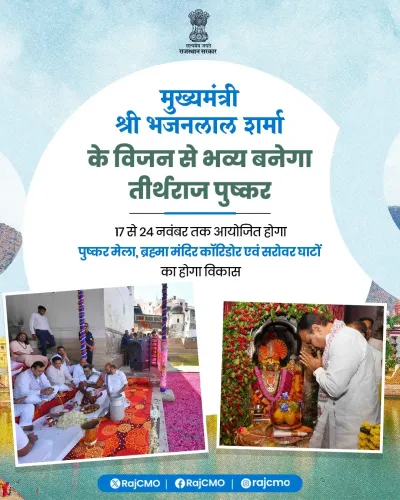
Rajasthan Chief Minister Bhajan Lal Sharma on 17 November 2026 inaugurated the International Pushkar Mela, calling it a celebration of devotion, trade, folk art, and tradition, and welcoming visitors from across India and the world to the historic annual fair.
Key Takeaways
CM Bhajan Lal Sharma formally greeted all participants at the opening of the International Pushkar Mela on 17 November 2026 .
The fair takes place in Pushkar, Ajmer district, Rajasthan — home to India's only major Brahma Temple and the sacred Pushkar Lake .
The mela combines religious pilgrimage, livestock trading, folk art, and international tourism in a single annual event.
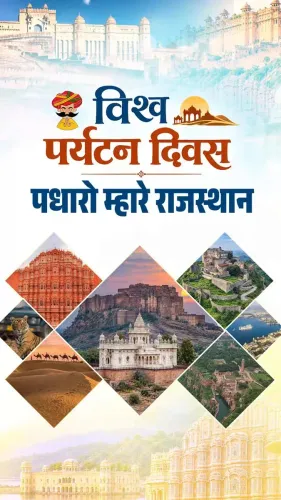
CM Sharma invoked the Rajasthani welcome phrase 'Padharo m'hare des' , addressing pilgrims, livestock herders, traders, and foreign guests.
The state government views the mela as a tool for rural livelihood support and cultural diplomacy on a global platform.
Key metrics to watch this edition include attendance figures, livestock trade volumes , and any new tourism infrastructure announcements .
Every November, a small sacred town in the Thar Desert draws the world to its shores — and Rajasthan Chief Minister Bhajan Lal Sharma marked the opening of the International Pushkar Mela on Tuesday, 17 November 2026, extending warm greetings to pilgrims, livestock traders, artisans, and tourists converging on Pushkar, Ajmer district.
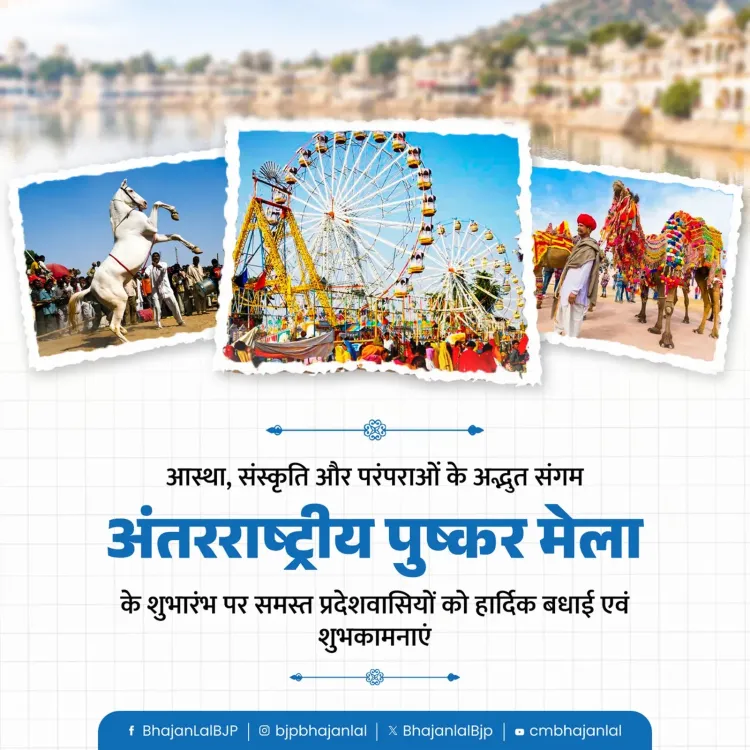
Posting on X in Hindi, CM Sharma called the fair 'bhakti, vyapar, lokkala aur paramparon ka adbhut utsav' — 'a wondrous celebration of devotion, trade, folk art, and traditions' — and extended the state's time-honoured welcome phrase 'Padharo m'hare des' to visitors from every corner of the country and the world.
Pushkar: Where the Sacred and the Commercial Have Always Met
Pushkar is one of Hinduism's holiest towns, anchored by the only major Brahma Temple in India and the revered Pushkar Lake, whose ghats draw hundreds of thousands of pilgrims each year. The annual mela — held on the banks of the lake during the Hindu month of Kartik — is simultaneously a religious congregation and one of India's oldest livestock trading fairs, where camels, horses, and cattle change hands in transactions that sustain pastoral communities across the region.
Artisans, folk performers, acrobats, and international tourists layer the fair with a cultural richness that has made it a fixture on global travel itineraries. That blend of the devotional and the commercial is precisely what CM Sharma highlighted — expressing hope that the annual event would bring 'new prosperity' (nai khushali) to livestock herders and traders while projecting Rajasthan's 'living cultural heritage' on a global stage.
State Policy Behind the Spectacle
Rajasthan governments across administrations have backed the Pushkar Mela as both a cultural-diplomacy asset and a rural-economy lever. The logic is straightforward: a fair that draws international footfall creates demand for local handicrafts, boosts hospitality revenue, and gives pastoral communities a high-visibility marketplace for their livestock. For CM Sharma's BJP government, which took office in December 2023, championing such heritage events also signals a commitment to Rajasthan's distinct cultural identity.
The mela's international profile means foreign tourists, diplomatic guests, and global media arrive alongside domestic pilgrims — giving the state a soft-power platform that few other events in the calendar can match.
Who Comes to Pushkar — and What They're Watching For
The three main communities CM Sharma addressed tell the whole story of what Pushkar Mela actually is: pilgrims seeking a sacred dip in the lake, livestock traders and pastoralists looking for a profitable market, and cultural visitors drawn by folk performances, craft stalls, and the sheer spectacle of tens of thousands of camels on a desert plain.
The numbers that emerge from this edition — attendance, livestock volumes, and any new state tourism infrastructure announcements — will be the real scorecard for whether the fair continues to grow as a global cultural event.
When the world comes looking for Rajasthan, it usually starts at Pushkar — and once again, the gates are open.
Point of View
Rural economy, and global prestige in a single message. For the BJP government in Jaipur, championing an event of this scale reinforces its cultural-nationalist credentials while simultaneously serving a hard developmental purpose: rural livelihoods, pastoral trade, and inbound tourism revenue. The consistent cross-party support for Pushkar Mela over decades shows it has outgrown politics — but the incumbent always captures the brand equity of association. As Rajasthan positions itself as a premier cultural-tourism destination, the mela remains the state's single most potent annual soft-power asset.
NationPress
17 Nov 2026
Frequently Asked Questions
What is the Pushkar Mela and when does it take place?
The Pushkar Mela is an annual international fair held in Pushkar, Ajmer district, Rajasthan, during the Hindu month of Kartik (typically November). It combines religious pilgrimage to Pushkar Lake and the Brahma Temple with one of India's largest livestock markets and folk cultural performances.
Who inaugurated the Pushkar Mela 2026?
Rajasthan Chief Minister Bhajan Lal Sharma marked the opening of the International Pushkar Mela 2026 on 17 November 2026, extending greetings to pilgrims, traders, livestock herders, and tourists on X.
Why is Pushkar significant for Hindus?
Pushkar is home to India's only major Brahma Temple and the sacred Pushkar Lake, whose ghats are considered among the holiest bathing sites in Hinduism. A dip in the lake during Kartik is believed to cleanse sins.
What happens at the Pushkar Mela apart from religious activities?
Beyond pilgrimage, the Pushkar Mela is a major livestock trading fair where camels, horses, and cattle are bought and sold by pastoralists from across Rajasthan. It also features folk performances, craft stalls, and attracts large numbers of international tourists.
What is 'Padharo m'hare des'?
'Padharo m'hare des' is a traditional Rajasthani welcome phrase meaning 'Please come to my land.' It is widely used as a symbol of Rajasthan's renowned hospitality culture and is frequently invoked by officials welcoming guests to the state.