Sachin Pilot pays tribute to Lala Lajpat Rai on death anniversary
Synopsis
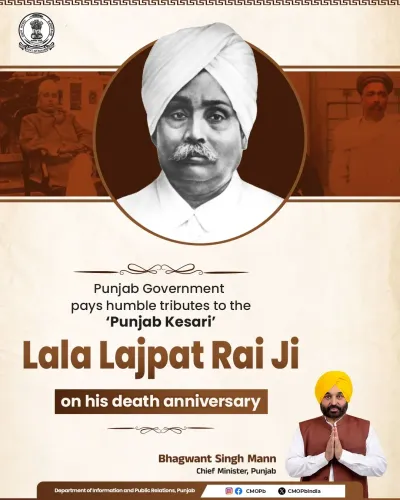
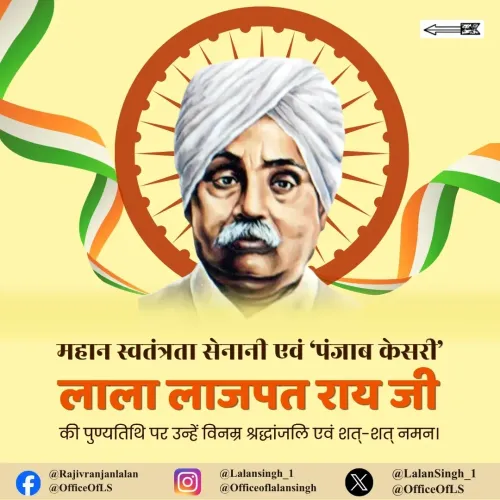
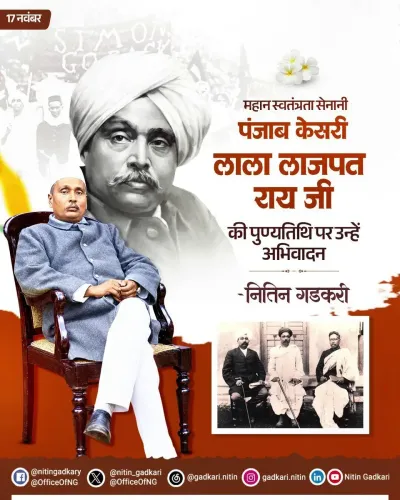
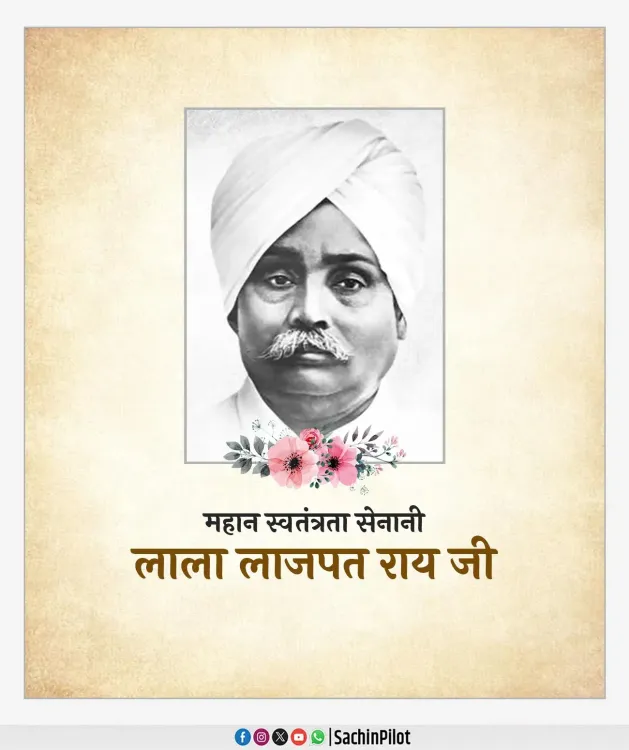
Congress general secretary Sachin Pilot paid tribute to Lala Lajpat Rai, the 'Punjab Kesari', on his 98th death anniversary on 17 November 2026, honouring the independence icon who died from injuries sustained in the 1928 Simon Commission lathi charge in Lahore.
Key Takeaways
Sachin Pilot , Congress general secretary and Chhattisgarh in-charge, posted a tribute to Lala Lajpat Rai on 17 November 2026 .
Lala Lajpat Rai, known as Punjab Kesari , died on 17 November 1928 from injuries sustained in a police lathi charge during protests against the Simon Commission in Lahore.
Rai was a leading member of the Lal-Bal-Pal nationalist trio alongside Tilak and Bipin Chandra Pal.
His death directly inspired revolutionary figures including Bhagat Singh , Sukhdev , and Rajguru .
Rai also founded institutions including the Punjab National Bank ( 1894 ) and the Servants of the People Society ( 1921 ).
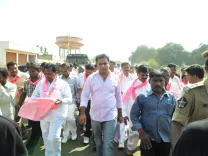
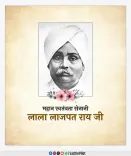
Ninety-eight years after a British lathi charge cut short his life, Lala Lajpat Rai — the man Indians called Punjab Kesari, the Lion of Punjab — is remembered once again on 17 November 2026. Congress leader and general secretary Sachin Pilot offered his respects to the freedom fighter on his death anniversary, joining a chorus of tributes to one of the independence movement's most fearless voices.
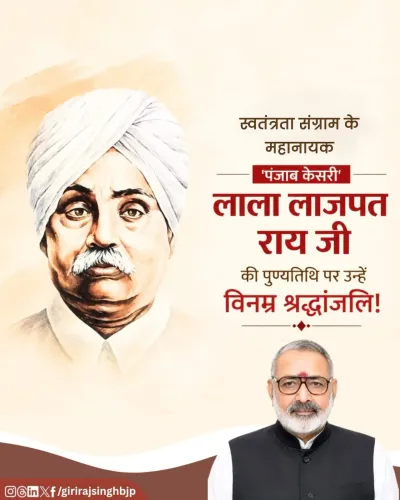
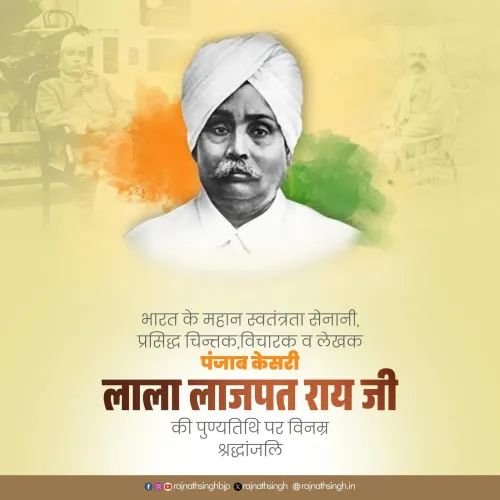
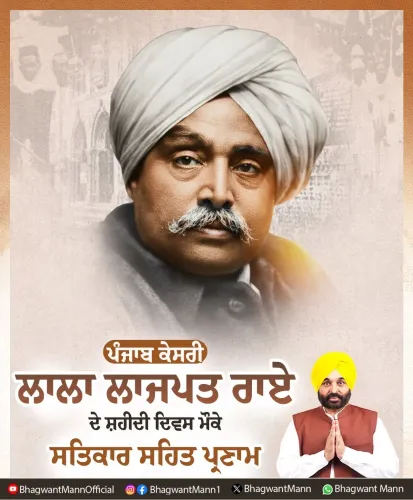
Posting on X, Pilot wrote: 'Mahan swatantrata senani evam Punjab Kesari Lala Lajpat Rai ji ki punyatithi par unhe vinamra shraddhanjali' — 'A humble tribute to the great freedom fighter and Punjab Kesari, Lala Lajpat Rai, on his death anniversary.'
The lathi charge that became a rallying cry
Lala Lajpat Rai's death is not merely a chapter in a history textbook — it is a moment that reordered the course of India's freedom struggle. On 30 October 1928, Rai led a massive procession in Lahore against the all-British Simon Commission, which had arrived in India without a single Indian member to assess the country's constitutional future. Police superintendent James A. Scott ordered a baton charge on the demonstrators. Rai was struck repeatedly on the chest. He never recovered. He died on 17 November 1928. His parting words — widely quoted — were a prophecy: 'Every blow dealt to me today is a nail in the coffin of British imperialism.' They proved true. The incident inflamed national sentiment and directly inspired younger revolutionaries, most famously Bhagat Singh, Sukhdev, and Rajguru, who avenged Rai's death by shooting J.P. Saunders (mistaking him for Scott) in Lahore that December — an act that deepened the revolution's urgency.The 'Lal-Bal-Pal' triumvirate and Rai's political legacy
Rai was one-third of the legendary Lal-Bal-Pal trio — alongside Bal Gangadhar Tilak and Bipin Chandra Pal — the radical nationalist wing that pushed back hard against the moderate politics of the early Indian National Congress. Where moderates petitioned, Lal-Bal-Pal demanded. Rai founded the Punjab National Bank in 1894 and the Servants of the People Society in 1921, institutions built on the belief that independence required economic and social muscle, not just political argument. His title, Punjab Kesari — Lion of Punjab — was earned not by birth but by decades of unyielding defiance.A ritual of remembrance — and what it signals
Across Indian political life, tributes to freedom-era figures on their birth and death anniversaries have become a near-universal practice. Parties of every stripe invoke Rai, Ambedkar, Patel, Bhagat Singh — anchoring contemporary identity in the legitimacy of the independence struggle. For the Congress, whose roots stretch back to the movement itself, such tributes carry an additional layer: a claim to custodianship of that legacy. Sachin Pilot, as the party's Chhattisgarh in-charge and a prominent younger face of the Congress, participating in this remembrance reflects the party's deliberate effort to keep that thread visible and unbroken. Ninety-eight years on, the Lion of Punjab still roars — if only in the words of those who remember why he fell.Point of View
Uncompromising nationalism, making him a figure the Congress must actively reclaim rather than cede to competing narratives. For Sachin Pilot, a younger leader building national profile, participating in this remembrance reinforces his party's lineage claim. The deeper pattern is one of legacy politics: in an era when the independence movement is increasingly contested terrain, who remembers whom — and how loudly — matters.
NationPress
17 Nov 2026
Frequently Asked Questions
Why is Lala Lajpat Rai called Punjab Kesari?
Lala Lajpat Rai earned the title 'Punjab Kesari,' meaning Lion of Punjab, for his fearless leadership during India's independence movement, particularly his defiant protests against British rule in Punjab.
How did Lala Lajpat Rai die?
Lala Lajpat Rai died on 17 November 1928, weeks after sustaining severe injuries from a police lathi charge during a protest against the Simon Commission in Lahore on 30 October 1928.
What was the Simon Commission that Lala Lajpat Rai protested against?
The Simon Commission was an all-British committee sent to India in 1928 to review the country's constitutional framework — it had no Indian members, which triggered widespread protests across India.
Who were the Lal-Bal-Pal trio in India's freedom struggle?
Lal-Bal-Pal refers to the nationalist triumvirate of Lala Lajpat Rai, Bal Gangadhar Tilak, and Bipin Chandra Pal, who formed the radical wing of the Indian National Congress in the early 20th century and pushed for more assertive resistance to British rule.
What institutions did Lala Lajpat Rai found?
Lala Lajpat Rai founded the Punjab National Bank in 1894 and the Servants of the People Society in 1921, both aimed at building Indian economic and social self-reliance.