Sachin Pilot pays tribute to Nehru on death anniversary
Synopsis
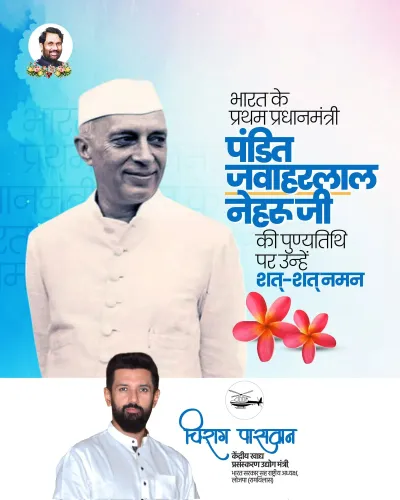
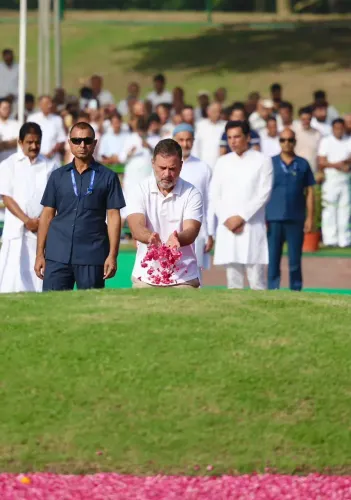
Congress general secretary Sachin Pilot on 27 May 2026 paid tribute to India's first Prime Minister Jawaharlal Nehru on his death anniversary, calling his contributions to the freedom struggle, democratic institutions, and nation-building eternally inspiring and a guide for future generations.
Key Takeaways
Sachin Pilot , Congress general secretary and Chhattisgarh in-charge, posted a tribute to Jawaharlal Nehru on 27 May 2026 .
Nehru passed away on 27 May 1964 after serving as India's Prime Minister for nearly 17 years .
Pilot credited Nehru with contributions spanning the freedom struggle and the construction of a 'strong, prosperous and progressive nation.' He highlighted Nehru's 'deep faith in democratic values' as a lasting source of national gratitude.
Nehru oversaw India's first general elections in 1951-52 and established the Planning Commission in 1950 .
Congress leaders routinely mark 27 May to reaffirm the party's ideological lineage rooted in Nehru's democratic and secular vision.
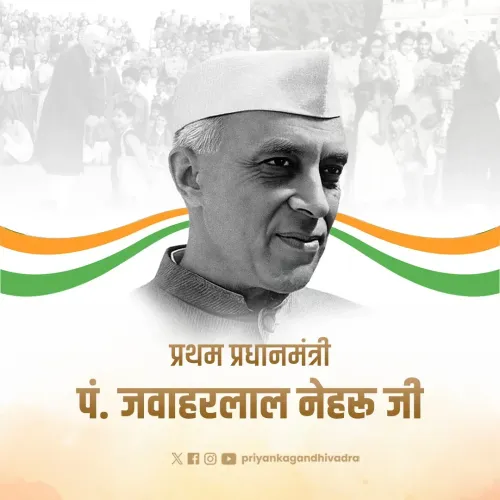
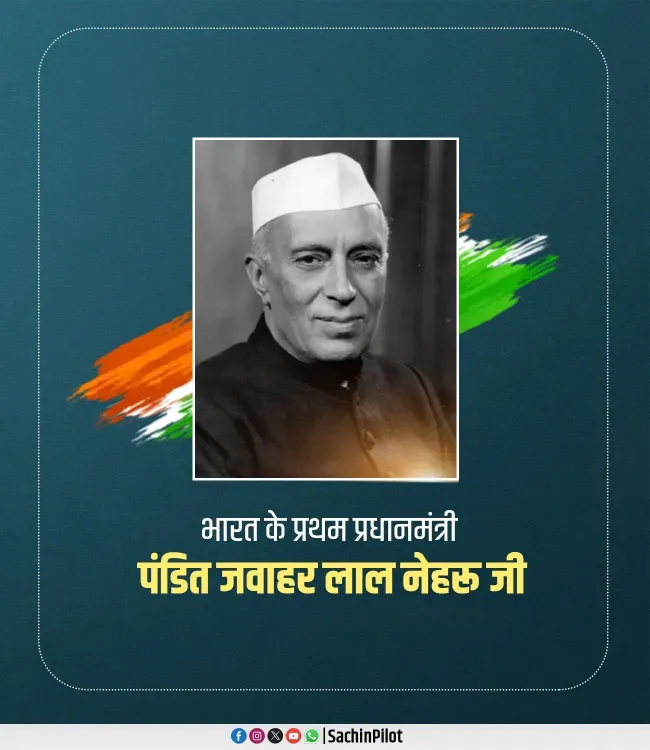
Congress leader and party general secretary Sachin Pilot on Wednesday, 27 May 2026 paid tribute to Jawaharlal Nehru, India's first Prime Minister, on his death anniversary, honouring his role in the freedom struggle and post-independence nation-building.
Posting in Hindi on X, Pilot wrote: 'भारत के प्रथम प्रधानमंत्री स्व. पंडित जवाहरलाल नेहरू जी की पुण्यतिथि पर मैं उन्हें श्रद्धापूर्वक नमन करता हूँ' ('On the death anniversary of India's first Prime Minister, the late Pandit Jawaharlal Nehru, I bow to him with reverence'). He described Nehru's contribution — from the freedom struggle to building a strong, prosperous and progressive nation — as 'eternally inspiring.'
Context
Jawaharlal Nehru passed away on 27 May 1964, having served as Prime Minister from 1947 until his death — a tenure of nearly 17 years. His anniversary, observed annually, draws tributes from across the political spectrum, though it carries particular weight within the Indian National Congress, the party he led and shaped.
Pilot, who serves as Congress general secretary and Chhattisgarh in-charge, emphasised that Nehru's 'deep faith in democratic values' and his 'invaluable contribution to nation-building' would keep the country grateful. He added that Nehru's ideas and life would 'continue to guide generations to come.'
Policy Backdrop
Nehru's institutional legacy is substantial. He oversaw India's first general elections in 1951-52, which established universal adult franchise and cemented parliamentary democracy as the republic's governing framework. The Planning Commission, set up in 1950 under his direction, drove successive Five Year Plans that laid the foundation for India's industrial and social infrastructure.
These institutions remain reference points in contemporary debates on governance, economic policy, and India's democratic character — debates that Congress regularly anchors to the founding-era record.
Stakeholders and Impact
Annual commemorations on 27 May serve as a moment for Congress to reaffirm its ideological lineage and contrast founding-era policies with present-day governance. Political commentators note that such tributes are also a signal to the party's base, reinforcing continuity between Nehru's vision and the Congress's current platform on secularism, democratic institutions, and planned development.
Beyond party politics, Nehru's legacy intersects with ongoing national conversations about the role of historical figures in school curricula, the renaming of institutions, and India's foreign policy orientation — areas where his record continues to be both celebrated and contested.
What's Next
Similar statements from other Congress and opposition leaders are expected throughout the day, as 27 May customarily draws a wave of commemorative posts and public events. As the Congress party approaches state assembly cycles and seeks to consolidate its position in states like Chhattisgarh — where Pilot holds organisational responsibility — invoking Nehru's democratic and developmental legacy is likely to remain a recurring rhetorical anchor in the months ahead.
Point of View
Reinforcing Congress's claim to the founding-era democratic tradition at a time when debates over institutional legacy and historical memory remain politically charged. For Pilot specifically — a leader managing organisational responsibilities in Chhattisgarh and navigating his own standing within the party — publicly anchoring to Nehru signals alignment with the party's ideological core. The broader pattern of Congress leaders marking 27 May collectively functions as a coordinated assertion of continuity, contrasting the party's founding values with contemporary governance. Such commemorations rarely shift opinion on their own, but they sustain a symbolic vocabulary that Congress deploys across electoral and policy debates.
NationPress
10 Oct 2026
Frequently Asked Questions
When did Jawaharlal Nehru die?
Jawaharlal Nehru passed away on 27 May 1964, after serving as India's first Prime Minister from 1947 until his death — a tenure of nearly 17 years.
Why do Congress leaders pay tribute to Nehru on 27 May?
27 May marks Nehru's death anniversary, known as his 'punyatithi.' Congress leaders use the occasion to reaffirm the party's ideological lineage rooted in Nehru's democratic, secular, and nation-building legacy.
What is Sachin Pilot's current role in Congress?
Sachin Pilot currently serves as general secretary of the Indian National Congress and is the party's in-charge for Chhattisgarh. He previously served as Deputy Chief Minister of Rajasthan.
What were Jawaharlal Nehru's key contributions to India?
Nehru oversaw India's first general elections in 1951-52, establishing universal adult franchise, and set up the Planning Commission in 1950 to drive Five Year Plans for industrial and social development. He is credited with shaping parliamentary democracy and modern India's institutional framework.
What did Sachin Pilot say about Nehru on his death anniversary in 2026?
Pilot said Nehru's contribution from the freedom struggle to building a strong, prosperous and progressive nation was 'eternally inspiring,' and that the country would always be grateful for his deep faith in democratic values and his invaluable role in nation-building.