Giriraj Singh pays tribute to Lala Lajpat Rai on death anniversary
Synopsis
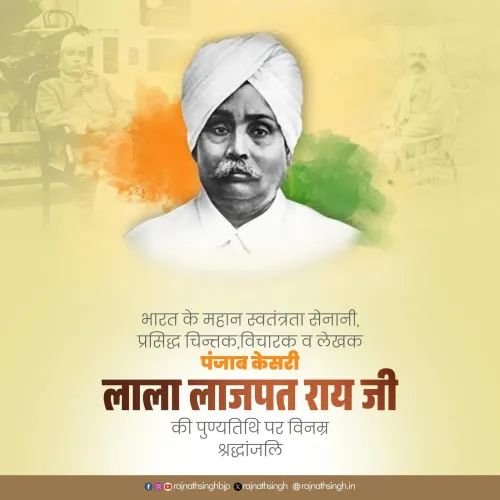
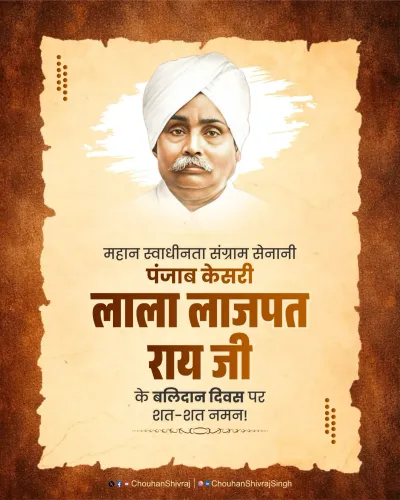
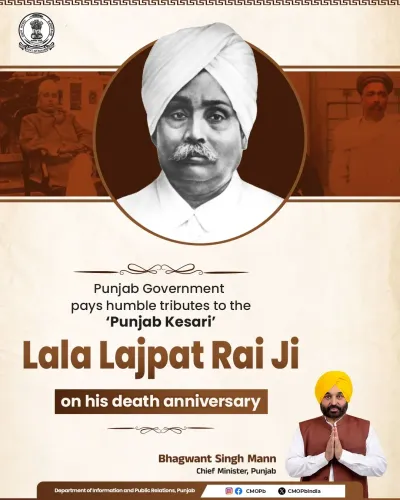
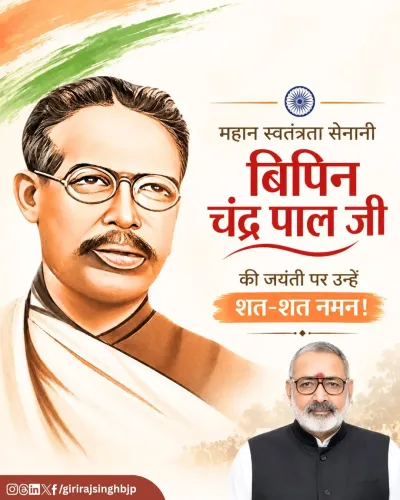
Union Textiles Minister Giriraj Singh on 17 November 2026 paid solemn tribute to Lala Lajpat Rai, the 'Punjab Kesari', on his death anniversary, honouring the nationalist leader who died in 1928 from injuries sustained in the Simon Commission protests in Lahore.
Key Takeaways
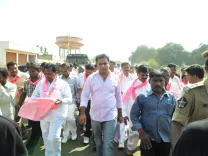
Giriraj Singh , Union Textiles Minister and BJP MP from Begusarai , paid tribute to Lala Lajpat Rai on 17 November 2026 .
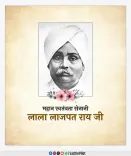
Lala Lajpat Rai (1865–1928), known as 'Punjab Kesari' , was a towering figure of India's independence movement and part of the Lal-Bal-Pal trio.
Rai died on 17 November 1928 from injuries sustained during a lathi charge by colonial police in Lahore during protests against the Simon Commission .
Singh invoked Rai's 'sacrifice, martyrdom, and love for the nation' as a continuing guide for the country.
The tribute follows a consistent BJP practice of publicly commemorating independence-era nationalist icons on their anniversaries.
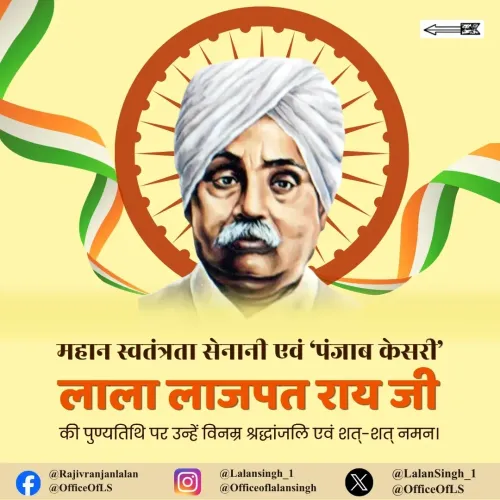
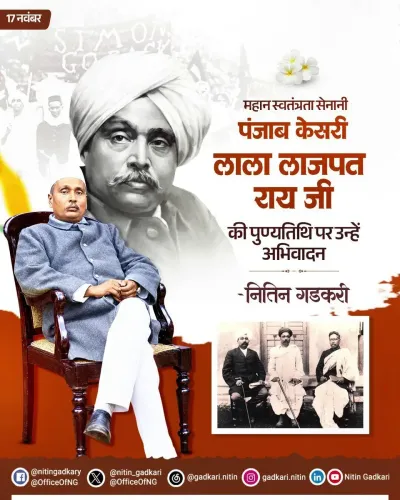
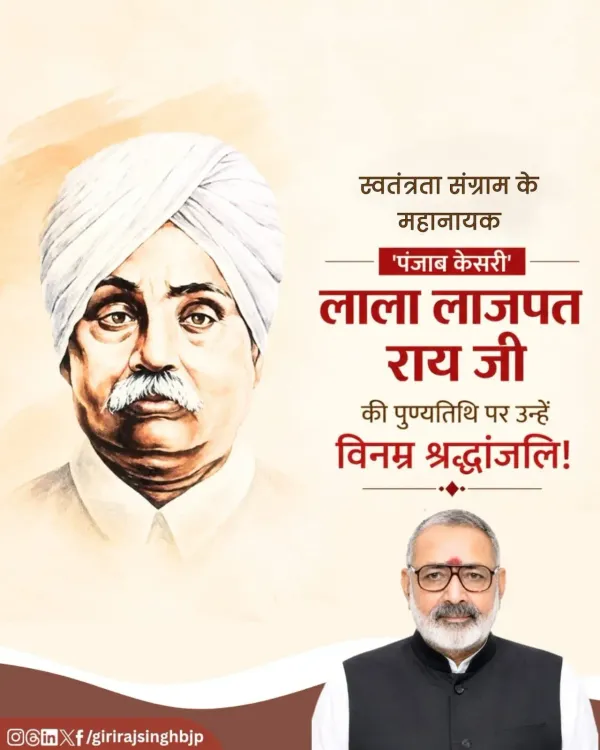
A freedom fighter who stared down a colonial baton charge and paid for it with his life — Union Textiles Minister Giriraj Singh marked the death anniversary of 'Punjab Kesari' Lala Lajpat Rai on Tuesday, 17 November 2026, with a solemn tribute on X, bowing to the nationalist icon's sacrifice and enduring legacy.
Posting in Hindi, the senior BJP leader wrote: 'भारतीय स्वतंत्रता संग्राम के महानायक, पंजाब केसरी लाला लाजपत राय जी की पुण्यतिथि पर उन्हें कोटि-कोटि नमन एवं विनम्र श्रद्धांजलि।' — 'On the death anniversary of the great hero of India's freedom struggle, Punjab Kesari Lala Lajpat Rai, I offer my countless salutations and humble homage.' He added that Rai's sacrifice, martyrdom, and love for the nation 'will always guide us.'
Who was Punjab Kesari — and why the baton mattered
Lala Lajpat Rai was born in 1865 in Punjab and rose to become one of the most formidable voices of the Indian independence movement. Alongside Bal Gangadhar Tilak and Bipin Chandra Pal, he formed the legendary Lal-Bal-Pal trio — a trident of radical nationalism that electrified the Congress in the early twentieth century and pushed for outright self-rule at a time when moderation still dominated the mainstream.
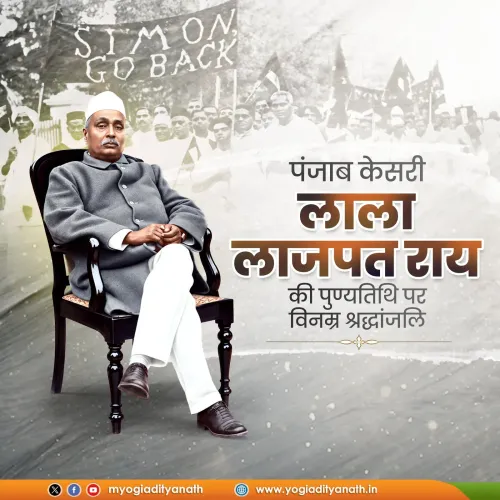
His death is inseparable from a single violent afternoon. In October 1928, Rai led a protest march in Lahore against the Simon Commission — a British parliamentary body that had arrived to review India's constitutional future with not a single Indian member on its panel. Colonial police charged the demonstrators with lathis. Rai was struck repeatedly. He died on 17 November 1928, and before his death reportedly declared that every blow landed on him was a nail in the coffin of the British Empire. The words have echoed across nearly a century.
A pattern of public remembrance
The tribute from Giriraj Singh, a Lok Sabha MP from Begusarai, Bihar, follows a consistent practice by BJP leaders of marking the anniversaries of independence-era icons on social media. These commemorations serve both as acts of public memory and as signals of the party's framing of nationalist history. Rai, whose ideological journey spanned social reform, Hindu revivalism, and anti-colonial agitation, holds a particular resonance in that canon.
The death anniversary falls every year on 17 November — the same date Rai died in 1928 from injuries sustained in the Lahore lathi charge. No specific policy announcement accompanied today's tribute.
Ninety-eight years on, the name Punjab Kesari still commands a full stop. That, by itself, is a kind of victory.
Point of View
Assertive nationalist tradition, not merely a post-Partition organisation. Lala Lajpat Rai's legacy is particularly layered: a social reformer, a Hindu revivalist, and an anti-colonial agitator whose Lal-Bal-Pal alliance represented radical nationalism's first serious challenge to moderate Congress leadership. By invoking Rai's martyrdom, figures like Giriraj Singh position the BJP within a longer arc of sacrifice and national assertion. These gestures carry no legislative weight, but they are far from incidental — they are the daily vocabulary of historical ownership in Indian politics.
NationPress
17 Nov 2026
Frequently Asked Questions
Why is 17 November significant for Lala Lajpat Rai?
17 November is the death anniversary of Lala Lajpat Rai , who died on this date in 1928 from injuries sustained during a lathi charge by colonial police in Lahore while he led protests against the Simon Commission.
Who was Lala Lajpat Rai and why is he called Punjab Kesari?
Lala Lajpat Rai (1865–1928) was a prominent Indian nationalist leader from Punjab. He earned the title 'Punjab Kesari' — meaning 'Lion of Punjab' — for his fierce and fearless leadership in the independence movement.
What was the Simon Commission and why did Lala Lajpat Rai protest it?
The Simon Commission was a British parliamentary body set up in 1927 to review India's constitutional arrangements. Indians protested it because the commission had no Indian members, making it a symbol of colonial exclusion. Lala Lajpat Rai led the protest march in Lahore in October 1928 that resulted in the lathi charge that fatally injured him.
Who are the Lal-Bal-Pal trio?
The Lal-Bal-Pal trio refers to Lala Lajpat Rai , Bal Gangadhar Tilak , and Bipin Chandra Pal — three radical nationalist leaders of the early twentieth century who pushed the Indian independence movement toward assertive demands for self-rule.
What did Giriraj Singh say about Lala Lajpat Rai?
Union Textiles Minister Giriraj Singh offered 'countless salutations and humble homage' to Lala Lajpat Rai on his death anniversary on 17 November 2026 , stating that Rai's sacrifice, martyrdom, and love for the nation 'will always guide us.'