CM Bhajan Lal Sharma Joins Anti-Drug Rally in Punjab's Mamdot
Synopsis
Rajasthan CM Bhajan Lal Sharma joined a Nasha Virodhi Yatra rally in Firozpur's Mamdot on 27 September 2026, attacking AAP's Punjab government for failing Punjab's drug-afflicted youth while endorsing PM Modi's Nasha Mukt Bharat Abhiyan as the credible counter-force.
Key Takeaways
Rajasthan CM Bhajan Lal Sharma addressed a Nasha Virodhi Yatra rally in Mamdot, Firozpur, Punjab on 27 September 2026 .
Sharma directly criticised Punjab's Aam Aadmi Party government for 'failing to impose an effective curb on drugs.' He framed the crisis as a direct threat to Punjab's youth and future generations , demanding concrete results over political claims.
The event is tied to the Nasha Mukt Bharat Abhiyan , launched in 2020 by the Ministry of Social Justice and Empowerment.
Sharma invoked Prime Minister Narendra Modi 's leadership in dismantling drug networks at the national level.
The campaign calls for converting anti-drug resolve into a mass people's movement ( janaandolan ).
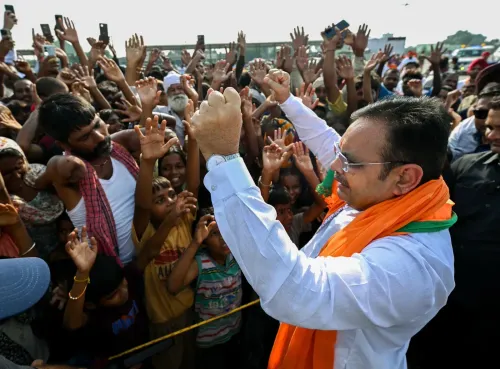
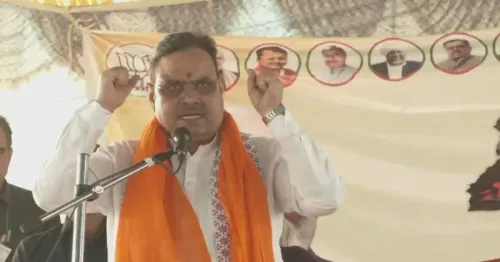
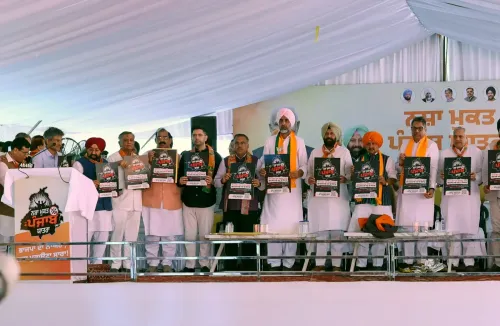
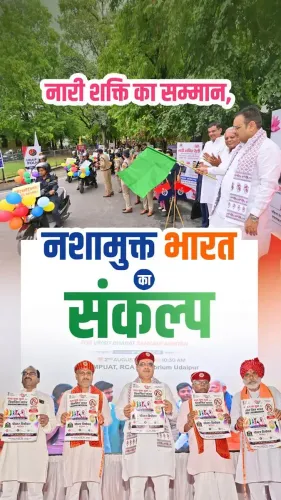
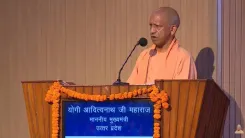
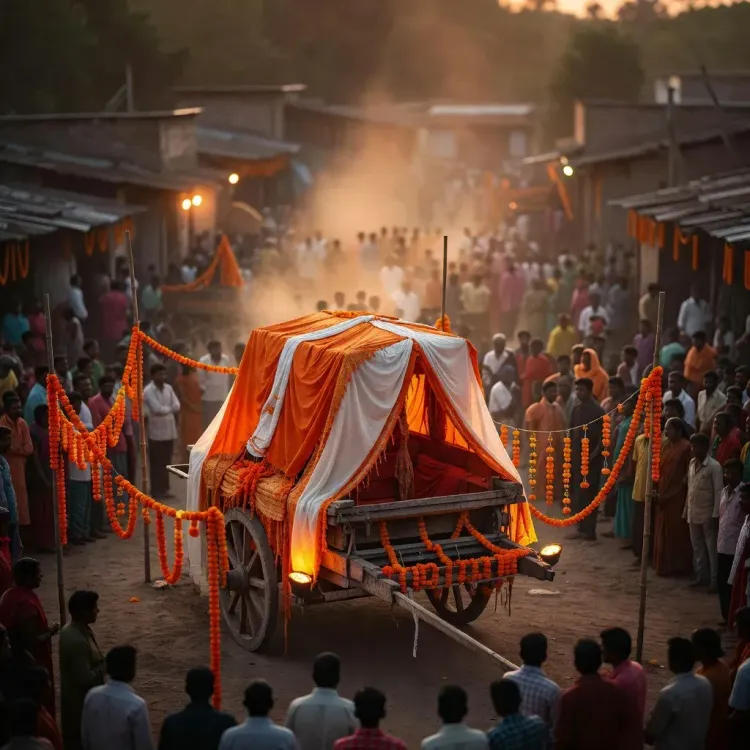
Punjab's drug crisis has a new visitor from across the border — and he came with pointed questions. Rajasthan Chief Minister Bhajan Lal Sharma addressed a public rally in Mamdot, Firozpur, on Sunday, 27 September 2026, under the banner of the Nasha Virodhi Yatra: Nasha Mukt Punjab campaign, and also participated in the ceremonial anti-drug chariot procession (ratha yatra) that anchored the event.
Sharma's Direct Attack on AAP's Punjab Record
Sharma did not mince words. Addressing the gathering, he declared that drug abuse is a 'grave challenge for Punjab's present and future generations,' and squarely blamed the Aam Aadmi Party government in Punjab for failing to put an effective stop to it. His words: the state government has 'failed to impose an effective curb on drugs,' and that failure is 'directly affecting the future of Punjab's youth.'
The critique lands in a state where the drug problem has been a recurring political flashpoint. Punjab's proximity to international narcotics trafficking routes — and the social wreckage that has followed — has made it a live issue for families, schools, and law enforcement for decades. Sharma's framing was unambiguous: claims are not enough; 'concrete action and effective results' are what the moment demands.
The Nasha Mukt Bharat Framework Behind the Yatra
The rally draws its formal backing from the Nasha Mukt Bharat Abhiyan, launched in 2020 by the Ministry of Social Justice and Empowerment as a nationwide, district-level campaign combining awareness drives with enforcement coordination. Sharma invoked Prime Minister Narendra Modi directly, stating that the central government — under Modi's leadership — is 'working with resolve to dismantle drug networks and realise the vision of a drug-free India.'
The Abhiyan has focused especially on districts with high vulnerability, and border states like Punjab sit at the sharp end of that map. By stepping into Firozpur — deep in Punjab's border belt — Sharma made visible the BJP's calculation that the Centre's counter-narcotics push can and should be contrasted against what the party frames as state-level inaction.
A Call to Turn Resolve into a People's Movement
Sharma closed on a mobilisation note, urging citizens to convert the anti-drug resolve into a janaandolan — a mass people's movement — and 'play their role in building a healthy, empowered, safe and drug-free society.' The hashtags #NashaMuktAbhiyan and #NashaMuktPunjabYatra amplified the message digitally.
The pattern here is familiar: BJP leaders from neighbouring states have periodically used Punjab's drug challenge as a platform to highlight the contrast between central initiative and state government performance under AAP. What distinguishes today's event is the ground-level visibility — a sitting Chief Minister, a chariot procession, a public rally in a border district — translating a national campaign into local political theatre with real stakes for real families.
The question Punjab's youth and their families are watching is not which party speaks loudest against drugs — it is which level of government delivers a measurable drop in supply and addiction. That answer is still being written.
Point of View
Giving the critique geographical credibility beyond sloganeering. This fits a broader BJP pattern of converting central welfare schemes into state-level accountability campaigns against opposition governments. Whether the optics translate into policy pressure or voter movement depends on whether the Centre's anti-narcotics enforcement produces measurable outcomes on the ground.
NationPress
27 Sept 2026
Frequently Asked Questions
Why did Rajasthan CM Bhajan Lal Sharma attend an event in Punjab?
Sharma participated in the Nasha Virodhi Yatra anti-drug rally in Firozpur's Mamdot as part of the BJP-backed Nasha Mukt Bharat Abhiyan, using the platform to criticise Punjab's AAP government for its handling of the drug crisis.
What is the Nasha Mukt Bharat Abhiyan?
The Nasha Mukt Bharat Abhiyan was launched in 2020 by the Ministry of Social Justice and Empowerment to combat substance abuse nationwide through district-level awareness drives and coordinated enforcement, with special focus on high-vulnerability regions.
What did Bhajan Lal Sharma say about Punjab's drug problem?
Sharma stated that the AAP government in Punjab has failed to impose an effective curb on drugs and that this failure is directly harming the future of Punjab's youth, calling for concrete action rather than mere claims.
What is the Nasha Virodhi Yatra in Punjab?
The Nasha Virodhi Yatra — or anti-drug journey — is a campaign-style initiative combining public rallies and chariot processions across Punjab to build awareness and political pressure around the state's longstanding drug abuse crisis.
How does Punjab's drug crisis connect to BJP-AAP political rivalry?
BJP leaders from states including Rajasthan have repeatedly highlighted Punjab's drug problem to contrast the AAP state government's record with the central government's Nasha Mukt Bharat framework, making it a sustained axis of political competition in the state.