IRGC seizes second US REMUS 600 drone sub in Strait of Hormuz
Synopsis
Iran's IRGC has now seized two US underwater drones in the Strait of Hormuz within weeks, identifying the latest as a REMUS 600. With Tehran blocking US- and Israel-affiliated vessels since February and its army chief warning of further strikes, the standoff at the world's most critical oil chokepoint is deepening — and the data recovered from these AUVs could hand Iran significant intelligence advantages.
Key Takeaways
Iran's IRGC navy announced on 27 September 2026 the capture of a second US Army autonomous underwater vehicle in the Strait of Hormuz .
The seized vessel was identified as a REMUS 600 AUV, which has been handed to Iranian specialists for data recovery .
Iran captured a first US drone sub — identified as a 'Dive-LD' — earlier this month at the entrance of the same waterway.
Iran has barred passage of US- and Israel-affiliated vessels through the Strait of Hormuz since 28 February , following reported joint US-Israeli strikes on Iranian territory.
Army Chief Amir Hatami declared on Sunday the war with the US and Israel 'is not over' and warned of further 'crushing blows.' The Strait of Hormuz carries roughly 20% of globally traded oil, making the ongoing standoff a live risk to energy markets.
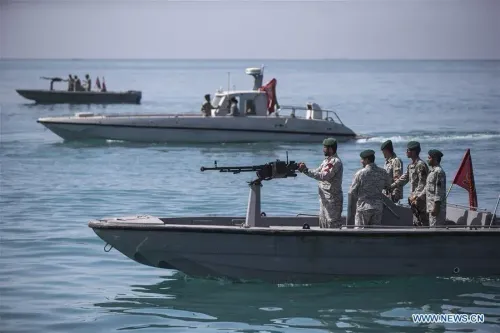
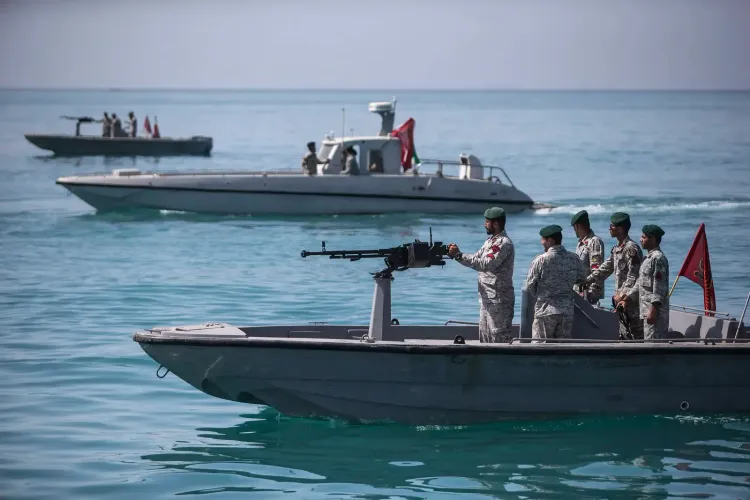
The navy of Iran's Islamic Revolutionary Guard Corps (IRGC) announced on Sunday, 27 September 2026 that its forces have seized a second US Army unmanned underwater vehicle in the Strait of Hormuz, escalating an already tense standoff over one of the world's most critical maritime chokepoints. The vessel, identified as a REMUS 600 autonomous underwater vehicle (AUV), has been handed over to Iranian specialists for data recovery.
How the Capture Unfolded
According to a statement carried by Sepah News, the IRGC's official outlet, the REMUS 600 was conducting what Iran described as 'espionage' activities in the strait when it was intercepted through a 'coordinated and complex operation with intelligence dominance and electronic warfare.' The IRGC navy did not disclose the precise location within the waterway or the timestamp of the interception.
This is the second such seizure in weeks. Earlier this month, the IRGC announced capturing what it called one of the US Army's 'most modern, smart' unmanned submarines at the entrance of the Strait of Hormuz, identifying it as a 'Dive-LD.' The back-to-back seizures suggest Iran has developed — or believes it has developed — a repeatable capability to detect and neutralise US underwater surveillance assets in the region.
Iran's Hardened Stance on the Strait
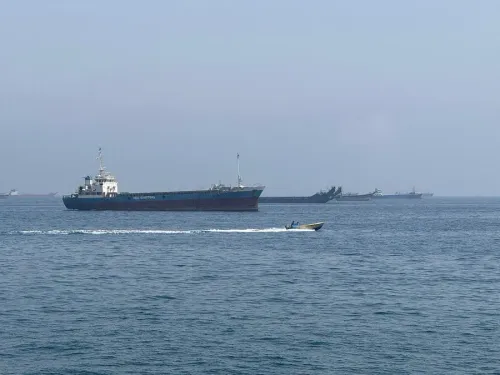
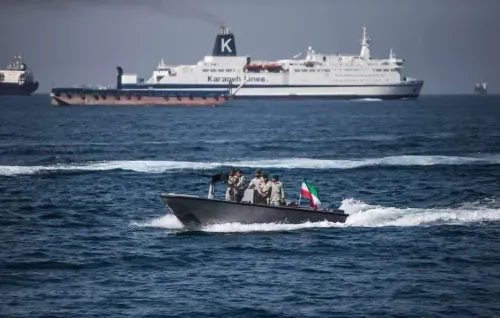
Iran tightened its grip on the Strait of Hormuz on 28 February, barring safe passage to vessels belonging to or affiliated with Israel and the United States following what Tehran described as joint US-Israeli strikes on Iranian territory. The IRGC navy reiterated on Sunday that the strait is effectively closed to such vessels, stating: 'We are taking decisive and incessant actions against dangerous movements and passage through unauthorised routes in the waterway.'
Notably, the Strait of Hormuz carries roughly 20% of the world's traded oil, making any sustained disruption there a matter of acute concern for global energy markets. Repeated IRGC actions in the waterway since February have already rattled shipping insurers and tanker operators.
Army Chief Warns of Further Strikes
Separately, Chief Commander of Iran's Army Amir Hatami declared on Sunday that the conflict with the United States and Israel has not concluded. Speaking at a national festival in Tehran, Hatami said: 'The war is not over ... Although the aggressive enemy has suffered heavy blows, it must remain prepared to receive further crushing blows from Iran's armed forces,' according to the semi-official Tasnim news agency.
Hatami also urged neighbouring states to reconsider alignment with Washington, arguing that cooperation with the United States 'fails to guarantee their security' and that regional stability must be built by the nations of the region themselves — a message directed, analysts suggest, at Gulf states that host US military assets.
Geopolitical Significance
The REMUS 600 is a US Navy-associated AUV used for oceanographic surveys, mine countermeasures, and — according to open-source defence literature — intelligence gathering in contested waters. Its capture, if confirmed and undamaged, would theoretically give Iranian engineers access to its navigation, sensor, and communications architecture. Washington has not publicly commented on the claimed seizure.
This comes amid broader US-Iran tensions that have intensified since the reported joint US-Israeli strikes on Iranian soil. With the IRGC now claiming two AUV captures and the army chief signalling continued military posture, the Strait of Hormuz remains a flashpoint with direct consequences for global energy flows and regional security architecture.
Point of View
If extracted intact, could expose US underwater surveillance patterns in the Gulf at a moment when the broader US-Iran-Israel conflict is unresolved. Mainstream coverage has focused on the headline seizure; the more consequential story is what Iranian engineers do next with the hardware. Meanwhile, Hatami's remarks about regional states distancing themselves from the US are a direct play for Gulf fence-sitters — a diplomatic dimension that deserves at least as much attention as the drone capture itself.
NationPress
27 Sept 2026
Frequently Asked Questions
What is the REMUS 600 drone submarine seized by Iran?
The REMUS 600 is a US Navy-associated autonomous underwater vehicle (AUV) used for oceanographic surveys, mine countermeasures, and intelligence gathering. Iran's IRGC navy claimed on 27 September 2026 to have captured one in the Strait of Hormuz during what it described as a 'coordinated and complex operation with intelligence dominance and electronic warfare.'
Is this the first time Iran has seized a US underwater drone in the Strait of Hormuz?
No. Earlier in September 2026, the IRGC announced it had captured a separate US AUV — identified as a 'Dive-LD' — at the entrance of the Strait of Hormuz. The REMUS 600 seizure is the second such incident within the same month.
Why has Iran blocked the Strait of Hormuz to US and Israeli vessels?
Iran tightened its grip on the strait on 28 February, barring vessels belonging to or affiliated with Israel and the United States. Tehran cited joint US-Israeli strikes on Iranian territory as the justification for the blockade.
What did Iran's Army Chief say about the ongoing conflict?
Chief Commander Amir Hatami said on Sunday at a festival in Tehran that the war imposed by the US and Israel 'is not over' and warned that the 'enemy' should be prepared for 'further crushing blows' from Iranian armed forces, according to the Tasnim news agency.
Why does the Strait of Hormuz situation matter beyond the region?
The Strait of Hormuz is the transit point for roughly 20% of the world's traded oil. Sustained disruption — through blockades, seizures, or military incidents — directly affects global energy supply chains, shipping insurance costs, and crude oil prices, with knock-on effects for economies worldwide including India.