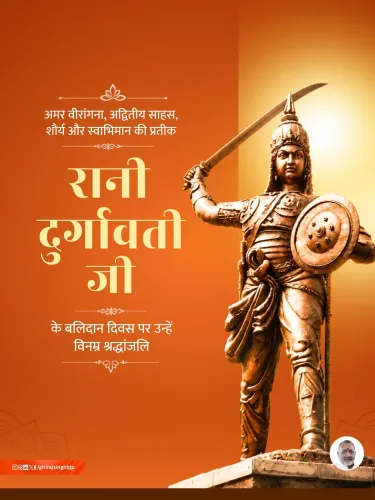
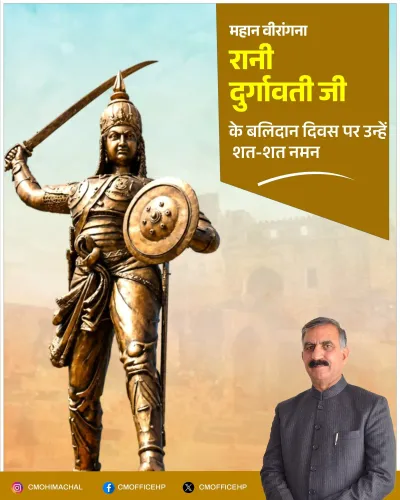
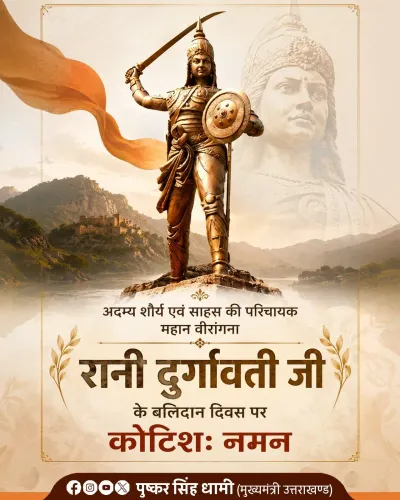
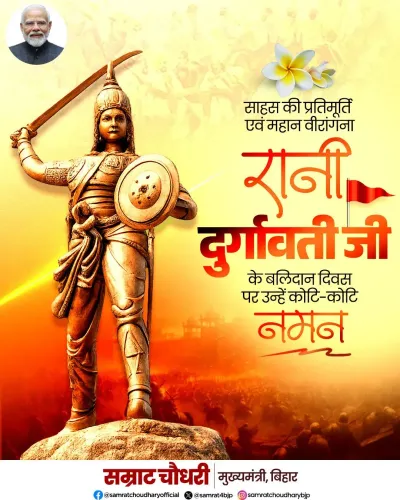
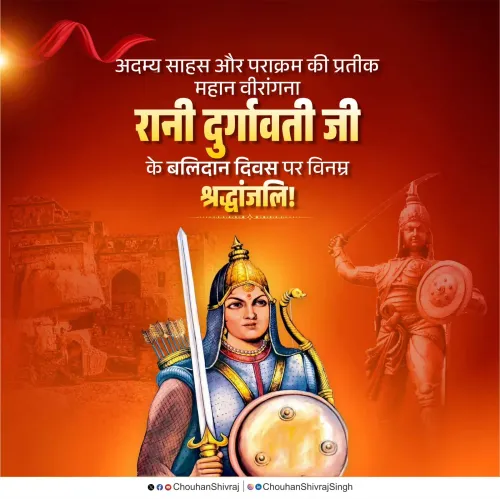
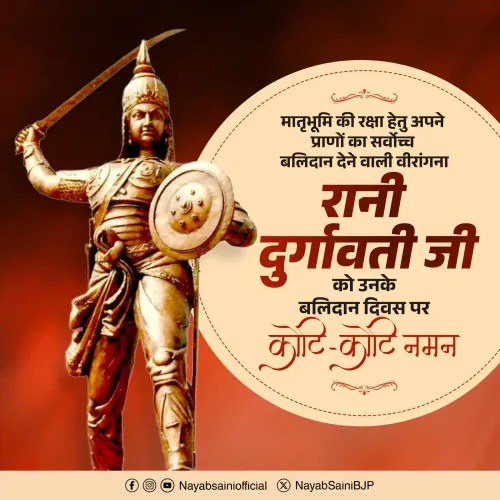
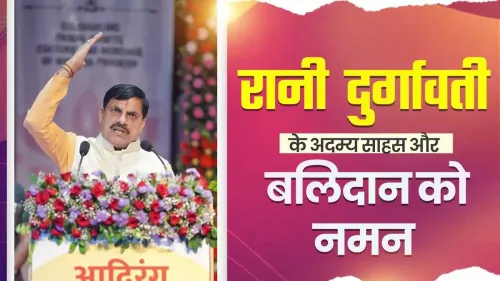
CM Bhajan Lal Sharma pays tribute to Rani Durgavati on Balidan Diwas
Synopsis
Rajasthan Chief Minister Bhajan Lal Sharma on 24 June 2026 paid tribute to Rani Durgavati on her Balidan Diwas, calling the 16th-century Gondwana queen a symbol of sacrifice, valour, and self-respect who resisted Mughal forces and died in battle in 1564.
Key Takeaways
Rajasthan CM Bhajan Lal Sharma paid tribute to Rani Durgavati on her Balidan Diwas, 24 June 2026 .
He described her as a symbol of sacrifice, valour, and self-respect whose courage will inspire patriotism for generations.
Rani Durgavati was the queen of the Gondwana kingdom (present-day Madhya Pradesh and Chhattisgarh) and died in battle on 24 June 1564 resisting Mughal general Asaf Khan .
She is especially revered by tribal communities across central India as an ancestral symbol of resistance and dignity.
BJP-governed states regularly mark death anniversaries of pre-colonial rulers as part of a broader pattern of highlighting regional martial heritage.
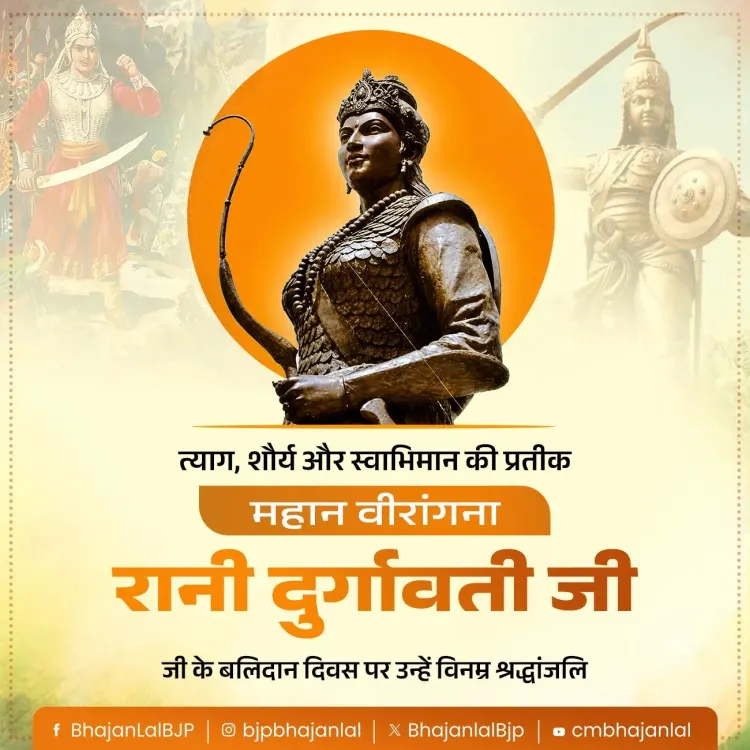
Rajasthan Chief Minister Bhajan Lal Sharma on Wednesday, 24 June 2026 paid tribute to Rani Durgavati, the 16th-century queen of the Gondwana kingdom, on her Balidan Diwas (martyrdom anniversary), honouring her as a symbol of sacrifice, valour, and self-respect.
Context
In his post, Sharma described Rani Durgavati as 'tyag, shaurya aur swabhiman ki pratik' ('a symbol of sacrifice, valour, and self-respect'), offering a humble tribute on her martyrdom anniversary. He wrote that her supreme sacrifice and unparalleled courage in defence of the motherland 'will continue to inspire patriotism and self-respect for ages to come.'
Rani Durgavati ruled the Gondwana kingdom — spanning parts of present-day Madhya Pradesh and Chhattisgarh — and died in battle on 24 June 1564 while resisting the advancing Mughal army under general Asaf Khan. Refusing to surrender, she is said to have taken her own life on the battlefield to avoid capture, an act that has cemented her place in the pantheon of Indian martial heroines.
Policy Backdrop
Tributes to pre-colonial rulers who resisted Mughal or other external forces have become a recurring feature of the political calendar for BJP-governed states. State leaders regularly use such anniversaries to foreground narratives of indigenous valour, cultural continuity, and national pride.
Rani Durgavati holds particular resonance for tribal communities across central India, where she is revered as a protector queen. Her legacy has featured in educational curricula and state-sponsored cultural events in Madhya Pradesh, the region most directly associated with her reign.
Stakeholders and Impact
The tribute carries symbolic weight for tribal communities across Madhya Pradesh, Chhattisgarh, and Rajasthan, for whom Rani Durgavati represents ancestral resistance and dignity. Public commemorations on her Balidan Diwas often draw participation from Gond community organisations and state cultural bodies.
For the broader public, such tributes reinforce a shared historical memory of regional martial heritage. Bhajan Lal Sharma's message, issued from his official handle, signals the Rajasthan government's alignment with this commemorative tradition, even as the queen's primary historical geography lies in neighbouring states.
What's Next
State governments in Madhya Pradesh and Chhattisgarh are expected to hold official commemorations on 24 June each year, and observers will watch whether Rajasthan formalises similar events under the current administration. References to Rani Durgavati in school curricula reviews or cultural policy announcements in BJP-ruled states would mark a deeper institutional embedding of her legacy beyond annual social-media tributes.
Point of View
Anti-Mughal figures as icons of national pride. The choice to mark her Balidan Diwas from a Rajasthan platform — even though her kingdom lay in Madhya Pradesh and Chhattisgarh — signals an intent to broaden the cultural resonance of such figures beyond their immediate geography. For tribal communities, who regard Durgavati as a protector queen, such tributes from senior leaders carry both symbolic validation and potential electoral significance. The pattern suggests these commemorations are evolving from social-media gestures into a sustained political-cultural project.
NationPress
24 Jun 2026
Frequently Asked Questions
Who was Rani Durgavati?
Rani Durgavati was a 16th-century queen of the Gondwana kingdom in central India. She died on 24 June 1564 in battle against the Mughal army led by general Asaf Khan, choosing death over surrender, and is remembered as a symbol of courage and resistance.
When is Rani Durgavati Balidan Diwas observed?
Rani Durgavati Balidan Diwas is observed on 24 June each year, marking the anniversary of her death in battle in 1564.
Why did Bhajan Lal Sharma pay tribute to Rani Durgavati?
Rajasthan Chief Minister Bhajan Lal Sharma paid tribute on her Balidan Diwas, honouring her as a symbol of sacrifice, valour, and self-respect who gave her life defending the motherland against Mughal forces.
Where did Rani Durgavati rule?
Rani Durgavati ruled the Gondwana kingdom, which spanned parts of present-day Madhya Pradesh and Chhattisgarh in central India.
Why is Rani Durgavati important to tribal communities?
Rani Durgavati is revered by Gond and other tribal communities across central India as an ancestral queen who defended her land and people. Her legacy is celebrated through cultural events, state commemorations, and educational curricula in the region.