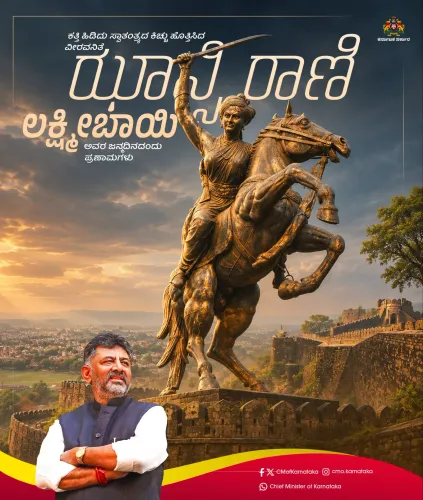
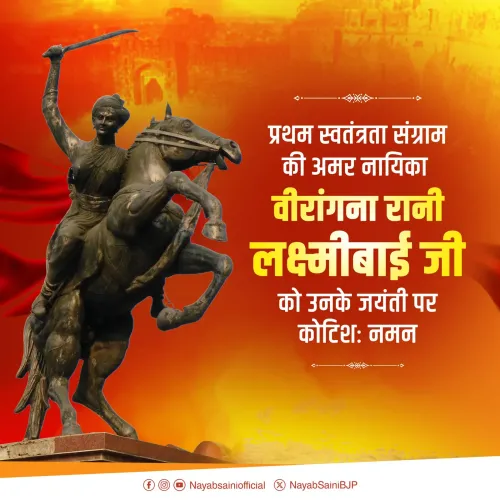
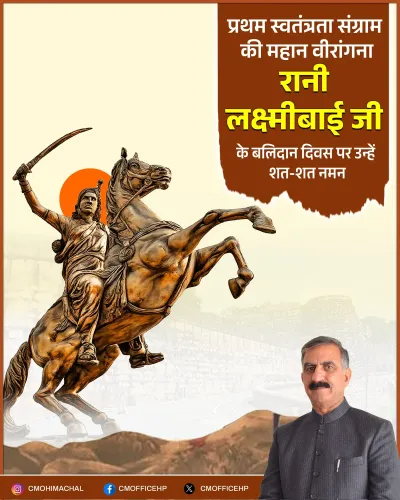
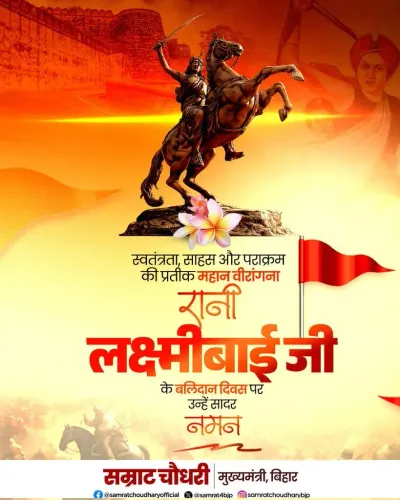
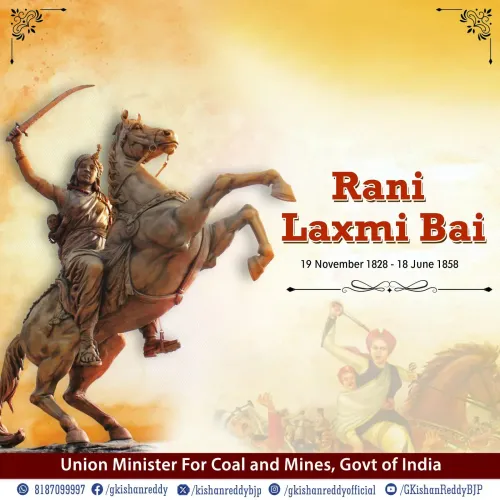
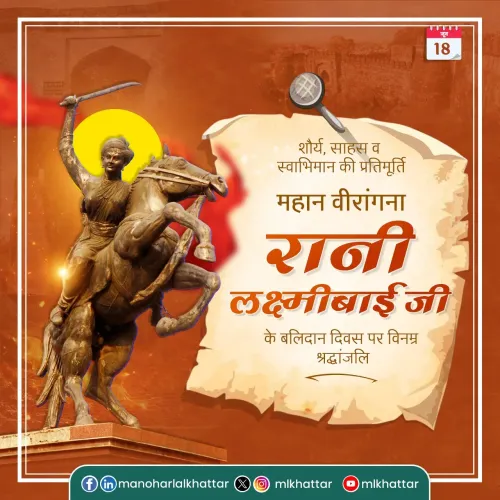
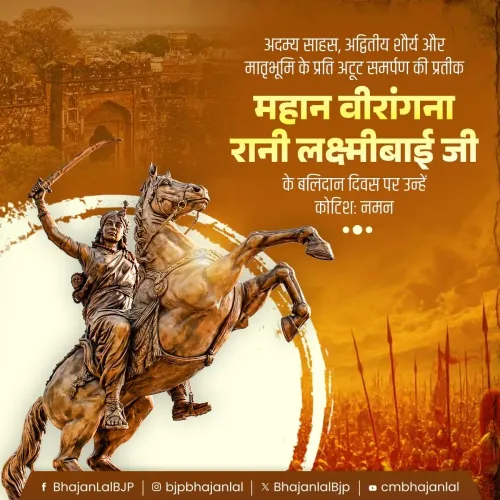
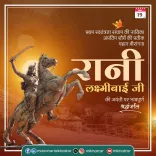
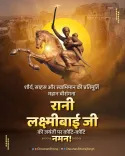
CM Bhajan Lal Sharma pays tribute to Rani Lakshmibai on her birth anniversary
Synopsis
Rajasthan Chief Minister Bhajan Lal Sharma paid homage to Rani Lakshmibai on her 197th birth anniversary on November 19, 2026, hailing the queen of Jhansi as a timeless symbol of courage and sacrifice whose life continues to inspire patriotism across generations.
Key Takeaways
Rajasthan CM Bhajan Lal Sharma posted a tribute to Rani Lakshmibai on her 197th birth anniversary, November 19, 2026 .
Sharma described her as a symbol of 'extraordinary courage, indomitable valour, and unwavering devotion to the motherland.' Rani Lakshmibai was born on November 19, 1828 , in present-day Varanasi , and became Queen of Jhansi .
She played a central role in the 1857 Rebellion against the East India Company and died in battle near Gwalior in June 1858 , aged 29.
Sharma stated her 'supreme sacrifice will remain immortal in Indian history forever' and will continue to inspire future generations.
On the 197th birth anniversary of Rani Lakshmibai — the warrior queen of Jhansi whose sword became the defining image of India's first great uprising against colonial rule — Rajasthan Chief Minister Bhajan Lal Sharma offered a heartfelt tribute on Thursday, November 19, 2026, honouring her as an enduring symbol of courage, self-respect, and sacrifice.
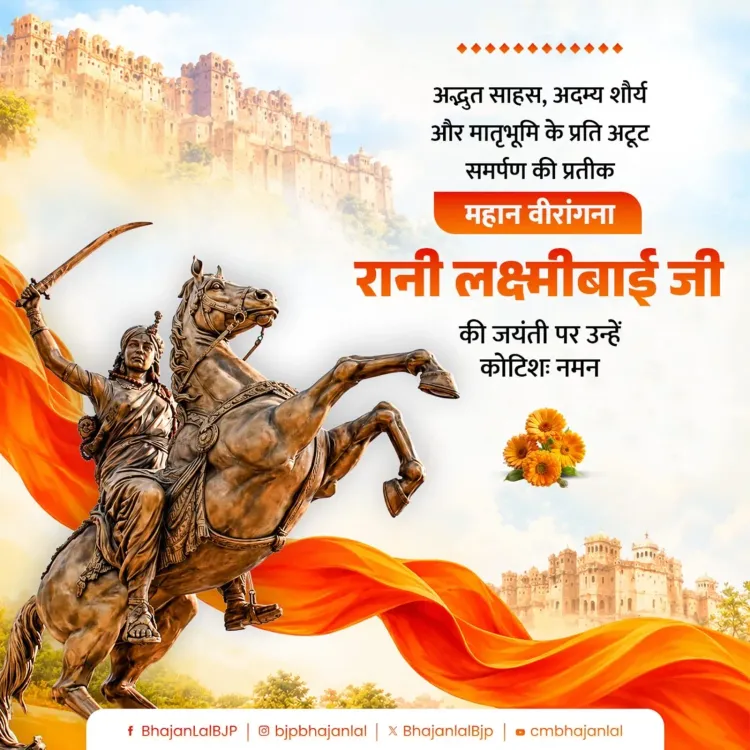
Sharma wrote in Hindi: 'Adbhut sahas, adamya shaurya aur matrubhumi ke prati atoot samarpan ki pratik' — 'a symbol of extraordinary courage, indomitable valour, and unwavering devotion to the motherland' — saluting the queen with the phrase kotishaḥ naman, meaning reverence a hundredfold. He added that her supreme sacrifice for the nation's freedom, pride, and honour 'will remain immortal in Indian history forever.'
Who was Rani Lakshmibai — and why November 19 matters
Rani Lakshmibai was born on November 19, 1828, in what is present-day Varanasi, and went on to become the Queen of Jhansi in central India. When British forces moved to annex her kingdom under the Doctrine of Lapse, she refused. Her decision to fight back placed her at the heart of the 1857 Rebellion — the first large-scale armed uprising against the East India Company's rule — alongside figures such as Tatya Tope and Nana Sahib.
She died in battle in June 1858, aged just 29, near Gwalior. The British officer who faced her forces reportedly acknowledged her as the most dangerous of the rebel leaders. That image — a queen on horseback, refusing to surrender — became one of the most potent icons in India's long road to independence nearly nine decades later.
A message aimed at generations to come
Sharma's tribute did not stop at commemoration. He framed Lakshmibai's life as a living call to action, stating that 'her courageous life will continue to awaken the spirit of bravery, patriotism, and national service in generations to come.' The forward-looking register — speaking not just of the past but of what her example demands today — reflects the standard register Indian leaders bring to November 19 every year.
Across the political spectrum, the anniversary is treated as a civic moment: school programmes, state-level events, and public declarations converge on the date. For a BJP leader, Lakshmibai's legacy carries additional resonance — her association with Jhansi, located in what is now Uttar Pradesh, and her status as a Hindu queen who fought foreign occupation make her a fixture in the party's broader civilisational narrative about India's history of resistance.
Sharma's salute from Jaipur is one voice in a chorus that rises every November 19 — but the warrior queen's story is powerful enough to never sound routine.
Point of View
But they also serve a deeper ideological purpose — anchoring contemporary governance narratives in a lineage of indigenous resistance. For the BJP, figures like Lakshmibai offer a bridge between patriotic sentiment and civilisational pride, reinforcing the party's core message about reclaiming India's pre-colonial identity. Chief Minister Sharma's framing — emphasising what her legacy demands of 'coming generations' rather than merely what she achieved — signals an intent to convert historical memory into present-day civic mobilisation. Whether such messaging translates into substantive educational or cultural policy at the state level remains the more consequential question.
NationPress
19 Nov 2026
Frequently Asked Questions
When is Rani Lakshmibai's birth anniversary?
Rani Lakshmibai was born on November 19, 1828 , and her birth anniversary is observed every year on November 19 across India.
Why is Rani Lakshmibai famous?
Rani Lakshmibai, the Queen of Jhansi , is celebrated for leading her forces against the British during the 1857 Rebellion — India's first major armed uprising against colonial rule — and dying in battle at the age of 29.
What did Rajasthan CM Bhajan Lal Sharma say about Rani Lakshmibai?
Sharma called her 'a symbol of extraordinary courage, indomitable valour, and unwavering devotion to the motherland,' and said her supreme sacrifice 'will remain immortal in Indian history forever.'
What was the 1857 Rebellion?
The 1857 Rebellion was the first large-scale armed uprising against the East India Company 's rule in India, involving several princely states and leaders, including Rani Lakshmibai of Jhansi.
Who is Bhajan Lal Sharma?
Bhajan Lal Sharma is the Chief Minister of Rajasthan and a senior leader of the Bharatiya Janata Party (BJP) .