CM Bhajan Lal Sharma Pitches Water, Jobs Vision for Shekhawati
Synopsis
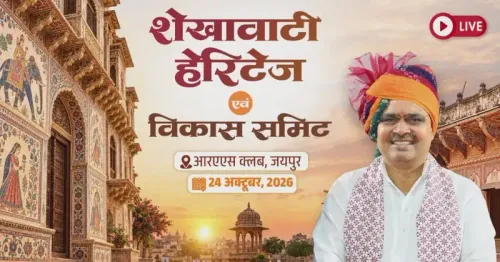
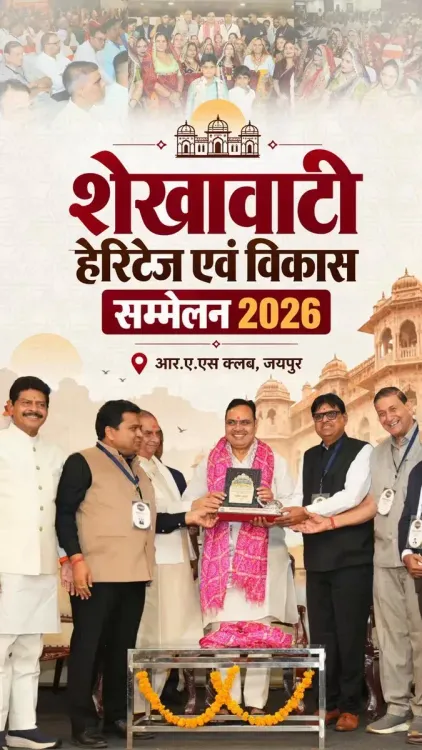
Rajasthan CM Bhajan Lal Sharma addressed the Shekhawati Heritage and Development Conference at Jaipur's R.A.S. Club on 24 October 2026, pledging to preserve the region's celebrated painted-haveli legacy while expanding water access, basic infrastructure, and employment across Sikar, Jhunjhunu, and Churu districts.
Key Takeaways
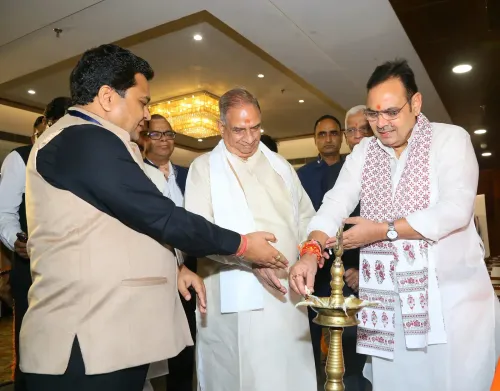
CM Bhajan Lal Sharma attended the Shekhawati Heritage and Development Conference at the R.A.S.
Club, Jaipur on 24 October 2026 .
He outlined a dual mission: preserving Shekhawati's historical heritage while driving development through water availability, basic infrastructure, and new employment .
Shekhawati spans Sikar, Jhunjhunu, and Churu districts and is globally recognised for thousands of intricately frescoed havelis .
The region faces persistent water scarcity and outmigration, making infrastructure investment a long-standing policy challenge for successive Rajasthan governments.
State policy has historically linked heritage conservation with tourism-led employment — a model CM Sharma appears to be doubling down on.
Concrete follow-through will be measured by budget allocations for water projects and skill development centres in the three Shekhawati districts.
At the R.A.S. Club in Jaipur on Saturday, 24 October 2026, Rajasthan Chief Minister Bhajan Lal Sharma stepped into a room full of heritage advocates and regional stakeholders — and made a promise that stretches from the frescoed walls of ancient havelis to the parched groundwater tables of northern Rajasthan.
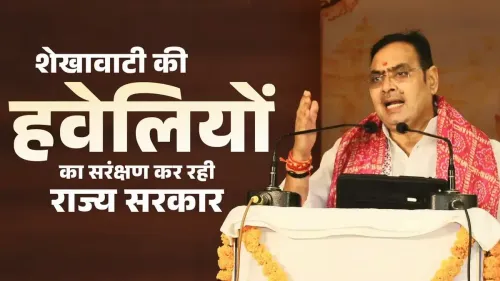
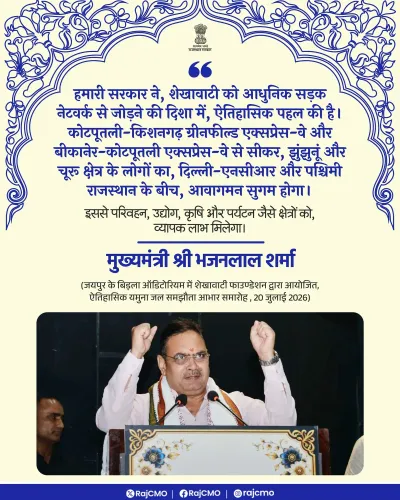
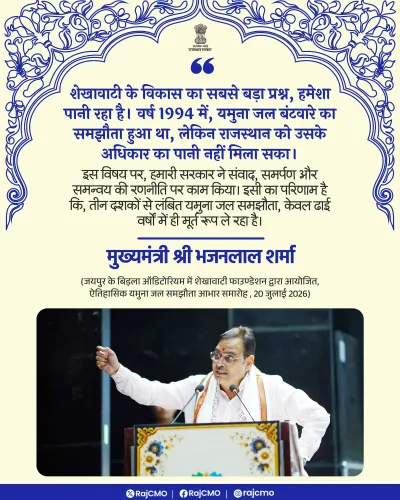
Addressing the Shekhawati Heritage and Development Conference, CM Sharma shared his government's vision for the region in Hindi: 'Shekhawati ki aitihasik dharohar ko sahejte hue jal uplabdhata, buniyadi suvidhaon aur rojgar ke naye avsar' — ('preserving Shekhawati's historical heritage while expanding water availability, basic infrastructure, and new employment opportunities'). The dual mandate — conservation and growth — was the centrepiece of his address.
Shekhawati's Painted Legacy and the Development Deficit
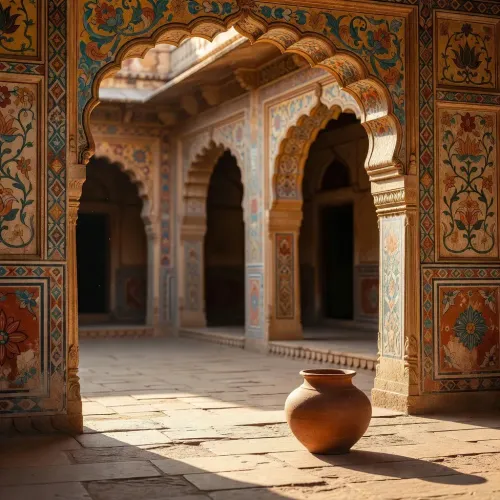
Shekhawati, the cluster of districts spanning Sikar, Jhunjhunu, and Churu in northern Rajasthan, carries one of India's most extraordinary built heritages: thousands of painted havelis adorned with intricate frescoes commissioned by 18th- and 19th-century merchant families. The region is sometimes called an 'open-air art gallery.' Yet the same geography that gifted it this legacy — semi-arid, low rainfall, limited surface water — has long constrained economic opportunity, driving generations of residents to migrate for work.
Rajasthan governments across administrations have grappled with this tension: how to monetise heritage through tourism without letting infrastructure gaps hollow out the local population. Water scarcity remains the most stubborn constraint, with communities in all three districts dependent on erratic groundwater and seasonal supply.
What Sharma's 'Dhyey' Signals for the Region
CM Sharma framed the government's objective as a 'dhyey' — a mission — rather than a routine policy announcement. By tying heritage conservation explicitly to water projects, basic amenities, and employment generation in a single statement, he signalled that the state intends to treat Shekhawati as an integrated development zone rather than a siloed tourism circuit.
State policy has historically linked built-heritage preservation with tourism-led employment — a model where restored havelis anchor hospitality, craft, and guided-tour economies. If the government follows through, the districts most likely to see early movement are those with the densest concentration of heritage structures: Jhunjhunu and Nawalgarh, already partial draws for domestic and international visitors.
The real test will arrive in the next state budget cycle: whether allocations for water infrastructure and skill development centres in Shekhawati districts match the ambition of Saturday's conference hall.
Point of View
CM Sharma is signalling that Shekhawati — long treated as a cultural footnote in state planning — is being repositioned as a priority development zone ahead of the next budget cycle. The framing of water, infrastructure, and jobs alongside heritage conservation is politically shrewd: it speaks simultaneously to the region's resident population worried about livelihoods and to the tourism and diaspora lobby invested in haveli preservation. Whether this translates into ring-fenced allocations or remains aspirational rhetoric will define Sharma's credibility in northern Rajasthan, where the BJP has deep roots but where unmet development expectations have historically complicated electoral arithmetic.
NationPress
25 Oct 2026
Frequently Asked Questions
What is the Shekhawati Heritage and Development Conference?
It is a conference focused on preserving Shekhawati's rich cultural heritage — particularly its famous painted havelis — while promoting development in the Sikar, Jhunjhunu, and Churu districts of northern Rajasthan. The October 2026 edition was held at the R.A.S. Club in Jaipur.
What did CM Bhajan Lal Sharma say at the Shekhawati conference?
CM Sharma said the government's mission is to preserve Shekhawati's historical heritage while expanding water availability, basic infrastructure, and new employment opportunities to accelerate the region's progress.
Why is Shekhawati famous?
Shekhawati, covering Sikar, Jhunjhunu, and Churu districts in northern Rajasthan, is renowned for thousands of intricately frescoed merchant havelis built in the 18th and 19th centuries, earning it the nickname 'open-air art gallery of Rajasthan.'
What is the main development challenge in Shekhawati?
Water scarcity is the most persistent challenge. The semi-arid region has limited surface water and erratic groundwater supply, which has historically driven outmigration and constrained economic growth despite its rich cultural assets.
What should we watch for after the Shekhawati conference?
The key indicator will be the next Rajasthan state budget: whether it includes specific allocations for water infrastructure projects and skill development centres in the Shekhawati districts of Sikar, Jhunjhunu, and Churu.