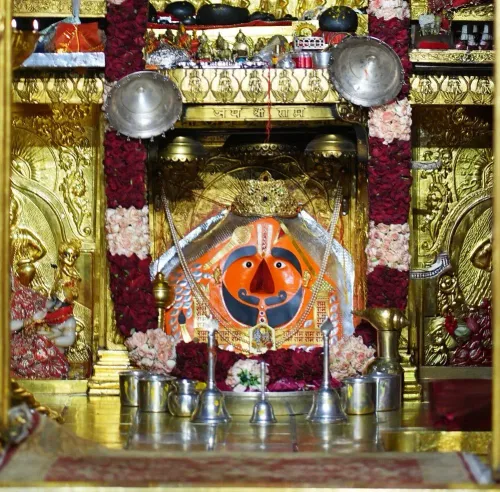
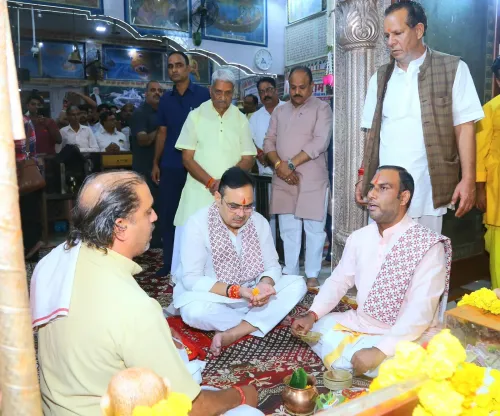
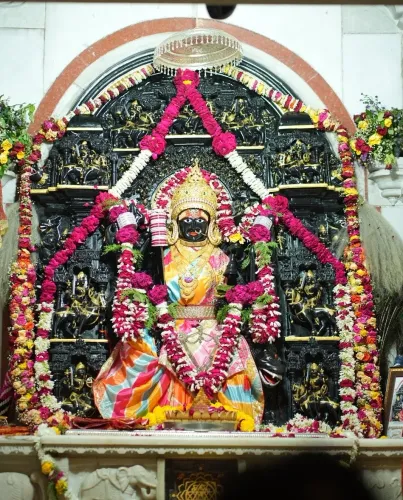
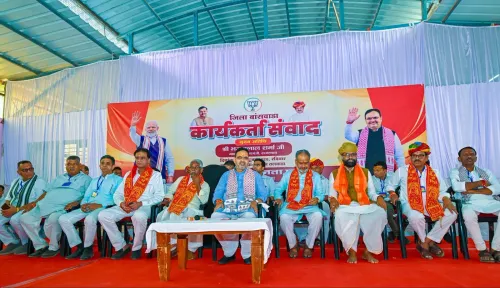
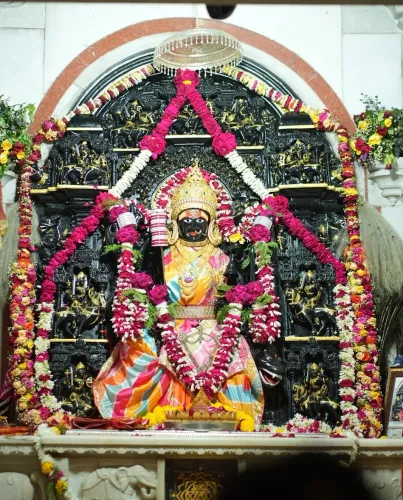
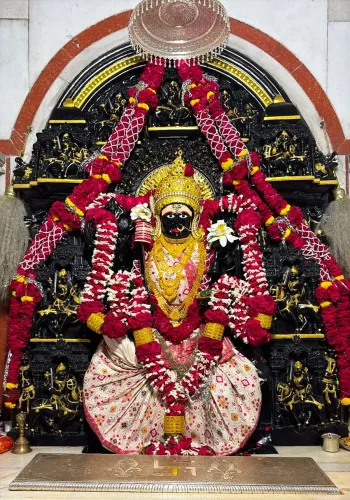
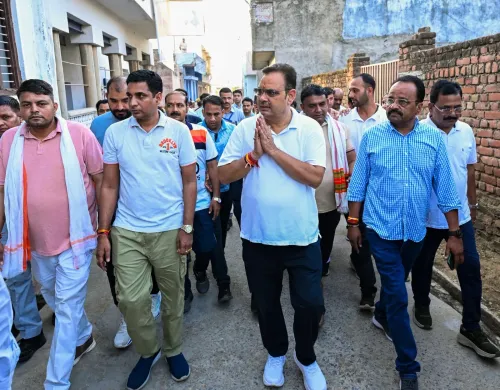
CM Bhajan Lal Sharma prays at Bhatia Mahadev, plants saplings
Synopsis
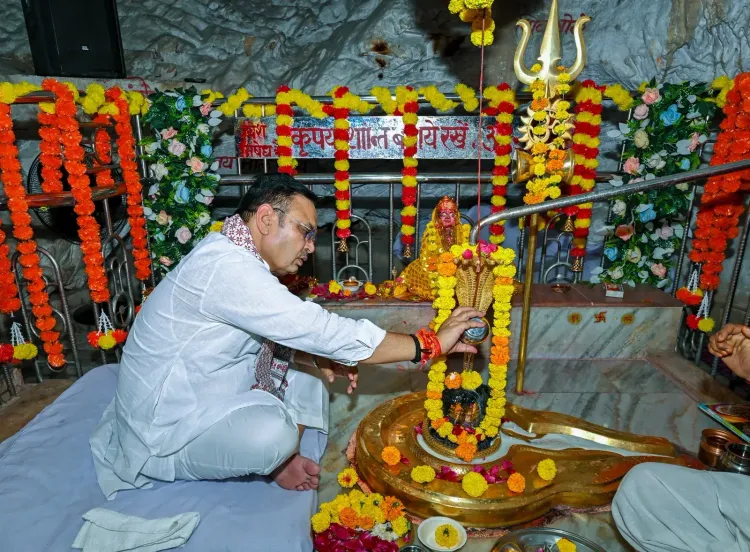
Rajasthan Chief Minister Bhajan Lal Sharma visited the Bhatia Mahadev Temple in Ghatol, Banswara on 26 October 2026, performed ritualistic worship, planted saplings under the 'Harialo Rajasthan' scheme, and prayed for the welfare and prosperity of all Rajasthan residents.
Key Takeaways
Bhajan Lal Sharma visited the Bhatia Mahadev Temple in Ghatol, Banswara on 26 October 2026 for prayers and rituals.
He planted saplings at the temple premises under the state's 'Harialo Rajasthan' tree-plantation and environmental-conservation initiative.
Banswara is a tribal-dominated district in southern Rajasthan bordering Gujarat and Madhya Pradesh .
Sharma prayed for the 'happiness, peace, prosperity and continuous progress of all Rajasthan residents.' 'Harialo Rajasthan' aims to address Rajasthan's arid ecology through mass afforestation, with cultural sites used as outreach venues.
The visit follows a pattern of Sharma combining temple outreach with state-scheme messaging in districts outside the capital.
At the ancient Bhatia Mahadev Temple in Ghatol, Banswara, Rajasthan Chief Minister Bhajan Lal Sharma offered prayers to Lord Shiva on Monday, 26 October 2026 and turned the sacred occasion into a green statement — planting saplings under the state's flagship 'Harialo Rajasthan' environmental drive.
Posting on X with the devotional sign-off 'Har-Har Mahadev!', Sharma wrote that he 'received blessings through darshan and ritualistic worship of Devaadhidev Mahadev' and, within the temple premises, gave 'concrete form to the resolve of Harialo Rajasthan through tree plantation, spreading a message of environmental conservation.' He added a prayer for 'the happiness, peace, prosperity and continuous progress of all residents of Rajasthan.'
Why Banswara — and why this temple
Banswara is a tribal-dominated district in southern Rajasthan, tucked against the borders of Gujarat and Madhya Pradesh. The Bhatia Mahadev Temple in Ghatol tehsil is a well-known Shiva shrine in the region, drawing devotees from across the district. A Chief Ministerial visit here carries both spiritual weight and political reach into a constituency that BJP has worked to consolidate since Sharma took office in December 2023.
'Harialo Rajasthan' — greening an arid state one temple at a time
Harialo Rajasthan — roughly translating to 'Green Rajasthan' — is a state initiative anchored on mass tree plantation and environmental awareness. Rajasthan's ecology is among India's most challenging: a vast arid and semi-arid expanse where afforestation is both an ecological imperative and a livelihood question for tribal and pastoral communities. By conducting plantation drives at culturally resonant sites like temples, the state government blends community participation with environmental messaging — a formula Indian administrations across party lines have found effective at the grassroots level.
Sharma's choice to plant saplings at a Shiva temple also taps into a long tradition of sacred groves and tree veneration in Hindu practice, lending the programme a cultural legitimacy that a purely administrative order rarely achieves.
A pattern of governance-with-devotion visits
This is consistent with a broader pattern that has defined Sharma's public outreach since he became Chief Minister. Temple visits in districts outside Jaipur serve as both personal expressions of faith and occasions to project state schemes to local populations — combining a spiritual itinerary with a governance message in a single media moment. Southern Rajasthan's tribal belt, including Banswara, has historically required sustained cultural engagement from state leadership, and visits like this one are part of that calculus.
The next measure of 'Harialo Rajasthan''s ambition will come as the drive extends to other districts — and as the state publishes data on saplings planted, survival rates, and community involvement across this monsoon and post-monsoon cycle.
A Chief Minister at a Shiva temple, a sapling in the earth, and a prayer for an entire state's prosperity — small gestures that, in Rajasthan's political grammar, speak loudly.
Point of View
Cultural outreach into the tribal south, and the branding of 'Harialo Rajasthan' as a government-wide identity. Conducting a plantation drive inside a temple compound is a deliberate design choice — it converts devotees into programme participants without a single bureaucratic order. For a BJP government looking to deepen its footprint in Scheduled Tribe-heavy constituencies ahead of future electoral cycles, the optics of a CM doing pradakshina and then planting a sapling carry far more weight than a press release. The broader pattern across Indian state governments of fusing governance with pilgrimage circuits suggests this is less an aberration than a playbook now standard across the political spectrum.
NationPress
26 Oct 2026
Frequently Asked Questions
Where is the Bhatia Mahadev Temple located?
The Bhatia Mahadev Temple is located in Ghatol tehsil of Banswara district in southern Rajasthan, a tribal-dominated region bordering Gujarat and Madhya Pradesh.
What is 'Harialo Rajasthan'?
Harialo Rajasthan — meaning 'Green Rajasthan' — is a state government initiative focused on mass tree plantation and environmental conservation, designed to address Rajasthan's arid ecology.
Why did CM Bhajan Lal Sharma visit Banswara?
Rajasthan CM Bhajan Lal Sharma visited Banswara on 26 October 2026 to offer prayers at the Bhatia Mahadev Temple and to carry out a plantation drive under the 'Harialo Rajasthan' scheme, combining devotion with environmental outreach.
When did Bhajan Lal Sharma become Chief Minister of Rajasthan?
Bhajan Lal Sharma became Chief Minister of Rajasthan in December 2023 as a BJP leader, following the party's victory in the state assembly elections.
What did Bhajan Lal Sharma pray for at Bhatia Mahadev Temple?
CM Sharma prayed for the 'happiness, peace, prosperity and continuous progress of all residents of Rajasthan,' according to his post on X after the visit.