CM Bhajan Lal Sharma Welcomes PM Modi to Rajasthan
Synopsis
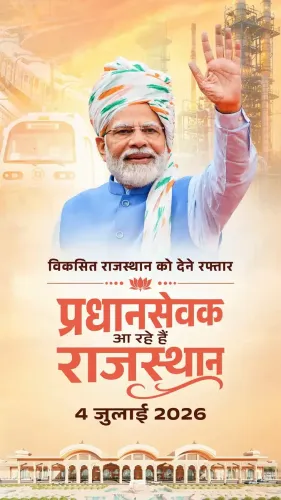
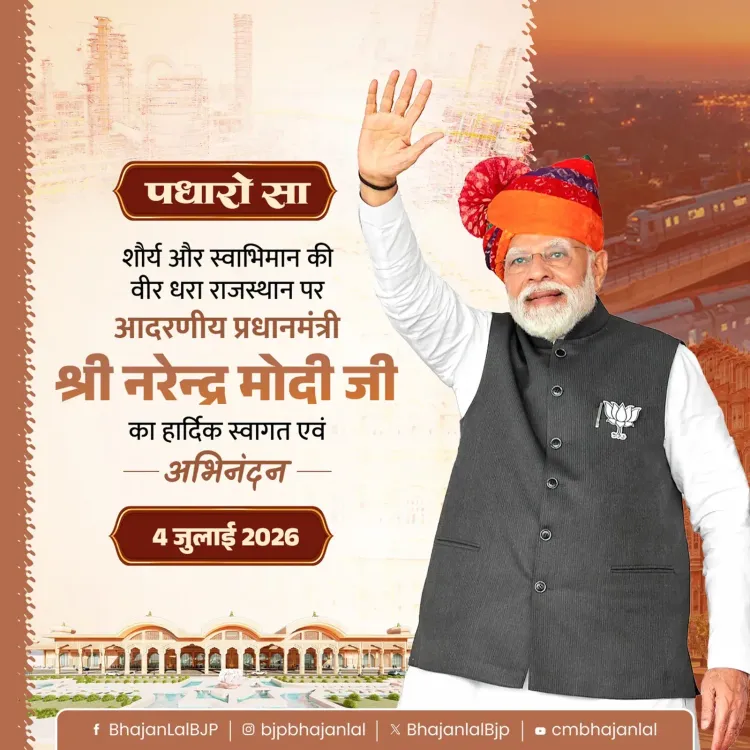
Rajasthan Chief Minister Bhajan Lal Sharma welcomed Prime Minister Narendra Modi to the state on 4 July 2026, describing the visit as a new source of energy for the state's Viksit Rajasthan development agenda aligned with the national Viksit Bharat 2047 vision.
Key Takeaways
CM Bhajan Lal Sharma publicly welcomed PM Narendra Modi to Rajasthan on 4 July 2026 via a post on X.
Sharma used the traditional Rajasthani greeting Padharo Sa and described the Prime Minister as a 'visionary leader and guide.' The welcome is framed around the Viksit Rajasthan vision, the state-level adaptation of PM Modi's Viksit Bharat @2047 national development goal.
Viksit Bharat @2047 was first articulated by the Prime Minister in his 2022 Independence Day address .
Rajasthan has been aligning its annual plans and flagship schemes with this national framework since the BJP's return to power in December 2023 .
Analysts will watch for project inaugurations, new MoUs , or revised budget allocations announced during the visit.
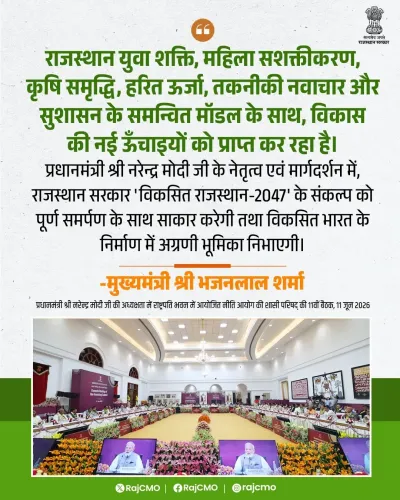
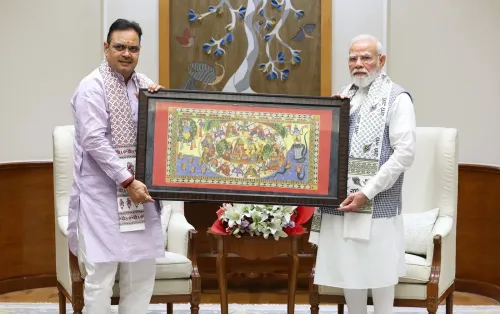
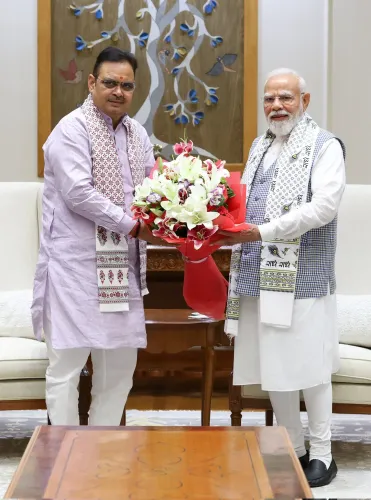
Rajasthan Chief Minister Bhajan Lal Sharma extended a warm welcome to Prime Minister Narendra Modi on Saturday, 4 July 2026, hailing the Prime Minister's visit to the state as a catalyst for renewed development momentum. Sharma invoked Rajasthan's heritage of valour and sacrifice, framing the visit within the state's ongoing commitment to the Viksit Rajasthan vision.
Context
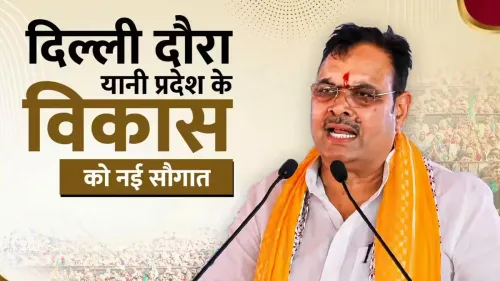
Posting in Hindi on X, CM Sharma wrote: 'पधारो सा!' — a traditional Rajasthani phrase of welcome — before describing PM Modi as a 'visionary leader and guide for all of us.' He stated that under the Prime Minister's 'far-sighted leadership and unwavering affection,' the state was steadily advancing toward fulfilling the resolve of a 'Viksit Rajasthan' (Developed Rajasthan). He added that the Prime Minister's arrival was 'infusing a new energy in the direction of the state's development and prosperity.'
Policy Backdrop
PM Modi first articulated the Viksit Bharat @2047 vision in his Independence Day address of 2022, setting out a roadmap to transform India into a fully developed nation by the centenary of its independence. After the BJP returned to power in Rajasthan in December 2023, the state government adopted this framework at the state level as Viksit Rajasthan, aligning its annual plans and flagship welfare schemes with the national development agenda. CM Sharma, who took charge in December 2023, has consistently positioned state policy as an extension of central priorities, including infrastructure expansion and beneficiary-linked welfare delivery.
Prime Minister Modi's visits to BJP-governed states have regularly coincided with reviews of centrally sponsored projects, scheme launches, and motivational messaging around the 2047 developed-nation target. Such visits serve both an administrative and a political signalling function, reinforcing Union-state coordination on shared development priorities.
Stakeholders and Impact
The primary stakeholders are Rajasthan's approximately 8 crore residents, whose access to infrastructure, welfare schemes, and employment opportunities is directly shaped by the pace of Union-state project implementation. State development agencies responsible for executing centrally sponsored programmes stand to receive renewed impetus and potentially fresh resource commitments following high-profile visits of this nature. Local elected representatives and district administrations also benefit from the visibility and accountability that a Prime Ministerial visit typically generates.
The broader BJP political apparatus in the state uses such occasions to consolidate its narrative of seamless coordination between Jaipur and New Delhi, particularly ahead of any future electoral cycles. Civil society and opposition parties, meanwhile, tend to scrutinise announced projects for follow-through on ground-level delivery.
What's Next
Observers will watch closely for any project inaugurations, fresh MoUs, or revised budgetary allocations announced during PM Modi's visit to Rajasthan. Subsequent updates on the state's performance in national development indices — including infrastructure completion rates and welfare scheme saturation — will indicate whether the visit translates into measurable policy acceleration. The hashtag #PMModi4ViksitRajasthan signals an intent to build sustained public communication around the visit's outcomes.
Point of View
He simultaneously flatters the Prime Minister and reinforces his own government's developmental credentials. The post fits a well-established BJP pattern in which state chief ministers use high-profile central visits to signal ideological alignment and attract project funding. With Rajasthan having returned to BJP rule only in late 2023, Sharma has strong incentive to demonstrate that his administration is a reliable delivery partner for New Delhi's 2047 agenda. The real test will be whether the visit produces concrete, trackable commitments rather than aspirational messaging.
NationPress
4 Jul 2026
Frequently Asked Questions
Why did CM Bhajan Lal Sharma welcome PM Modi to Rajasthan in July 2026?
CM Bhajan Lal Sharma welcomed PM Modi as part of the Prime Minister's visit to Rajasthan, framing the occasion as a boost to the state's Viksit Rajasthan development agenda.
What is Viksit Rajasthan?
Viksit Rajasthan is the state-level adaptation of PM Modi's Viksit Bharat @2047 vision, adopted by the Rajasthan BJP government after it returned to power in December 2023, aiming to align state plans with the national goal of a fully developed India by 2047.
What is Viksit Bharat @2047?
Viksit Bharat @2047 is a national development vision articulated by Prime Minister Narendra Modi in his 2022 Independence Day address, targeting India's transformation into a developed nation by the centenary of its independence.
Who is Bhajan Lal Sharma?
Bhajan Lal Sharma is the Chief Minister of Rajasthan and a BJP leader who assumed office in December 2023 after the party won the state assembly elections.
What can be expected from PM Modi's visit to Rajasthan in July 2026?
Observers are watching for project inaugurations, new MoUs, and revised budget allocations; however, specific announcements from the visit have not yet been confirmed.