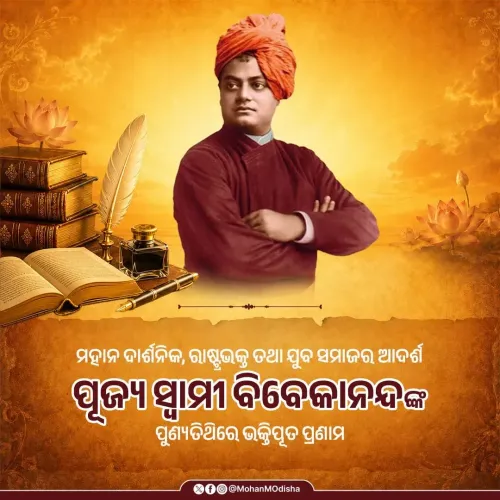
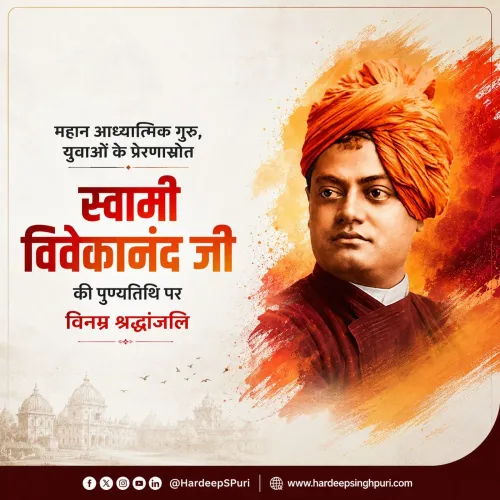
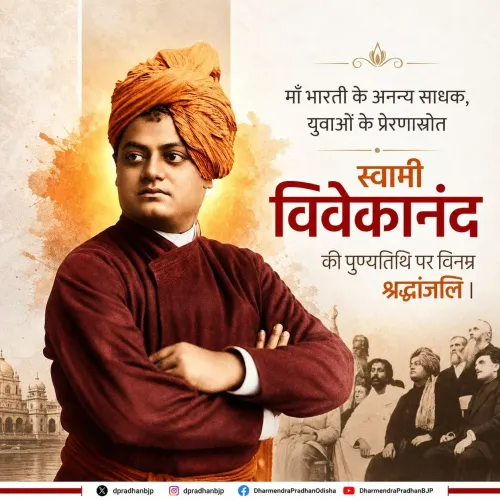
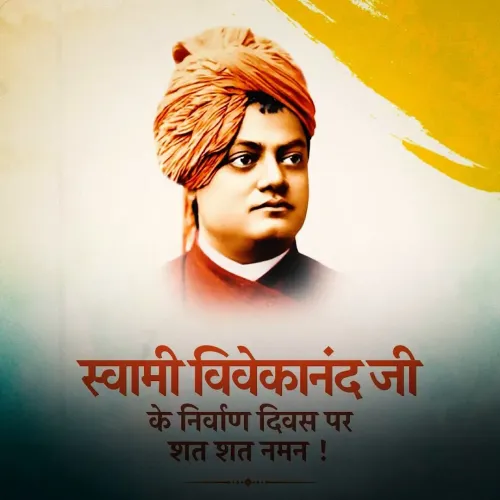
CM Bhupendra Patel Pays Tribute to Swami Vivekananda on Death Anniversary
Synopsis
Gujarat Chief Minister Bhupendra Patel paid tribute to Swami Vivekananda on his death anniversary on July 4, 2026, praising the philosopher-monk as the architect of national consciousness and calling his ideals an enduring inspiration for India's youth and nation-building efforts.
Key Takeaways
Gujarat CM Bhupendra Patel posted a tribute to Swami Vivekananda on his death anniversary, July 4, 2026 .
Patel described Vivekananda as the 'architect of national consciousness' and an inspiration for crores of young Indians .
He highlighted Vivekananda's emphasis on character formation among youth as central to nation-building.
Swami Vivekananda (1863–1902) famously represented India at the 1893 Parliament of the World's Religions in Chicago.
The Government of India designated January 12 as National Youth Day in 1984 in Vivekananda's honour.
The tribute follows a consistent BJP pattern of invoking Vivekananda to link party messaging with spiritual awakening and youth development.
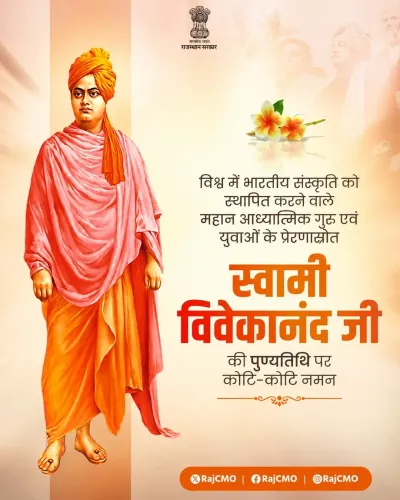
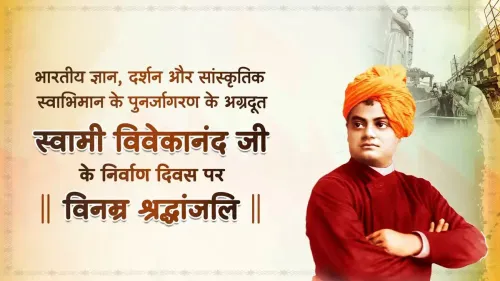
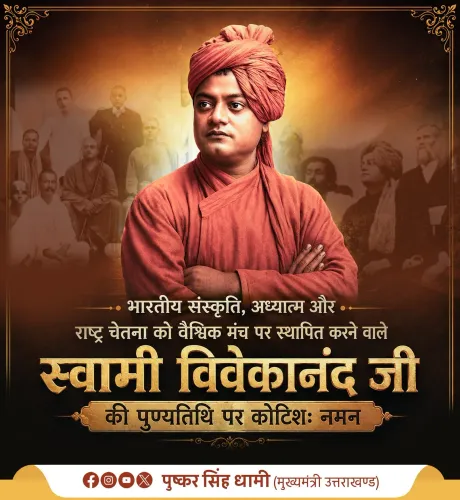
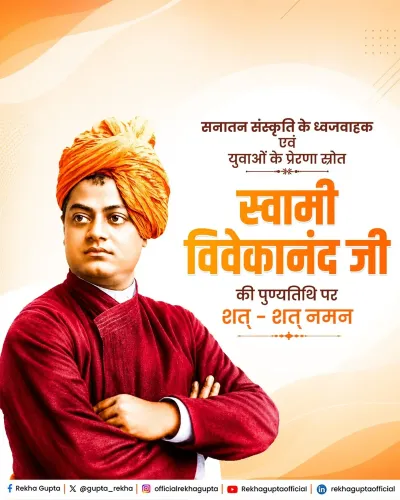
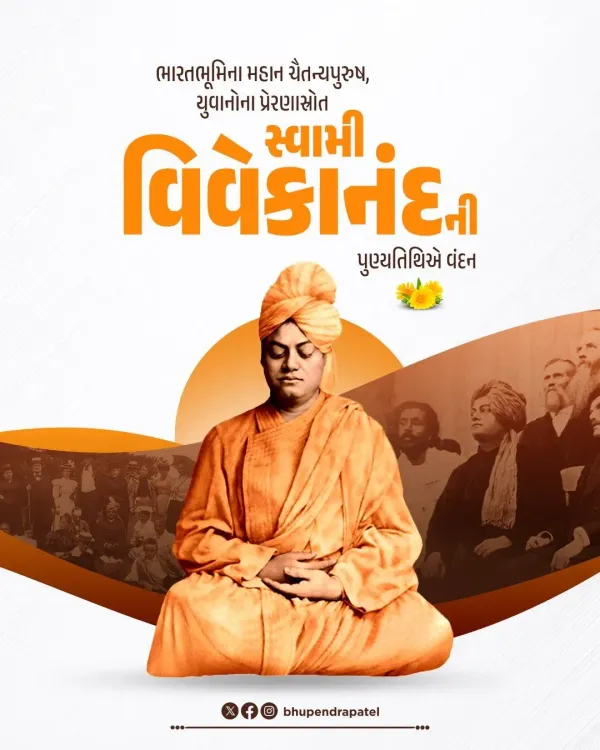
Gujarat Chief Minister Bhupendra Patel on Saturday, July 4, 2026, paid tribute to Swami Vivekananda on the philosopher-monk's death anniversary, hailing him as a visionary ascetic who established the glory of Indian culture and Sanatan Dharma on the world stage.
Posting in Gujarati on X, CM Patel described Vivekananda as 'રાષ્ટ્રચેતનાના શિલ્પી' ('the architect of national consciousness') and a source of inspiration for crores of young people. He noted that Vivekananda had awakened India's dormant inner strength and placed special emphasis on character formation among the youth for the purpose of nation-building.
Context
Swami Vivekananda (1863–1902) was a Hindu monk and philosopher who brought global attention to Indian spiritual thought, most memorably at the 1893 Parliament of the World's Religions in Chicago. His death anniversary falls on July 4 each year, a date observed by followers and public figures across India as a moment of reflection on his legacy of service, spiritual inquiry, and national awakening.
CM Patel wrote that Vivekananda's 'purposeful life, spiritual contemplation, and luminous ideas will forever inspire us all to work ceaselessly for self-upliftment, human welfare, and national welfare.' The tribute underscores the enduring resonance of Vivekananda's message in mainstream political and cultural discourse.
Policy Backdrop
The Government of India declared January 12 as National Youth Day in 1984 to commemorate Vivekananda's birth anniversary, institutionalising his association with youth development at the national level. His ideas on character-building and self-reliance have since been woven into government youth and education frameworks across multiple administrations.
BJP leaders have consistently invoked Vivekananda on both his birth and death anniversaries, linking party messaging to themes of spiritual awakening, nationalism, and youth character formation — a pattern that reflects a broader effort to connect contemporary nation-building efforts with pre-independence cultural figures.
Stakeholders and Impact
Vivekananda's legacy holds particular significance for Indian youth, who are the primary audience of National Youth Day programming and state-level initiatives inspired by his teachings. Gujarat, as one of India's larger states with a substantial young population, regularly incorporates Vivekananda's ideals into educational and cultural outreach.
Civil society organisations, educational institutions, and spiritual movements rooted in the Ramakrishna tradition also observe the death anniversary with programmes across the country, amplifying the reach of tributes such as the one issued by CM Patel.
What's Next
Observers will watch whether the Gujarat government follows the tribute with concrete youth or education initiatives citing Vivekananda's ideals in the coming months — a step that would translate ceremonial remembrance into policy action. Such moves have precedent in state-level programmes that draw on his philosophy of character-building and selfless service as guiding principles for public schemes.
Point of View
Patel aligns Gujarat's governance narrative with a broader civilisational discourse that the party has cultivated over decades. The tribute carries added political weight given Gujarat's historical and cultural centrality to the BJP's identity. Whether it translates into tangible state-level youth policy will determine if this year's remembrance moves beyond ritual into governance.
NationPress
2 Oct 2026
Frequently Asked Questions
Why is July 4 significant for Swami Vivekananda?
July 4 marks the death anniversary of Swami Vivekananda, who passed away on this date in 1902. It is observed across India as a day of tribute to his spiritual and national legacy.
Who is Bhupendra Patel?
Bhupendra Patel is the Chief Minister of Gujarat and a senior BJP leader who assumed office in 2021. He represents the Ghatlodiya constituency in Ahmedabad.
What did Swami Vivekananda do for India?
Swami Vivekananda (1863–1902) was a Hindu monk who introduced Indian philosophy and Vedanta to the world, most famously at the 1893 Parliament of the World's Religions in Chicago. He emphasised character-building, self-reliance, and service as the foundation of national renewal.
What is National Youth Day in India?
National Youth Day is observed on January 12 each year to commemorate Swami Vivekananda's birth anniversary. The Government of India designated this day in 1984 to promote youth development inspired by his ideals.
Why do BJP leaders pay tribute to Swami Vivekananda?
BJP leaders regularly pay tribute to Swami Vivekananda on his birth and death anniversaries, connecting his themes of spiritual awakening, nationalism, and youth character formation with the party's own nation-building messaging.