Pralhad Joshi meets Armenia PM Pashinyan, eyes solar and education ties
Synopsis
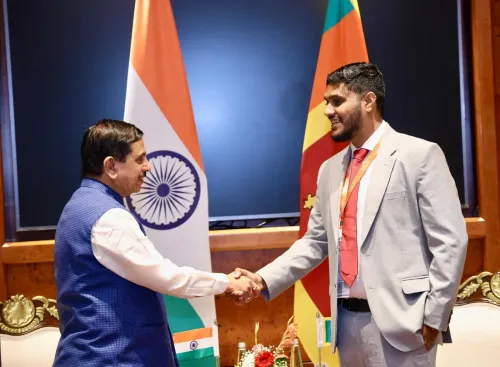
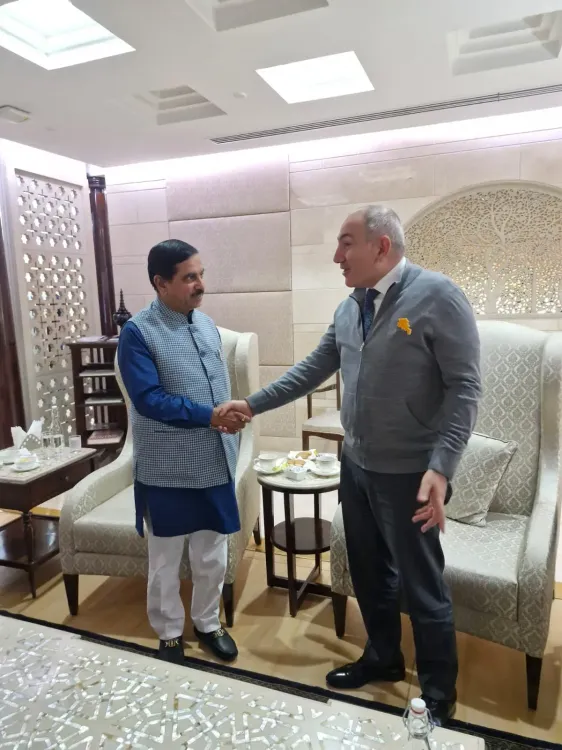
Union Minister Pralhad Joshi met Armenian PM Nikol Pashinyan on 16 November 2026 to discuss India-Armenia cooperation in solar energy and education, with a follow-up meeting with Armenia's Education Minister Zhanna Andreasyan scheduled later this month.
Key Takeaways
Union Minister Pralhad Joshi held a brief meeting with Armenian Prime Minister Nikol Pashinyan on 16 November 2026 .
Discussions focused on education , solar energy , and expanding overall bilateral cooperation.
Armenia has been a founding member of India's International Solar Alliance since 2015 , providing an institutional base for solar diplomacy.
India and Armenia established formal diplomatic ties in 1992 following Armenia's independence.
Joshi is scheduled to meet Armenia's Education Minister Zhanna Andreasyan later in November 2026 to advance educational cooperation.
The engagement fits India's broader strategy of sector-specific outreach to South Caucasus states.
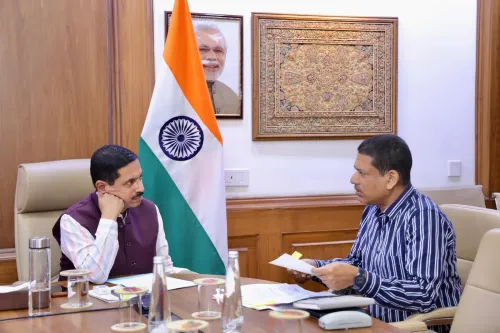
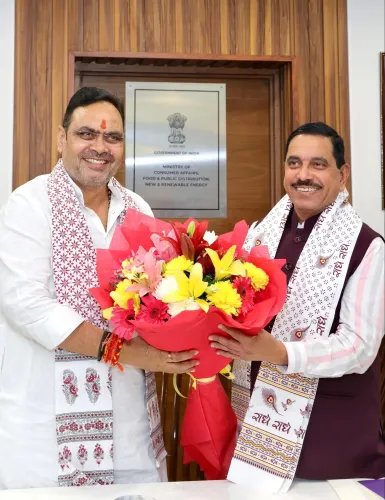
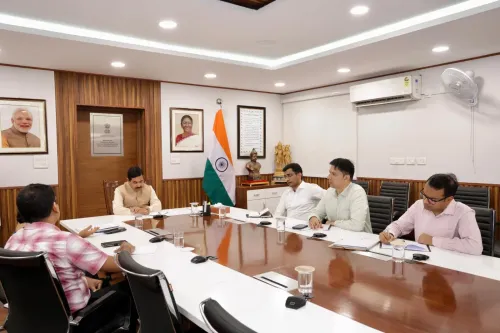
Solar energy and academic corridors are quietly becoming the new grammar of India's engagement with the South Caucasus — and Union Minister Pralhad Joshi moved that conversation forward on Monday, 16 November 2026, with a brief but pointed meeting with Armenian Prime Minister Nikol Pashinyan, exchanging views on education, renewable energy, and broader bilateral cooperation between the two nations.
What Joshi and Pashinyan put on the table
The two leaders 'exchanged views on strengthening India-Armenia relations, with a focus on education, solar energy and expanding bilateral cooperation,' according to Minister Joshi's post. The conversation also covered 'avenues for further deepening the partnership' — a signal that both sides see the relationship as capable of moving well beyond its current baseline.
Prime Minister Pashinyan has led Armenia since the country's landmark 2018 Velvet Revolution, steering the nation through significant geopolitical turbulence while simultaneously seeking deeper partnerships with democracies outside its immediate neighbourhood. India, with its growing renewable energy footprint and world-class higher education institutions, represents precisely the kind of non-traditional partner Yerevan has been courting.
Armenia, solar diplomacy, and the ISA connection
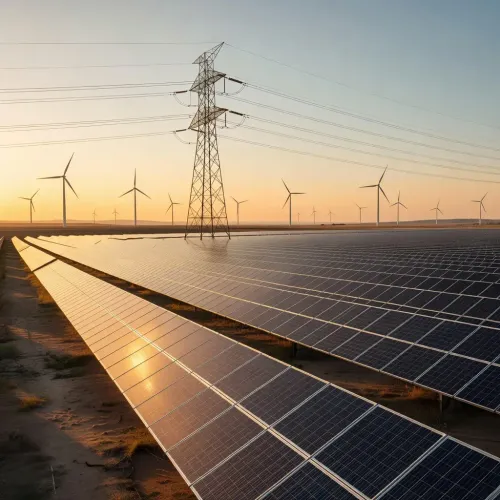
Armenia was a founding member of India's International Solar Alliance in 2015 — an early signal of Yerevan's alignment with New Delhi's clean-energy multilateralism. That membership now provides a natural institutional runway for the solar cooperation Joshi and Pashinyan discussed. India has used the ISA framework to push joint project development, technology transfer, and capacity building, making solar a conversation that carries real policy weight rather than mere aspiration.
Formal diplomatic ties between the two countries were established in 1992, following Armenia's independence, but the relationship has historically punched below its potential. High-level meetings in recent years have increasingly spotlighted renewable energy and academic linkages alongside older pillars of defence and trade — a pattern Joshi's engagement fits neatly into.
The Andreasyan meeting: education next in line
The more concrete near-term marker is the meeting Joshi flagged himself: a scheduled interaction with Armenia's Education Minister Zhanna Andreasyan 'later this month.' That conversation will put flesh on the education dimension of today's discussion — whether that means student exchange frameworks, university partnerships, or joint research corridors remains to be shaped.
As India's Minister of New and Renewable Energy, Joshi brings direct portfolio relevance to the solar strand of this diplomacy. As a senior political figure from Karnataka — a state with a significant higher-education ecosystem — he is not without credentials on the academic side either. The dual focus makes the bilateral agenda coherent rather than scattered.
India's extended neighbourhood outreach in the South Caucasus has rarely generated headlines the way its Gulf or Southeast Asian engagements do. But sector-specific cooperation, quietly built meeting by meeting, can harden into durable architecture. The Joshi-Pashinyan exchange is a small but deliberate brick in that wall.
Point of View
Specifically the International Solar Alliance, as a diplomatic entry point with countries outside the traditional near-abroad. Minister Joshi's dual portfolio in renewable energy and consumer affairs gives him direct relevance on the solar strand, while the forthcoming education minister meeting suggests New Delhi is trying to diversify the relationship beyond defence. For Armenia, deepening ties with a large democratic partner like India offers both economic opportunity and a measure of geopolitical hedging. The pattern — brief high-level contact followed by sector-specific ministerial follow-ups — is exactly how India has historically converted goodwill into working frameworks.
NationPress
16 Nov 2026
Frequently Asked Questions
Why did Pralhad Joshi meet Armenian PM Pashinyan?
Union Minister Pralhad Joshi met Armenian Prime Minister Nikol Pashinyan on 16 November 2026 to discuss strengthening India-Armenia relations, with a focus on solar energy, education, and expanding bilateral cooperation.
What is the history of India-Armenia diplomatic relations?
India and Armenia established formal diplomatic ties in 1992 following Armenia's independence from the Soviet Union. Cooperation has since grown across defence, trade, multilateral forums, and renewable energy.
Is Armenia a member of India's International Solar Alliance?
Yes. Armenia was a founding member of India's International Solar Alliance when it was launched in 2015, making it a natural partner for India's solar energy diplomacy.
Who is Zhanna Andreasyan and why is her meeting with Joshi significant?
Zhanna Andreasyan is Armenia's Minister of Education, Science, Culture and Sports. Her scheduled meeting with Minister Joshi later in November 2026 is expected to advance the education cooperation dimension discussed during the Pashinyan meeting.
What sectors are India and Armenia focusing on in their bilateral cooperation?
The current focus is on solar energy and education, alongside traditional areas like defence and trade. India's International Solar Alliance membership for Armenia and interest in academic partnerships are driving the agenda.