CM Bhajan Lal Calls for Unity Between Ruling, Opposition Benches
Synopsis
Rajasthan Chief Minister Bhajan Lal Sharma on 15 July 2026 called on both the ruling BJP and the opposition Congress to rise above partisanship, cooperate through dialogue, and place public welfare at the centre of the state's legislative work.
Key Takeaways
Bhajan Lal Sharma posted on X on 15 July 2026 calling for unity between ruling and opposition legislators in Rajasthan .
He stated that all elected representatives were chosen to honour the trust and aspirations of the people.
The Chief Minister specifically invoked dialogue, cooperation, and positive thinking as the means to advance state development.
The Rajasthan assembly is a 200-member house where the BJP holds a majority since December 2023 , with the Congress as principal opposition.
The statement signals a consensus-seeking posture from the government ahead of upcoming assembly sessions.
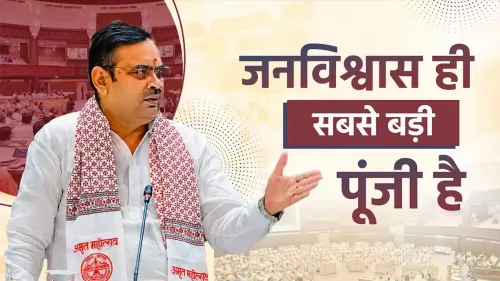
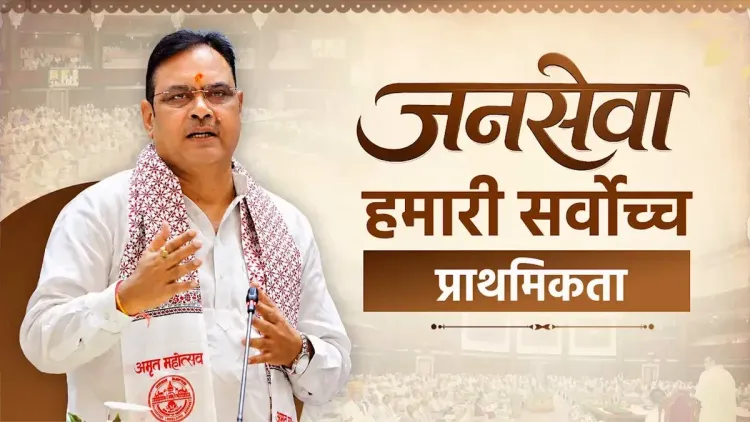
Rajasthan Chief Minister Bhajan Lal Sharma on Wednesday, 15 July 2026 called on both the ruling party and the opposition to work cooperatively for the development of the state, placing public interest above partisan differences. In a post on X, the Chief Minister underlined the shared responsibility of elected representatives to honour the trust and aspirations of the people who chose them.
Context
Sharma wrote in Hindi, 'जनता ने हम सभी को उनके विश्वास और आकांक्षाओं का प्रतिनिधित्व करने के लिए चुना है' ('The people have elected all of us to represent their trust and aspirations'). He added that both the ruling side and the opposition carry a responsibility to play a meaningful role in the development of the state, keeping public welfare supreme through dialogue, cooperation, and positive thinking.
The statement is addressed to all elected members of the Rajasthan legislative assembly, a 200-member house where the Bharatiya Janata Party holds a majority since the December 2023 assembly elections. The Indian National Congress serves as the principal opposition in the assembly.
Policy Backdrop
Bhajan Lal Sharma assumed office as Chief Minister in December 2023 following the BJP's victory in the state polls. Since then, the government has prioritised state development schemes and legislative business that require floor-level cooperation to advance.
Appeals for constructive cross-bench engagement are a recurring feature of Indian state politics, reflecting the constitutional design of assemblies where public welfare legislation depends on functional dialogue between the treasury and opposition benches. A chief minister publicly invoking this principle signals an intent to keep the legislative calendar productive.
Stakeholders and Impact
The primary audience for the message is the elected membership of the Rajasthan assembly — both BJP legislators and Congress members — as well as smaller parties and independents. For ordinary residents of the state, the practical implication is whether development schemes, budget allocations, and welfare measures clear the legislative floor without prolonged disruption.
The call for 'dialogue, cooperation, and positive thinking' (संवाद, सहयोग और सकारात्मक सोच) frames the Chief Minister's approach as consensus-seeking rather than confrontational, a posture that can ease the passage of contentious legislation and strengthen the government's public image ahead of future electoral cycles.
What's Next
Observers will watch whether this public appeal translates into formal mechanisms such as all-party meetings or pre-session consultations before the next Rajasthan assembly session. The test of the statement's intent will lie in whether the government extends concrete procedural courtesies — agenda-sharing, committee representation, adequate debate time — to the opposition benches in the weeks ahead.
Point of View
But its effectiveness depends on whether it is backed by procedural goodwill. Ultimately, the message serves a dual purpose: it builds a public narrative of a cooperative, people-first administration while setting the terms of political accountability for the opposition's conduct in the house.
NationPress
14 Oct 2026
Frequently Asked Questions
What did Rajasthan CM Bhajan Lal Sharma say on 15 July 2026?
Bhajan Lal Sharma called on both the ruling BJP and the opposition Congress in the Rajasthan assembly to cooperate through dialogue and positive thinking, keeping public welfare above partisan interests.
Who is Bhajan Lal Sharma?
Bhajan Lal Sharma is the Chief Minister of Rajasthan and a BJP leader who took office in December 2023 after the BJP won the state assembly elections.
What is the composition of the Rajasthan assembly?
The Rajasthan legislative assembly has 200 seats. The BJP holds a majority since the December 2023 elections, with the Indian National Congress serving as the principal opposition.
Why did Bhajan Lal Sharma make this appeal for ruling and opposition unity?
Sharma's statement reflects the constitutional principle that all elected representatives — regardless of party — are chosen to serve the people, and that development requires cooperation across the aisle in the state assembly.
What should we watch for after Bhajan Lal Sharma's unity appeal?
Watch for whether the Rajasthan government convenes all-party meetings or pre-session consultations, and whether opposition members are given adequate time and representation in assembly proceedings.