CM Bhajanlal: 4,875 PACS Run 3+ Business Activities
Synopsis
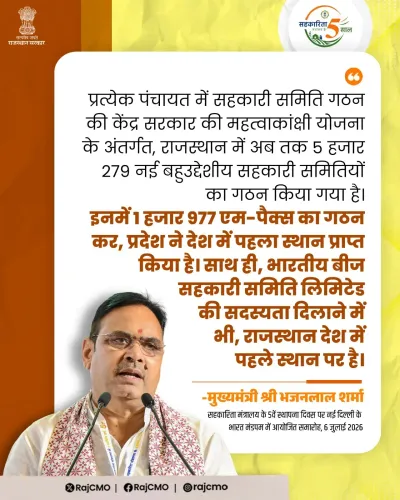
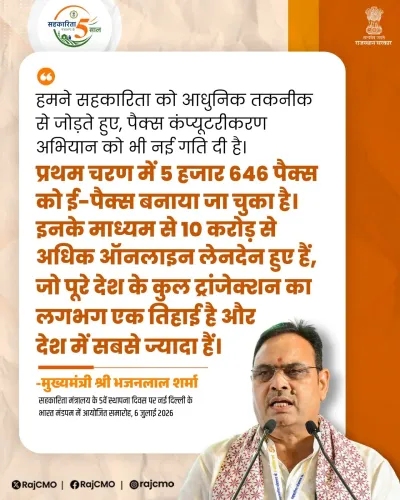
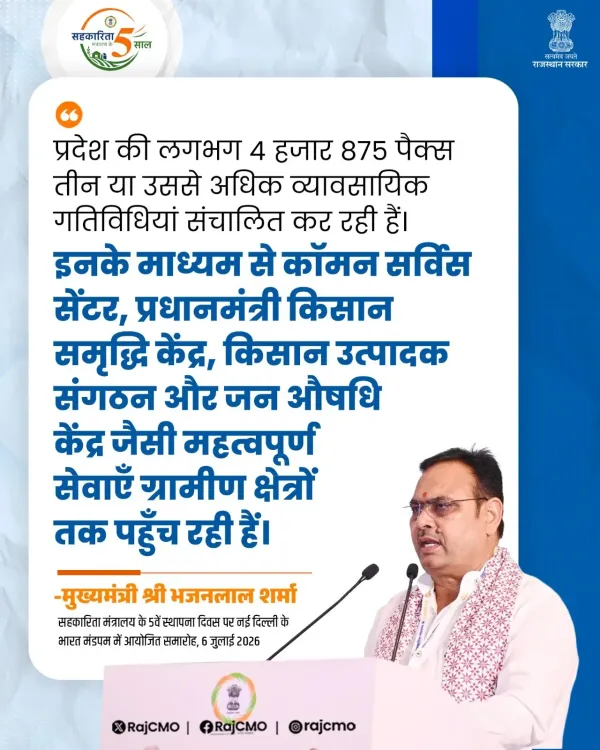
The Rajasthan CMO announced that nearly 4,875 PACS across the state are now running three or more commercial activities each. The development reflects the state's push to transform village-level credit societies into multi-purpose rural economic institutions, aligned with the national cooperative revival framework.
Key Takeaways
The Rajasthan CMO announced on 7 July 2026 that nearly 4,875 PACS in the state are operating three or more commercial activities each.
PACS are village-level cooperative credit institutions now being diversified into dairy, storage, marketing, and other sectors.
The push aligns with the Union Ministry of Cooperation's 2023 model bye-laws enabling PACS to function as multi-purpose entities.
The national cooperative revival framework began with the creation of a Ministry of Cooperation in 2021 .
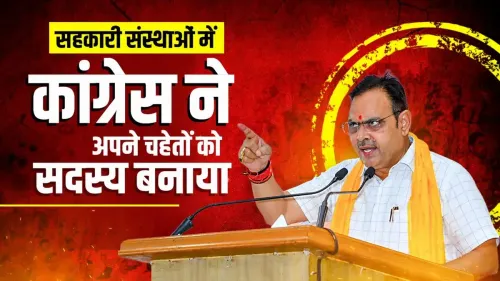
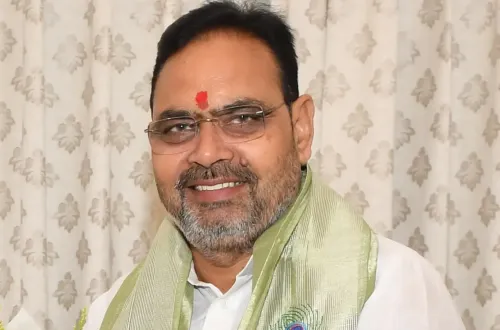
Chief Minister Bhajanlal Sharma , in office since December 2023 , has made cooperative expansion a visible part of Rajasthan's rural economic agenda.
Upcoming focus areas include PACS computerisation targets and potential amendments to the Rajasthan Cooperative Societies Act .
The Chief Minister's Office of Rajasthan announced on Tuesday, 7 July 2026 that nearly 4,875 Primary Agricultural Credit Societies (PACS) across the state are now operating three or more commercial activities each, marking a significant milestone in the diversification of rural cooperative institutions.
The post, shared under the hashtag #आपणो_अग्रणी_राजस्थान ('Our Pioneering Rajasthan'), tagged Chief Minister Bhajanlal Sharma and highlighted the scale of cooperative economic activity being driven at the village level across Rajasthan.
Context
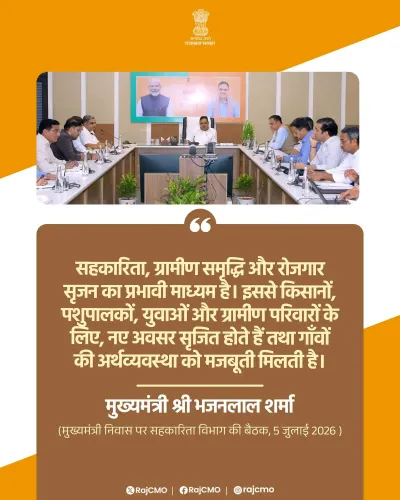
PACS are village-level cooperative credit institutions that have traditionally provided short-term agricultural loans to farmers. The announcement signals a shift from single-purpose credit bodies to multi-purpose rural economic hubs, with each of the nearly 4,875 societies now running at least three distinct commercial operations.
The CMO's post reflects the state government's push under Chief Minister Bhajanlal Sharma, who took office in December 2023, to expand the footprint of cooperatives beyond credit into areas such as dairy, storage, and marketing.
Policy Backdrop
The diversification drive draws directly from the Union Ministry of Cooperation's 2023 model bye-laws, which enabled PACS to operate as multi-purpose entities. These bye-laws opened the door for PACS to engage in activities including agri-input supply, custom hiring centres, common service centres, and warehousing.
The broader national framework was set in motion with the creation of a dedicated Ministry of Cooperation in 2021, which prioritised computerisation and functional diversification of PACS across India. Rajasthan's progress, as cited by the CMO, positions the state among those advancing this agenda most visibly.
Stakeholders and Impact
The primary beneficiaries are farmers and rural households in Rajasthan who depend on PACS for credit, inputs, and market linkages. A PACS operating multiple services reduces the need for farmers to approach separate agencies for different needs, cutting costs and improving access in remote areas.
Rural cooperative workers and PACS staff also stand to benefit from expanded mandates, which translate into more operational roles and potentially greater institutional revenue. The state's rural economy, which is heavily dependent on agriculture, gains a more resilient institutional backbone when cooperatives diversify their income streams.
What's Next
Attention will now turn to the pace of PACS computerisation in Rajasthan, a parallel priority under the national cooperative reform agenda, as well as any fresh allocations in the state budget or amendments to the Rajasthan Cooperative Societies Act that could further expand PACS mandates.
The CMO's framing of this milestone under the 'Aapno Agrani Rajasthan' banner suggests the government intends to continue presenting cooperative expansion as a flagship economic achievement ahead of future political cycles.
Point of View
The government is building a narrative of rural economic modernisation ahead of future electoral cycles. The figure of nearly 4,875 multi-activity PACS also serves to demonstrate Rajasthan's alignment with the BJP-led Centre's flagship cooperative agenda, reinforcing the political synergy between Jaipur and New Delhi. If the computerisation and diversification targets are met at scale, Rajasthan could emerge as a reference model for cooperative reform in other BJP-governed states.
NationPress
7 Jul 2026
Frequently Asked Questions
What are PACS and why are they important in Rajasthan?
PACS, or Primary Agricultural Credit Societies, are village-level cooperative institutions that provide short-term credit and services to farmers. In Rajasthan, they form a critical part of the rural financial infrastructure, and their diversification into multiple commercial activities is intended to strengthen the rural economy.
How many PACS in Rajasthan are running multiple business activities?
According to the Rajasthan CMO's post on 7 July 2026, nearly 4,875 PACS in the state are conducting three or more commercial activities each.
What activities can PACS now conduct beyond giving loans?
Under the Union Ministry of Cooperation's 2023 model bye-laws, PACS can engage in activities such as dairy operations, agricultural input supply, warehousing, custom hiring centres, common service centres, and marketing of farm produce.
What is the national policy behind PACS diversification?
The national push began with the creation of a dedicated Ministry of Cooperation in 2021, followed by model bye-laws in 2023 that allowed PACS to become multi-purpose entities. This is part of a broader cooperative revival drive across India.
What should we watch for next on Rajasthan PACS reform?
Key developments to track include the state's PACS computerisation progress, any new budget allocations for cooperatives, and possible amendments to the Rajasthan Cooperative Societies Act that could further expand PACS mandates.