CM Bhajanlal Stresses Mass Participation in Seva Shivirs
Synopsis
Chief Minister Bhajan Lal Sharma's office on 18 June 2026 stressed that collective citizen participation is essential for seva shivirs to be meaningful, reinforcing the Rajasthan BJP government's push for participatory governance under its 'Our Pioneering Rajasthan' banner.
Key Takeaways
The Chief Minister's Office of Rajasthan posted a message on 18 June 2026 attributed to CM Bhajan Lal Sharma .
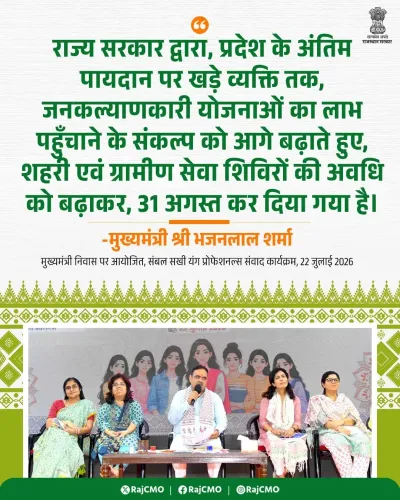
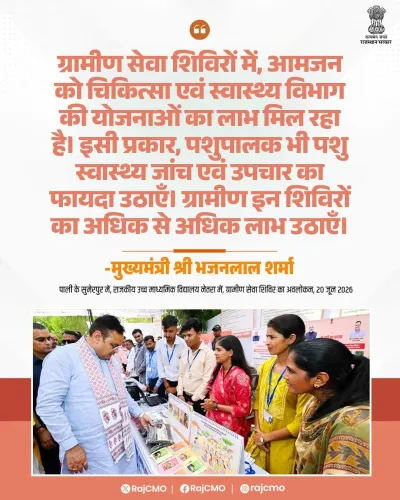
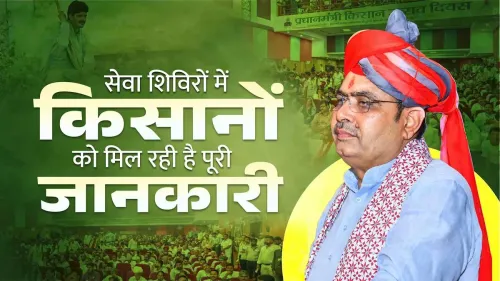
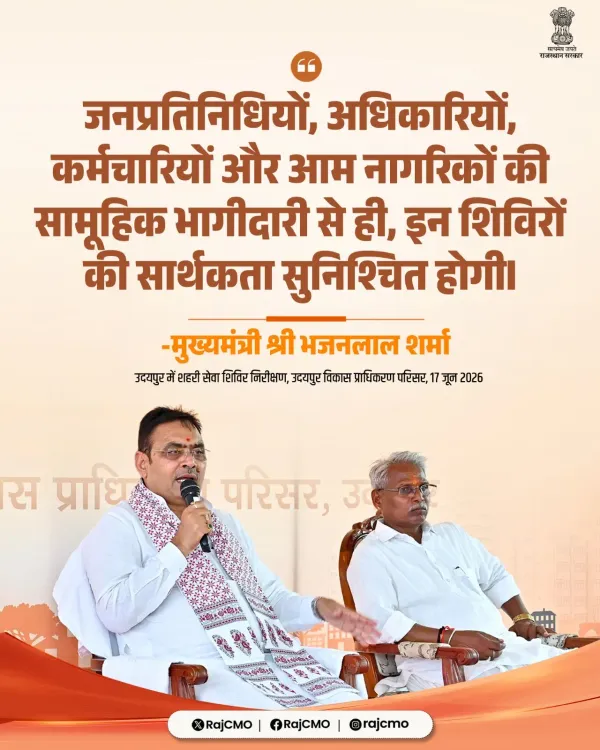
The message states that collective public participation is the key to ensuring the meaningfulness of seva shivirs (service camps).
The post was shared under the hashtag #AapnoAgraniRajasthan , a recurring banner for the state government's outreach communication.
The Bhajan Lal Sharma administration has been running citizen outreach and grievance redressal camps since taking office in December 2023 .
The participatory framing reflects a broader pattern across BJP -governed states of positioning welfare camps as joint government-citizen efforts.
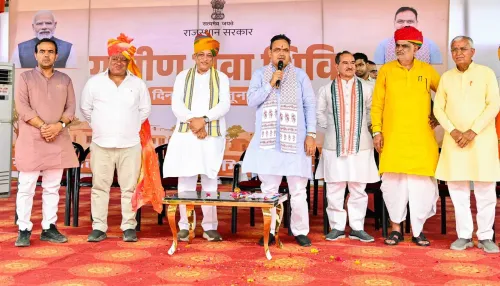
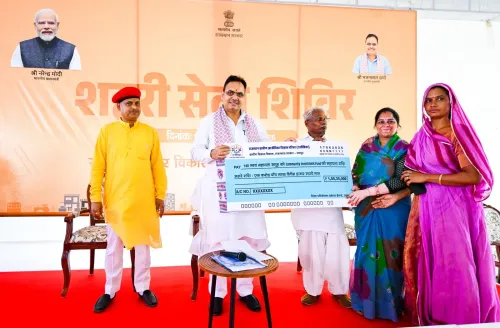
The Chief Minister's Office of Rajasthan on Thursday, 18 June 2026 shared a message from Chief Minister Bhajan Lal Sharma underscoring that the success of service camps — known as seva shivirs — depends on collective public participation, under the state's flagship outreach banner #AapnoAgraniRajasthan ('Our Pioneering Rajasthan').
Context
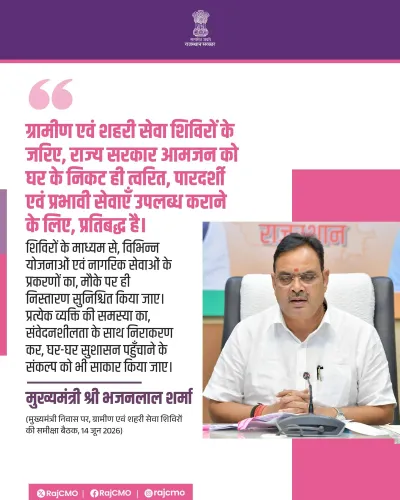
The post, attributed to CM Bhajan Lal Sharma, carries a concise but pointed message: 'Samuhik bhaagidaari se hi, seva shiviro ki saarthakta sunishchit hogi' — 'Only through collective participation will the meaningfulness of service camps be ensured.' The statement frames the government's outreach camps not as top-down administrative exercises, but as endeavours whose value is co-created by citizens themselves.
The hashtag #AapnoAgraniRajasthan ('Our Pioneering Rajasthan') is a recurring motif in the Rajasthan BJP government's public communication, signalling an aspiration to position the state as a model of governance and citizen engagement.
Policy Backdrop
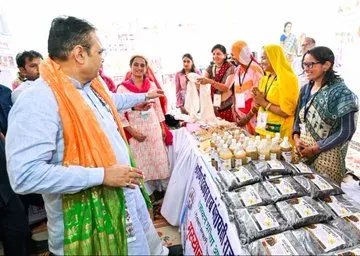
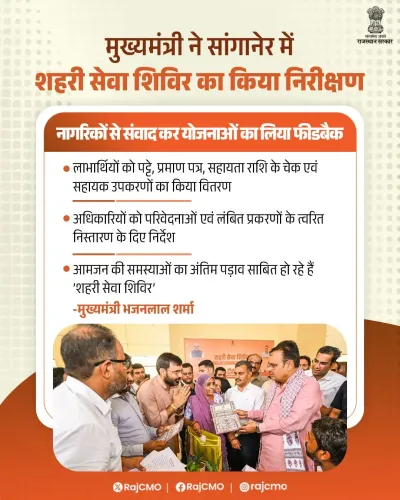
Since assuming office in December 2023 following the state assembly elections, the Bhajan Lal Sharma administration has launched a series of citizen outreach and grievance redressal programmes across Rajasthan. The seva shivir model — community-level camps where officials and residents interact directly — has been a central instrument of this approach.
The emphasis on participatory delivery mirrors a broader pattern seen across BJP-governed states since 2023, where welfare and administrative camps are positioned as joint government-citizen efforts. This framing is designed to deepen ownership of public programmes at the grassroots level and improve last-mile delivery outcomes.
Stakeholders and Impact
The primary beneficiaries of the seva shivir initiative are Rajasthan's residents, particularly those in rural and semi-urban areas who may have limited access to government offices. By bringing services and grievance mechanisms closer to communities, the camps aim to reduce procedural barriers for ordinary citizens.
Local communities, elected representatives, and district-level officials are all stakeholders in the programme's success. The Chief Minister's call for collective participation implicitly invites civil society and local bodies to take an active role alongside the administration in making these camps effective and well-attended.
What's Next
Observers will watch for follow-up announcements on the scale, frequency, and geographic spread of seva shivirs across Rajasthan's districts, as well as any district-level reviews that may be tabled during assembly sessions. If the government translates this messaging into a structured calendar of camps with measurable targets, it could set a template for participatory governance that other states may study closely.
Point of View
Reducing the risk of top-down failure narratives. At a time when the Rajasthan government is still consolidating its post-2023 electoral mandate, such messaging also serves to build grassroots political capital ahead of future local body elections. The real test will be whether the participatory rhetoric is matched by a structured, verifiable expansion of the seva shivir calendar at the district level.
NationPress
19 Sept 2026
Frequently Asked Questions
What is a seva shivir in Rajasthan?
A seva shivir is a community-level service camp organised by the Rajasthan government where officials interact directly with residents to address grievances and deliver welfare services closer to people's homes.
What did CM Bhajan Lal Sharma say about seva shivirs?
CM Bhajan Lal Sharma said that only through collective public participation will the meaningfulness of seva shivirs be ensured, calling on citizens to actively engage with these camps.
What is the AapnoAgraniRajasthan initiative?
'Aapno Agrani Rajasthan' translates to 'Our Pioneering Rajasthan' and is a communication banner used by the Rajasthan BJP government to highlight its governance and public outreach programmes.
When did Bhajan Lal Sharma become Chief Minister of Rajasthan?
Bhajan Lal Sharma assumed office as Chief Minister of Rajasthan in December 2023 following the state assembly elections in which the BJP won a majority.
Why is public participation important for seva shivirs?
The Rajasthan government's position is that seva shivirs derive their value from citizen involvement; without active community participation, the camps cannot effectively identify and resolve local grievances.