CM Bhajanlal's Rajasthan Pushes Seva Shivirs for Doorstep Services
Synopsis
The Chief Minister's Office of Rajasthan on June 15, 2026, reaffirmed CM Bhajan Lal Sharma's commitment to fast, transparent citizen services through rural and urban Seva Shivirs, reinforcing the state's long-standing push for last-mile governance reform.
Key Takeaways
The Chief Minister's Office of Rajasthan posted on June 15, 2026 , reaffirming the state's commitment to citizen service delivery through Seva Shivirs .
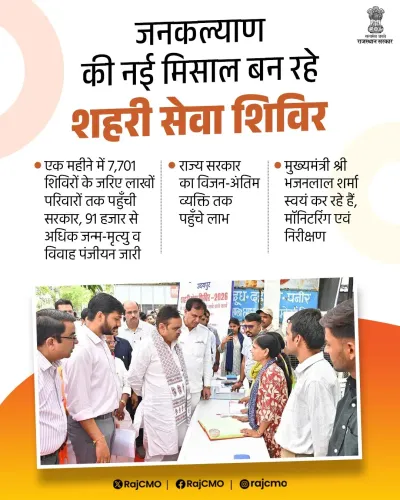
Seva Shivirs are multi-department camps held at local venues to provide services without requiring citizens to travel to district offices.
CM Bhajan Lal Sharma has led the BJP government in Rajasthan since December 2023 , with administrative efficiency as a core agenda.
Rajasthan has institutional foundations for this model, including the Rajasthan Right to Public Services Act (2011) and the e-Mitra kiosk network (2005) .
Key beneficiaries include rural residents, farmers, daily-wage workers, and senior citizens who face barriers accessing government offices.
Analysts will watch for camp performance data and possible digital portal integration in upcoming state fiscal announcements.
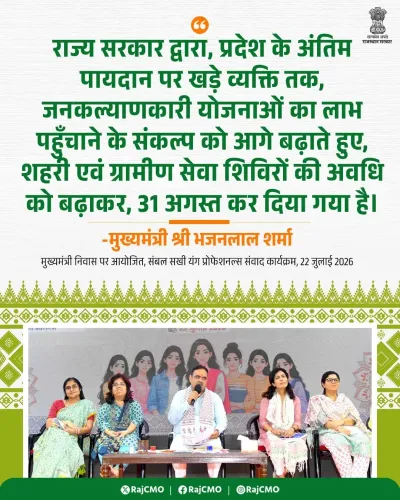
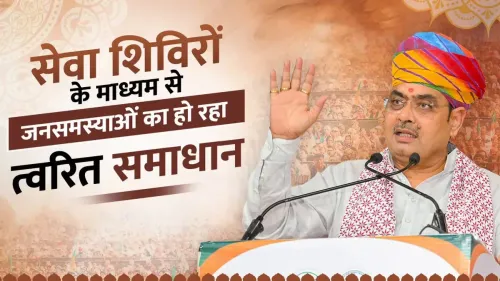
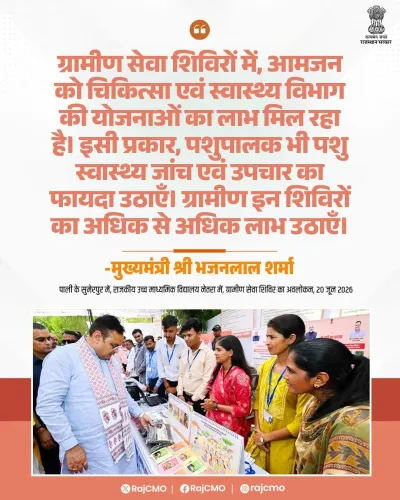
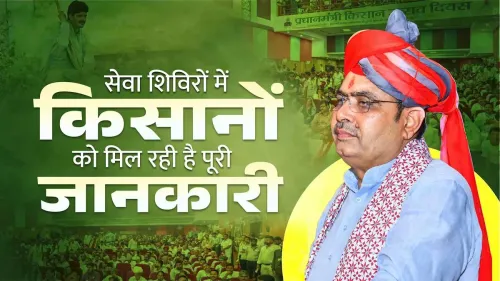
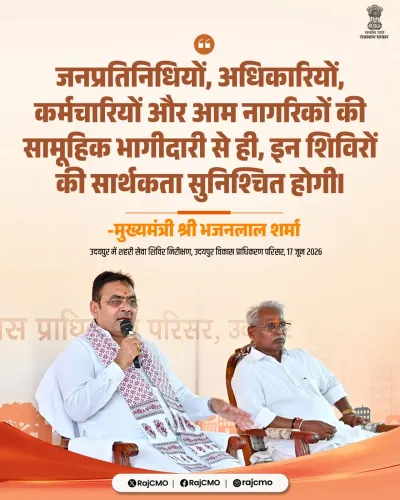
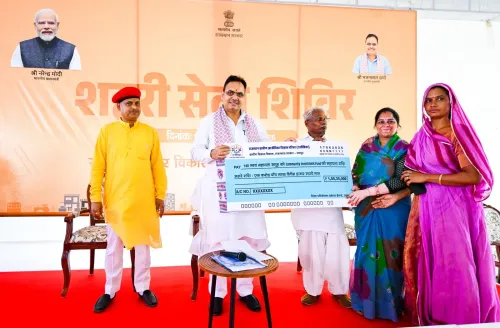
The Chief Minister's Office of Rajasthan reaffirmed on Monday, June 15, 2026, the state government's commitment to delivering fast, transparent, and effective services to citizens through rural and urban Seva Shivirs (service camps), bringing governance closer to people's doorsteps.
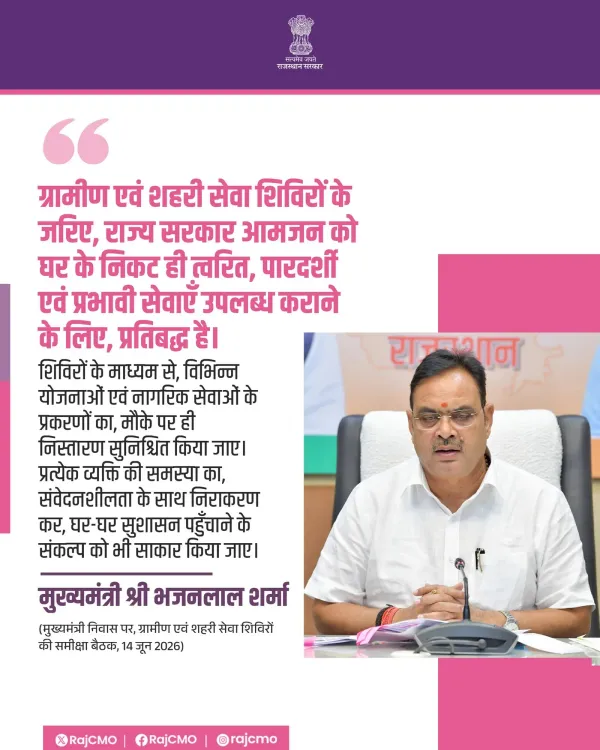
Posting on behalf of Chief Minister Bhajan Lal Sharma, the official CMO account stated: 'ग्रामीण एवं शहरी सेवा शिविरों के जरिए, राज्य सरकार आमजन को घर के निकट ही त्वरित, पारदर्शी एवं प्रभावी सेवाएँ उपलब्ध कराने के लिए, प्रतिबद्ध है।' — ('Through rural and urban service camps, the state government is committed to providing quick, transparent and effective services to the common people near their homes.') The message was tagged with the hashtag #AapnoAgrani_Rajasthan ('Our Pioneering Rajasthan'), which has served as a brand identity for the current administration's governance agenda.
Context
Seva Shivirs are organised camps where multiple government departments converge at a single location — typically a community centre, school, or panchayat building — so that citizens can access a range of services without travelling to district headquarters or government offices. The model is designed to cut processing time, reduce intermediaries, and bring transparency to routine administrative functions such as certificate issuance, scheme enrolment, and grievance redressal. The post comes as the Bhajan Lal Sharma-led BJP government, which assumed office in December 2023, continues to position administrative efficiency and citizen-centric delivery as central planks of its governance identity in Rajasthan.Policy Backdrop
Rajasthan has a relatively long history of institutionalising service delivery reform. The state enacted the Rajasthan Right to Public Services Act in 2011, which legally guaranteed time-bound delivery of notified government services — one of the earlier such frameworks among Indian states. The e-Mitra single-window kiosk network, launched in 2005, further decentralised access to government services by enabling digital transactions at local points across the state. The Seva Shivir model builds on this lineage by adding a physical, periodic outreach dimension — particularly relevant for citizens in remote rural areas where digital infrastructure or literacy may limit the reach of purely online solutions. Across India, several states have adopted similar periodic camp models as part of broader last-mile governance strategies aligned with the national Digital India initiative.Stakeholders and Impact
The primary beneficiaries of Seva Shivirs are rural and urban residents who face barriers of distance, cost, or time in accessing government offices. For daily-wage workers, farmers, and senior citizens especially, the ability to access certificates, welfare scheme enrolments, and other services within their locality can translate into direct economic savings and reduced dependence on touts or intermediaries. For the state administration, the camps serve a dual purpose: improving service disposal rates and building public trust in government responsiveness. The emphasis on 'paarasparik' (transparent) functioning signals an intent to reduce discretionary delays that have historically been a source of rent-seeking at government counters.What's Next
Administrative observers will watch for the release of periodic performance data on camp coverage — including the number of services rendered, districts covered, and citizen footfall — which would allow an independent assessment of the initiative's reach. Possible integration of Seva Shivir data with Rajasthan's existing digital portals, or fresh budget allocations tied to camp expansion in upcoming state fiscal announcements, would be significant markers of how deeply the government intends to institutionalise this model. If the state publishes verifiable disposal-rate data, the Seva Shivir programme could become a benchmark that other states examine as part of India's broader push toward accountable, proximity-based public administration.Point of View
Speed, and transparency become political differentiators. By invoking the 'Aapno Agrani Rajasthan' brand, the Sharma administration is consciously building a narrative of administrative modernisation that draws on the state's own reform legacy, from the e-Mitra network to the Right to Public Services Act. The real test will be whether the government publishes granular, verifiable performance data on camp outcomes — without that, the initiative risks remaining a communication exercise rather than a measurable governance shift. If data does follow, Rajasthan could position itself as a model for last-mile service delivery ahead of the next electoral cycle.
NationPress
14 Sept 2026
Frequently Asked Questions
What are Seva Shivirs in Rajasthan?
Seva Shivirs are government-organised camps where multiple departments provide services — such as certificate issuance, scheme enrolment, and grievance redressal — at a single local venue, reducing the need for citizens to travel to district offices.
Who is the Chief Minister of Rajasthan in 2026?
Bhajan Lal Sharma is the Chief Minister of Rajasthan, leading the BJP government that came to power in December 2023 .
What is the Rajasthan Right to Public Services Act?
The Rajasthan Right to Public Services Act , enacted in 2011 , legally guarantees time-bound delivery of notified government services to citizens, making it one of India's earlier such statutory frameworks.
What is the e-Mitra network in Rajasthan?
e-Mitra is a single-window kiosk network launched by Rajasthan in 2005 to digitise and decentralise access to government services at the local level across the state.
What does 'Aapno Agrani Rajasthan' mean?
'Aapno Agrani Rajasthan' translates from Rajasthani and Hindi as 'Our Pioneering Rajasthan' and is a branding hashtag used by the current Sharma administration to represent its governance and development agenda.