CM Bhajanlal Launches 'Karmbhoomi se Matrubhoomi' Water Drive
Synopsis
Rajasthan's Chief Minister's Office has launched 'Karmbhoomi se Matrubhoomi', a campaign inspired by PM Modi's Catch the Rain initiative, mobilising diaspora Rajasthanis to participate in water conservation works in their home state. The drive targets a state facing persistent groundwater depletion and recurring drought.
Key Takeaways
The Rajasthan CMO announced the 'Karmbhoomi se Matrubhoomi' campaign on 6 June 2026 .
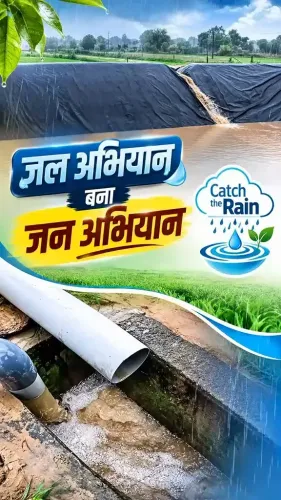
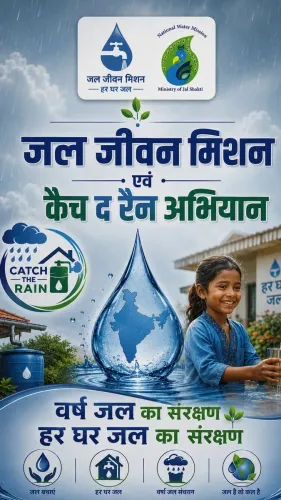
The initiative is explicitly inspired by PM Narendra Modi 's national Catch the Rain campaign, launched by the Ministry of Jal Shakti in 2021 .
The campaign aims to connect migrant Rajasthanis with water conservation projects in their home districts.
Rajasthan has faced long-standing groundwater depletion and drought, making water conservation a persistent policy priority.
The drive is part of a broader national pattern of states channelling diaspora participation toward local infrastructure and environmental works.
Integration with central schemes like Jal Shakti Abhiyan and MGNREGA will be key to scaling the campaign's impact.
The Chief Minister's Office of Rajasthan announced on Saturday, 6 June 2026 that the state has launched a new water conservation initiative — 'Karmbhoomi se Matrubhoomi' ('From Land of Work to Motherland') — drawing inspiration from Prime Minister Narendra Modi's national 'Catch the Rain' campaign. The drive aims to connect diaspora Rajasthanis with water conservation works in their home state.
Context
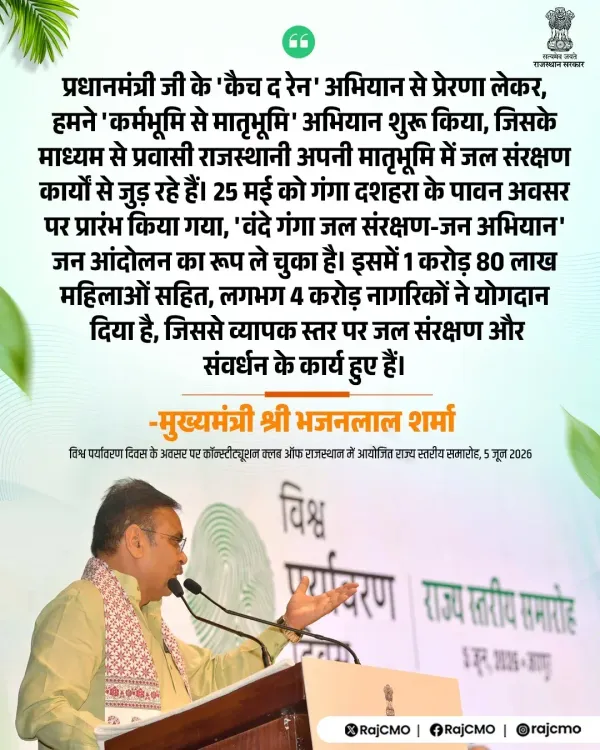
The post, shared from the official Rajasthan CMO handle and tagging Chief Minister Bhajanlal Sharma (@BhajanlalBjp), states: 'Pradhan Mantri ji ke 'Catch the Rain' abhiyan se prerana lekar, hamne 'Karmbhoomi se Matrubhoomi' abhiyan shuru kiya' — 'Taking inspiration from the Prime Minister's Catch the Rain campaign, we have launched the Karmbhoomi se Matrubhoomi campaign, through which migrant Rajasthanis are connecting with water conservation works in their motherland.' The announcement was made under the hashtag #AapnoAgraniRajasthan ('Our Leading Rajasthan').
Policy Backdrop
The Catch the Rain campaign was introduced by the Ministry of Jal Shakti in 2021 as an annual pre-monsoon drive to promote rainwater harvesting structures across rural and urban India. It followed the Jal Shakti Abhiyan launched in 2019, which targeted water-stressed blocks for aquifer recharge and conservation works.
Rajasthan has faced persistent groundwater depletion and recurring drought conditions for decades. Successive state governments have expanded traditional water structures — check dams, johads (community ponds), and watershed projects — frequently linking them to MGNREGA funding. The new campaign adds a diaspora dimension to this established policy architecture.
Stakeholders and Impact
The campaign specifically targets migrant Rajasthanis — a significant population that has historically moved to cities and other states for work — inviting them to contribute to water conservation projects in their villages and districts of origin. This mirrors a broader national pattern where several states have sought to channel diaspora skills and resources toward local infrastructure.
Rural communities in Rajasthan's arid and semi-arid regions stand to benefit most directly, as improved rainwater harvesting and groundwater recharge can ease seasonal water scarcity. The model also carries potential for mobilising non-resident contributions — financial or voluntary — toward state-level conservation goals.
What's Next
The integration of 'Karmbhoomi se Matrubhoomi' with existing central schemes such as Catch the Rain and Jal Shakti Abhiyan will determine how effectively the state can scale participation. Key indicators to watch include the number of water structures built or restored, the volume of funds mobilised through non-resident contributions, and formal convergence with MGNREGA or PM Krishi Sinchayee Yojana frameworks.
If the campaign succeeds in institutionalising diaspora participation in environmental works, it could serve as a replicable model for other water-stressed states seeking to leverage their migrant populations for local development goals.
Point of View
Positioning Rajasthan as a proactive state partner in the Jal Shakti agenda. By directing the appeal at migrant Rajasthanis rather than only resident communities, the campaign attempts to convert an economic reality — large-scale outmigration from an arid state — into a conservation asset. This diaspora-engagement model, if it gains traction, could offer a replicable template for other states with significant migrant populations and acute water stress. The announcement's timing ahead of the monsoon season also fits the pre-monsoon mobilisation rhythm established by the Catch the Rain campaign at the national level.
NationPress
19 Sept 2026
Frequently Asked Questions
What is the Karmbhoomi se Matrubhoomi campaign in Rajasthan?
'Karmbhoomi se Matrubhoomi' is a water conservation campaign launched by the Rajasthan government under Chief Minister Bhajanlal Sharma. It invites migrant Rajasthanis living outside the state to participate in and support water conservation works in their home districts, inspired by PM Modi's national Catch the Rain initiative.
What is the Catch the Rain campaign and how is it related?
The Catch the Rain campaign is an annual pre-monsoon drive launched by the Ministry of Jal Shakti in 2021 to promote rainwater harvesting and maintenance of water bodies across India. The Rajasthan government has cited it as the direct inspiration for its own 'Karmbhoomi se Matrubhoomi' initiative.
Why is water conservation especially important for Rajasthan?
Rajasthan faces persistent groundwater depletion and recurring drought conditions due to its largely arid and semi-arid geography. Successive governments have invested in check dams, johads, and watershed projects, often through MGNREGA, to address seasonal and long-term water scarcity.
Who are the target participants in the Karmbhoomi se Matrubhoomi campaign?
The campaign specifically targets migrant Rajasthanis — people originally from Rajasthan who have moved to other states or cities for work — encouraging them to contribute to water conservation projects in their native villages and districts.
How does the Rajasthan campaign fit into national water policy?
The campaign aligns with the central government's Jal Shakti Abhiyan (2019) and Catch the Rain (2021) frameworks, both aimed at improving water availability across India. By framing its initiative as state-level implementation of PM Modi's vision, the Rajasthan government is positioning itself within the national water conservation policy arc.