Jal Shakti Minister Paatil highlights Navsari recharge borewell drive
Synopsis
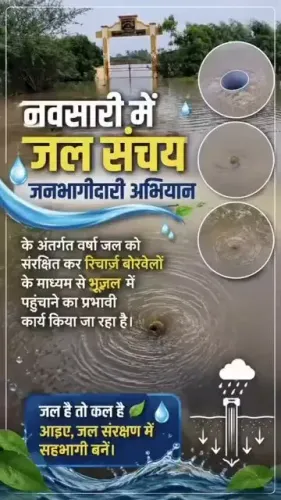
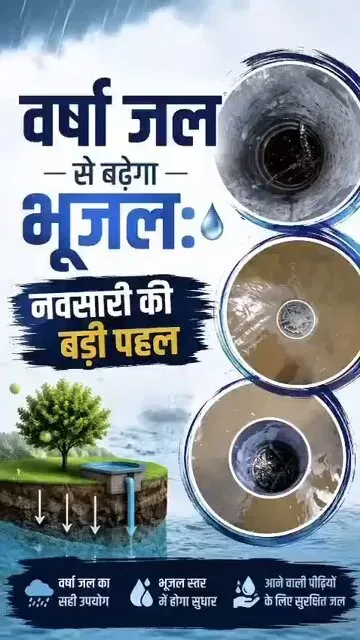
Union Jal Shakti Minister C. R. Paatil on 13 July 2026 highlighted recharge borewell structures being built in Navsari, Gujarat, under the Jal Sanchay Jan Bhagidari Abhiyan, channelling monsoon rainwater into aquifers through a joint effort of district administration and local communities.
Key Takeaways
Union Jal Shakti Minister C.
Paatil posted on 13 July 2026 about an ongoing groundwater recharge initiative in Navsari, Gujarat .
The work is being carried out under the Jal Sanchay Jan Bhagidari Abhiyan , channelling captured rainwater into aquifers via recharge borewells.
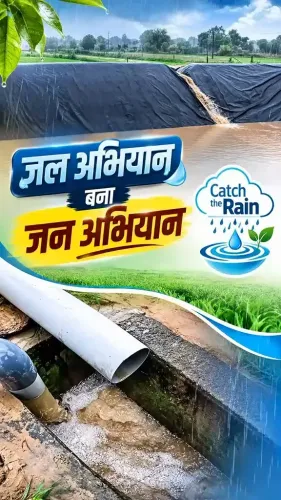
The initiative is framed as an implementation of Prime Minister Narendra Modi 's Catch the Rain campaign, launched in 2021 .
Structures are built jointly by the district administration and local communities, embodying the jan bhagidari (public participation) model.
The campaign targets prevention of monsoon runoff wastage and continuous enrichment of the groundwater table in a semi-arid region.
Progress data from the 2026 monsoon season is expected to be reviewed by the Ministry of Jal Shakti and assessed by the Central Ground Water Board .
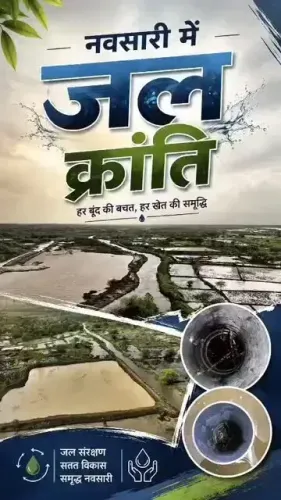
Union Jal Shakti Minister C. R. Paatil on Monday, 13 July 2026, spotlighted an ongoing rainwater harvesting initiative in Navsari, Gujarat, where recharge borewells are being used to channel captured monsoon water directly into the groundwater table under the Jal Sanchay Jan Bhagidari Abhiyan.
In his post, Minister Paatil described the effort as fulfilling Prime Minister Narendra Modi's vision of water conservation through the 'Catch the Rain' (Catch the Rain) campaign and community participation. He wrote that structures built jointly by the district administration and local communities are 'preventing rainwater from flowing away wastefully and continuously enriching the groundwater level.'
Context
The Navsari district initiative involves constructing water-harvesting structures that funnel monsoon rainfall into recharge borewells, replenishing aquifers rather than allowing runoff to drain away. The work is being carried out under the Jal Sanchay Jan Bhagidari Abhiyan, a programme that combines administrative machinery with active community involvement. Minister Paatil described it as 'an innovative effort' and called every drop saved 'an invaluable asset for the future.'
Gujarat, a state with significant semi-arid tracts, has historically faced groundwater stress during non-monsoon months. Navsari district, situated in south Gujarat, relies on monsoon recharge to sustain agriculture and domestic water needs through the dry season.
Policy Backdrop
The Catch the Rain campaign was launched by the Ministry of Jal Shakti in 2021 with the mandate to promote rainwater harvesting structures across all districts before and during the monsoon season. Its guiding principle — 'Catch the Rain, Where it Falls, When it Falls' — encourages states and local bodies to maximise in-situ water retention.
The campaign runs alongside the Jal Jeevan Mission, announced in 2019, which targets universal piped water supply while simultaneously stressing source sustainability and aquifer recharge. Together, the two programmes form the central government's dual-track approach to both supply and conservation. The Central Ground Water Board periodically assesses aquifer health across states, and recharge interventions of this kind are intended to reverse declining water tables in stressed regions.
Stakeholders and Impact
The Navsari model draws on two key actors: the district administration, which provides planning, technical support, and resources, and local communities, whose voluntary participation — jan bhagidari — is central to the campaign's design. This co-production model is intended to build local ownership of water assets and reduce dependence on external water supply.
Farmers, households, and small industries in the region stand to benefit from a stabilised groundwater table, particularly during the lean pre-monsoon months of April to June. Improved recharge also reduces the cost and energy burden of pumping water from deeper levels.
What's Next
The Ministry of Jal Shakti is expected to compile district-level progress data on recharge structures built during the 2026 monsoon season as part of its annual Catch the Rain review. The Central Ground Water Board will be a key source for assessing whether interventions in districts like Navsari translate into measurable aquifer recovery in subsequent assessments.
If the Navsari recharge borewell model demonstrates verifiable improvements in groundwater levels, it could serve as a replicable template for other semi-arid districts across Gujarat and neighbouring states, reinforcing the government's push for community-anchored water security ahead of the next pre-monsoon stress period.
Point of View
Timed to the active monsoon season when public attention to water issues peaks. By centering both administrative action and community participation, the messaging reinforces the BJP-led government's 'jan bhagidari' governance narrative. The Navsari highlight also carries a home-state dimension for Paatil, a Gujarat stalwart, lending the communication a dual purpose of policy promotion and regional outreach. The broader pattern suggests the Ministry of Jal Shakti is increasingly using social media to surface granular, district-level outcomes as evidence of scheme delivery ahead of a potential national review of groundwater data.
NationPress
12 Oct 2026
Frequently Asked Questions
What is the Jal Sanchay Jan Bhagidari Abhiyan?
The Jal Sanchay Jan Bhagidari Abhiyan is a water conservation programme under the Ministry of Jal Shakti that combines district administration planning with community participation to build rainwater harvesting and groundwater recharge structures across India.
What is the Catch the Rain campaign?
The Catch the Rain campaign was launched by the Ministry of Jal Shakti in 2021 with the aim of encouraging states, local bodies, and citizens to create rainwater harvesting structures before and during the monsoon season, following the principle of catching rain where it falls, when it falls.
How do recharge borewells work?
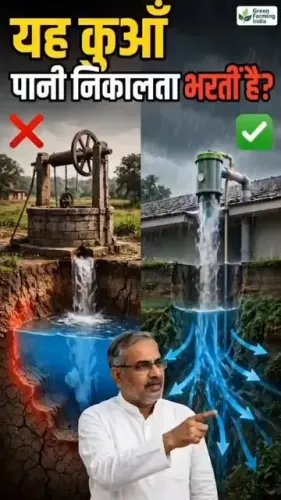
Recharge borewells are structures that direct captured surface rainwater underground through a borewell shaft, allowing it to percolate into aquifers and replenish the groundwater table rather than flowing away as runoff.
Why is groundwater recharge important in Navsari, Gujarat?
Navsari is in a semi-arid region of Gujarat where groundwater is a critical source for agriculture and domestic use. Monsoon recharge through structures like borewells helps sustain water availability through the dry pre-monsoon months.
What is C. R. Paatil's role in water conservation?
C. R. Paatil is the Union Minister of Jal Shakti, the central ministry responsible for water resources management, groundwater recharge programmes, and schemes like Catch the Rain and Jal Jeevan Mission across India.