CM Bhajanlal Sharma Feted Over Yamuna Water Deal for Shekhawati
Synopsis
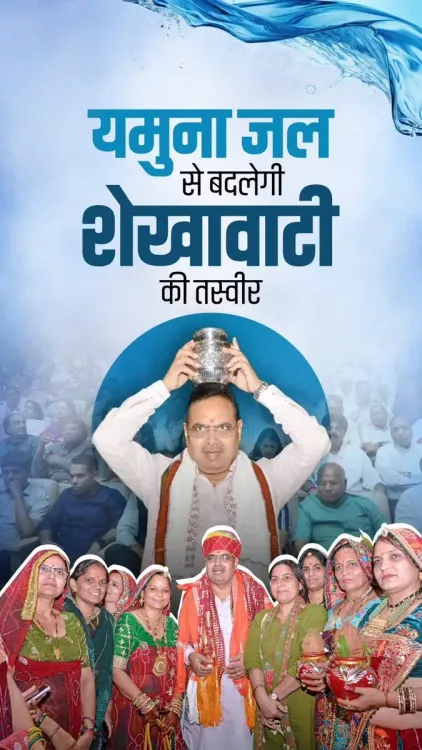
Chief Minister Bhajanlal Sharma was felicitated in Jaipur by the Shekhawati Foundation on 21 July 2026 for securing a Yamuna water agreement that promises to deliver river water to the arid districts of Sikar, Jhunjhunu and Churu, offering lasting relief to millions in northern Rajasthan.
Key Takeaways
CM Bhajanlal Sharma was felicitated in Jaipur by the Shekhawati Foundation on 21 July 2026 for the Yamuna water agreement.
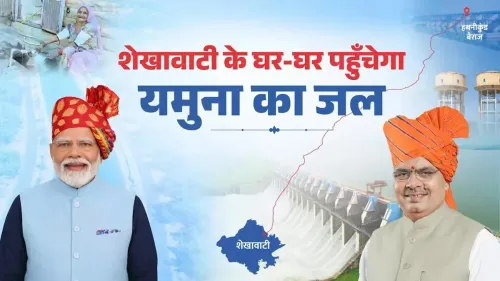
The agreement, facilitated under Prime Minister Narendra Modi , aims to channel Yamuna river water to the Shekhawati region.
The districts of Sikar , Jhunjhunu and Churu are the primary beneficiaries, with 'millions of people' expected to gain permanent water relief.
The 1994 Upper Yamuna Agreement had earlier allocated a share of Yamuna waters to Rajasthan, which this pact seeks to operationalise.
Implementation will require canal alignment, water-release schedules and fund allocation by the state water-resources department.
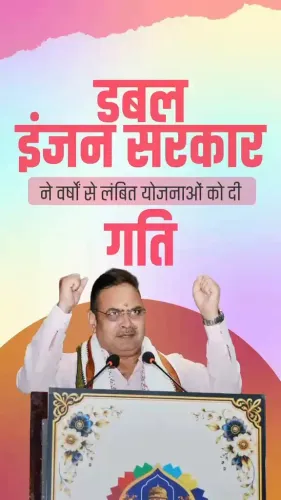
The government has framed the deal as a flagship achievement under its #AapnoAgraniRajasthan development narrative.
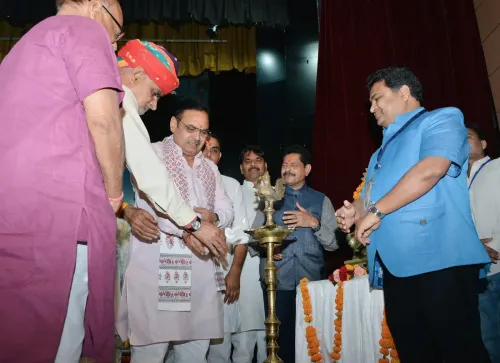
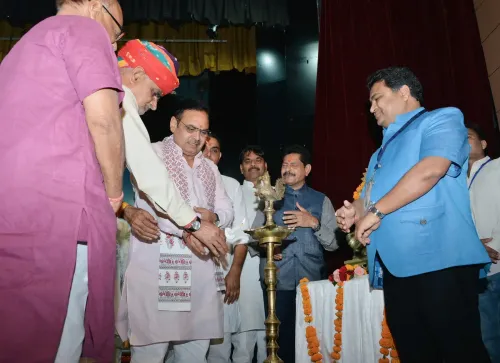
The Chief Minister's Office of Rajasthan announced on Tuesday, 21 July 2026 that Chief Minister Bhajanlal Sharma was felicitated in Jaipur by the Shekhawati Foundation in recognition of a landmark Yamuna water agreement that is set to channel river water to the arid Shekhawati region of northern Rajasthan.
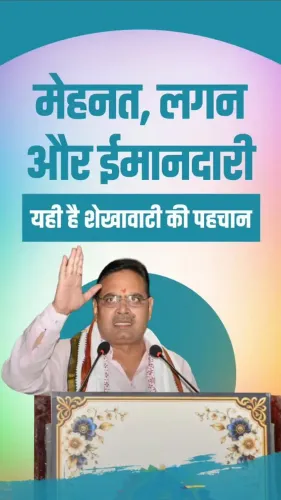
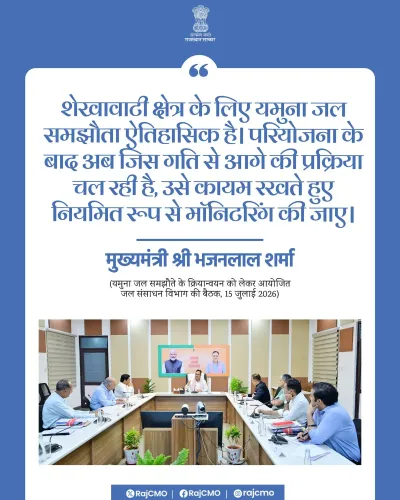
The official post, shared in Hindi, quoted CM Sharma as saying: 'Pradhanmantri Shri Narendra Modi ji ke netritva mein hue is samjhaute se Yamuna ka jal Shekhawati pahunchega' — ('Under the leadership of Prime Minister Narendra Modi, this agreement will bring Yamuna waters to Shekhawati') — and that it would give 'new momentum to the development of the region, including Sikar, Jhunjhunu and Churu, and provide permanent relief to millions of people.'
Context
The Shekhawati Foundation is a regional body that advocates for development across the three arid districts of Sikar, Jhunjhunu and Churu — collectively known as the Shekhawati belt. The felicitation ceremony in Jaipur was held to mark the conclusion of an inter-state Yamuna water pact described by the Chief Minister's Office as 'historic.' The agreement is positioned as a milestone in addressing the region's longstanding water crisis.
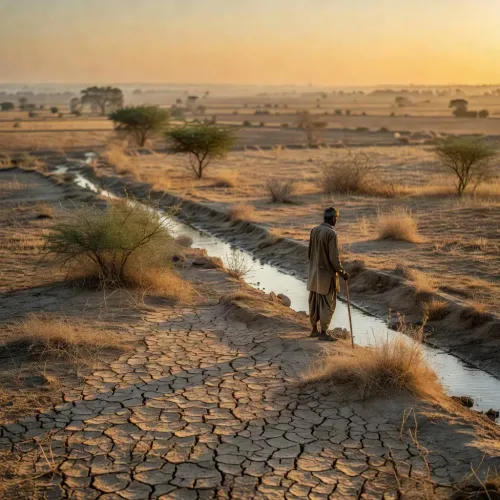
The Shekhawati belt has for decades grappled with acute groundwater depletion and unreliable drinking-water supply. Surface-water linkages through canal systems have long been identified as the most viable structural solution for these districts.
Policy Backdrop
Rajasthan's claim to Yamuna waters traces back to the 1994 Upper Yamuna Agreement, an inter-state compact that apportioned basin flows among Uttar Pradesh, Haryana, Rajasthan, Delhi and Himachal Pradesh. Successive state governments have sought to operationalise Rajasthan's allocated share through canal linkages to the north-western districts, with limited success until now.
The current agreement, facilitated at the central level under the Modi government, is presented as the mechanism that will finally translate that allocation into physical water delivery to Shekhawati. Central-government mediation in inter-state river disputes has been a recurring instrument of water governance across the country's arid western and north-western belt.
Stakeholders and Impact
Farmers and residents of Sikar, Jhunjhunu and Churu districts stand to be the primary beneficiaries. CM Sharma indicated that 'millions of people' in the region would receive 'permanent relief' — a reference to both drinking-water security and irrigation potential that could revive agricultural activity in a zone that has historically depended on depleting groundwater aquifers.
The Shekhawati Foundation's decision to publicly felicitate the Chief Minister signals broad regional endorsement of the agreement and is likely to amplify political support for the BJP-led state government ahead of future electoral cycles. Civil-society and farmer organisations in the three districts have long lobbied for a durable surface-water solution.
What's Next
The practical delivery of Yamuna water to Shekhawati will depend on notifications from the state water-resources department covering canal alignment, water-release schedules and fund allocation for the proposed lift or link project. These administrative and engineering steps are typically multi-year undertakings requiring coordination between state agencies and the central river board.
Observers will watch whether the state government tables a detailed project report and a financing plan in the near term, as the gap between inter-state agreement and actual water-at-tap has historically been wide in Rajasthan's major canal schemes. The hashtag #AapnoAgraniRajasthan ('Our Leading Rajasthan') used in the post signals the government's intent to frame this agreement as a signature achievement of its development agenda.
Point of View
Anchoring the BJP state government's identity to a long-pending demand of the Shekhawati electorate. By crediting Prime Minister Modi's central facilitation, the messaging reinforces the party's dual-government synergy narrative ahead of future polls. However, the distance between an inter-state pact and functional water delivery in Rajasthan has historically been vast, and the administration will face scrutiny on engineering timelines and budget commitments. The real test of this agreement's 'historic' status will be the speed and scale of canal infrastructure that follows.
NationPress
20 Oct 2026
Frequently Asked Questions
What is the Yamuna water agreement for Shekhawati?
The Yamuna water agreement is an inter-state pact, facilitated at the central level, intended to allocate and deliver Yamuna river water to the arid Shekhawati region of Rajasthan, covering Sikar, Jhunjhunu and Churu districts.
Which districts in Rajasthan will benefit from the Yamuna water deal?
The districts of Sikar, Jhunjhunu and Churu — the three districts that make up the Shekhawati region of northern Rajasthan — are the primary beneficiaries of the agreement.
Why is Shekhawati facing a water crisis?
Shekhawati is an arid belt in northern Rajasthan that has long suffered from severe groundwater depletion and unreliable drinking-water supply, making surface-water linkages through canals a critical development priority.
What role did PM Modi play in the Yamuna water agreement?
CM Bhajanlal Sharma credited Prime Minister Narendra Modi's leadership with facilitating the inter-state Yamuna water agreement that is intended to bring river water to the Shekhawati region.
What happens next after the Yamuna water agreement for Rajasthan?
The state water-resources department will need to issue notifications on canal alignment, water-release schedules and project funding before water physically reaches Shekhawati; these steps typically span multiple years.