CM Bhajanlal Visits Tanot Mata Temple, Honours BSF Jawans on Bhai Dooj
Synopsis
Chief Minister Bhajanlal Sharma visited the historic Tanot Mata Temple in Jaisalmer on Bhai Dooj, had protective threads tied by BSF women soldiers, and laid a wreath at the Vijay Stambh war memorial — blending festival tradition with frontier tribute.
Key Takeaways
CM Bhajanlal Sharma visited Tanot Mata Temple , Jaisalmer, on 12 November 2026 for Bhai Dooj celebrations.
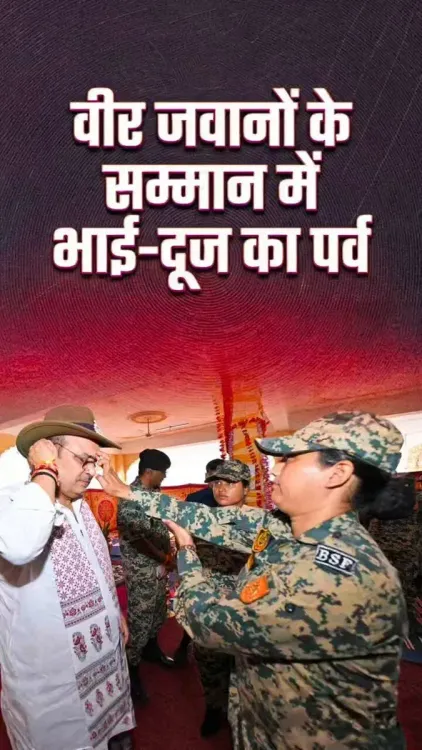
BSF women jawans tied raksha sutra on the Chief Minister's wrist during the temple ceremony.
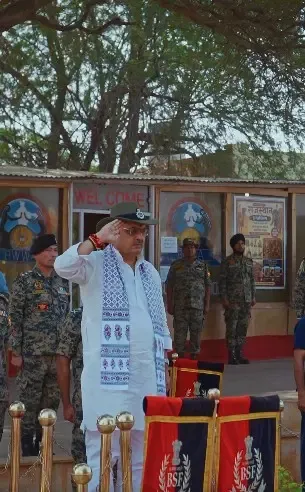
Sharma offered a floral wreath at the Vijay Stambh memorial, paying homage to martyrs of the 1971 Indo-Pak war .
Tanot Mata Temple is maintained by the BSF and is historically linked to miraculous protection during the 1965 and 1971 wars .
The visit continues a long-standing tradition of Rajasthan chief ministers engaging with border security forces during festivals.
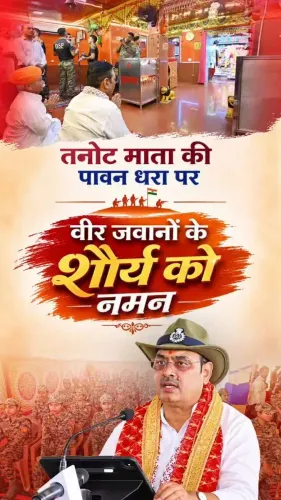
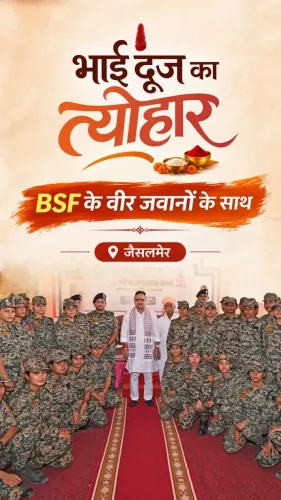
At the edge of the Thar Desert, within sight of the India-Pakistan border, Chief Minister Bhajanlal Sharma marked Bhai Dooj not in a ceremonial hall but among the women soldiers who guard the frontier — a gesture that blended faith, festival, and frontier duty into a single frame on Thursday, 12 November 2026.
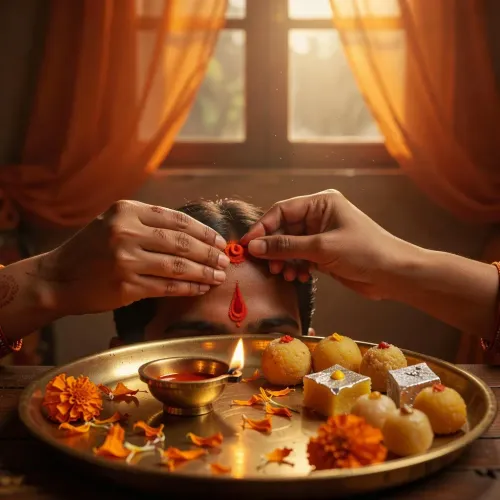
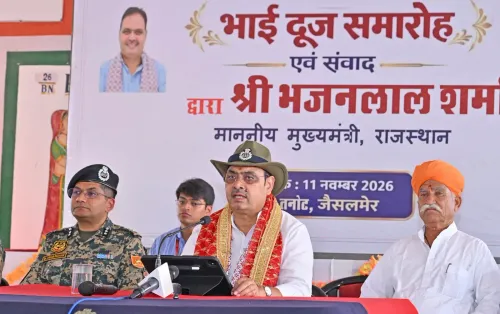
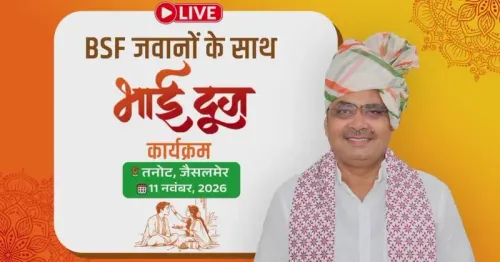
The Chief Minister's Office of Rajasthan posted that Sharma visited the Tanot Mata Temple in Jaisalmer and participated in the Bhai Dooj ceremony held in the temple complex. There, he had raksha sutra (protective threads) tied on his wrist by women jawans of the Border Security Force (BSF), exchanged greetings with them, and offered Bhai Dooj wishes — a tradition that symbolises a sister's prayer for a brother's protection, here extended across uniform and office.
A Wreath at the Vijay Stambh Before the Festivities
Before joining the temple celebration, Sharma laid a floral wreath at the Vijay Stambh — the memorial pillar in Jaisalmer that commemorates Indian soldiers who made the supreme sacrifice in the 1971 Indo-Pak war, including the legendary Battle of Longewala. The tribute preceded the festival, setting a tone of remembrance before rejoicing.
Why Tanot Mata Temple Carries the Weight of History
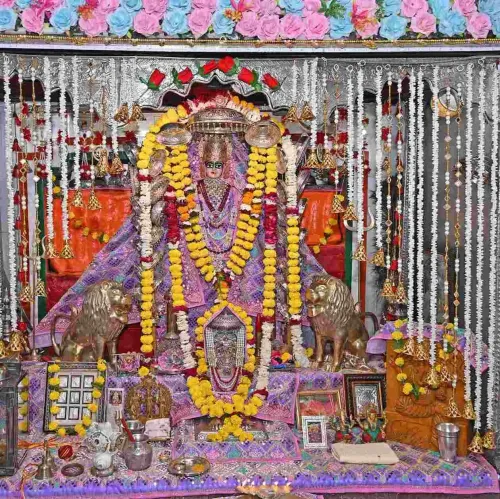
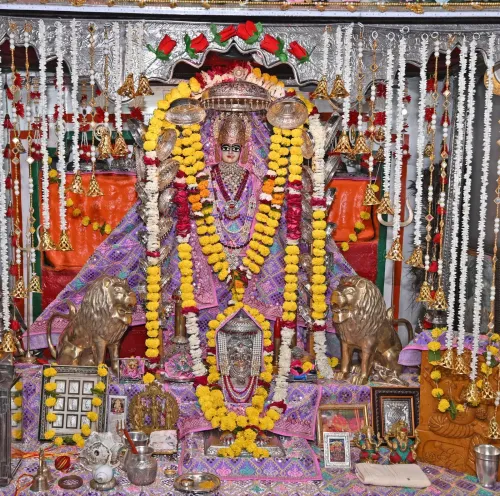
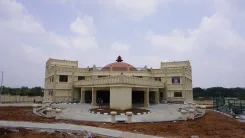
The Tanot Mata Temple is no ordinary pilgrimage site. Located deep in the Jaisalmer district, the shrine stands just kilometres from the Pakistani border and is inseparable from the memory of the 1965 and 1971 wars. Local lore — and BSF institutional memory — holds that the temple was miraculously unharmed despite heavy shelling during both conflicts, and the BSF has maintained the temple ever since. For personnel posted to this remote, strategically sensitive zone, the site is both a place of worship and a living monument to the wars fought on this sand.
Rajasthan's Border Belt and the Civil-Military Thread
Rajasthan chief ministers have made periodic visits to Tanot and nearby war memorials, particularly during festivals, as a way of maintaining civil-military ties along the western frontier. The practice is not incidental — the desert districts of Jaisalmer, Barmer, and Bikaner host a significant BSF presence, and state leaders engaging with security forces in their field postings serves a quiet but consistent diplomatic function: it signals that the state government sees the border not as a distant abstraction but as a living, inhabited front. Sharma, who took office in December 2023, continuing this tradition underscores its bipartisan institutional roots.
The hashtag #आपणो_अग्रणी_राजस्थान ('Our Leading Rajasthan') carried in the post reflects the Rajasthan government's ongoing branding around development and pride — but on the ground at Tanot on Bhai Dooj, the symbolism was simpler and sharper: a Chief Minister, a festival, a border temple, and the women who stand watch so the festival can be celebrated at all.
In the months ahead, welfare measures for BSF families in border districts and further infrastructure development in western Rajasthan's frontier zones are areas observers will watch closely.
Point of View
But its durability reveals something real: in border states, civil-military engagement at the grassroots level carries institutional weight that far outlasts any single government. For Sharma, attending the ceremony in person — rather than sending a representative — reinforces a BJP-era emphasis on visible solidarity with security forces, a theme that resonates electorally in Rajasthan's border districts. The Bhai Dooj framing, with BSF women jawans as the symbolic 'sisters,' also quietly highlights the force's growing gender integration at the frontier — a policy dimension the government is visibly keen to associate itself with. Whether this translates into concrete welfare or infrastructure announcements for border families will determine its policy substance beyond the optics.
NationPress
12 Nov 2026
Frequently Asked Questions
What is the Tanot Mata Temple and why is it significant?
The Tanot Mata Temple is a historic shrine in Jaisalmer district, located near the India-Pakistan border. It is revered for reportedly surviving heavy Pakistani shelling during the 1965 and 1971 wars without damage, and has been maintained by the BSF since then.
Why did CM Bhajanlal Sharma visit Jaisalmer on Bhai Dooj 2026?
Chief Minister Bhajanlal Sharma visited the Tanot Mata Temple in Jaisalmer to participate in the Bhai Dooj festival with BSF personnel, had a protective thread tied by women jawans, and paid tribute at the Vijay Stambh war memorial.
What is the Vijay Stambh in Jaisalmer?
The Vijay Stambh is a memorial pillar in Jaisalmer commemorating Indian soldiers who died in the 1971 Indo-Pak war, particularly those who fought in the Battle of Longewala.
What is raksha sutra in the context of Bhai Dooj?
A raksha sutra is a protective thread tied by a sister on her brother's wrist during Bhai Dooj as a symbol of prayer for his safety and well-being. At Tanot, BSF women jawans performed this ritual with the Chief Minister.
Does the BSF manage the Tanot Mata Temple?
Yes, the Border Security Force has maintained and managed the Tanot Mata Temple since the 1971 war, as the temple is located in a sensitive border zone in Rajasthan's Jaisalmer district.