Sitharaman's MPLADS Funds India's First LED Dome Planetarium
Synopsis
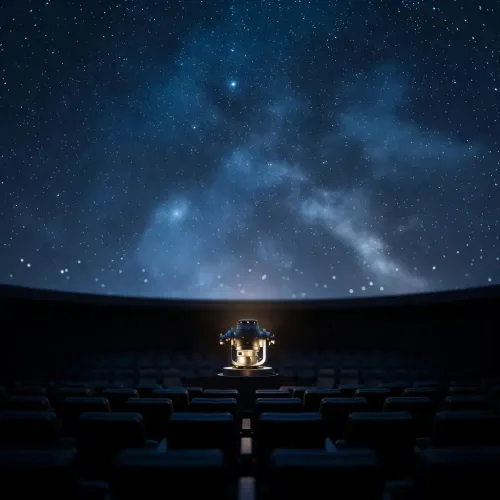
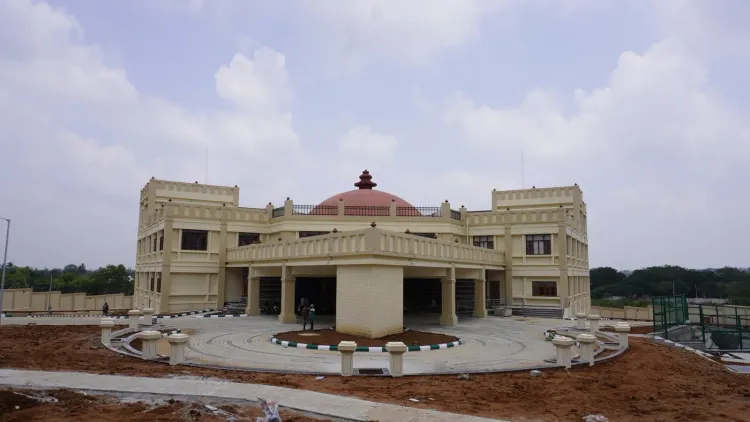
Prime Minister Modi will inaugurate COSMOS-Mysuru on 13 November 2026 — India's first LED Dome planetarium, built by the Indian Institute of Astrophysics and funded in part by Finance Minister Sitharaman's ₹5 crore MPLADS contribution. The 15-metre tilted dome features 6,150 panels housing 4.2 crore LEDs for real-time immersive astronomy shows.
Key Takeaways
PM Narendra Modi will inaugurate the COSMOS-Mysuru Planetarium on 13th November 2026 .
Built by the Indian Institute of Astrophysics (IIA) , it is India's first LED Dome planetarium .
The dome spans 15 metres and comprises around 6,150 panels with 4.2 crore individual LEDs controllable in real time.
Finance Minister Nirmala Sitharaman contributed ₹5 crore through her MPLADS allocation to fund the project.
The Sky Theatre will screen astronomy programmes and an in-house film on Mysuru's astronomical heritage in Kannada, English, and Hindi .
Unlike projector-based planetariums, the LED panels allow real-time control, enabling fully interactive and immersive experiences.
India's science education landscape gets a dazzling upgrade on 13th November 2026, when Prime Minister Narendra Modi inaugurates the COSMOS-Mysuru Planetarium — a facility unlike any other in the country, built not with projectors and passive screens, but with 4.2 crore individual LEDs stitched across a living dome. Union Finance Minister Nirmala Sitharaman shared the announcement on 12th November 2026, noting that the project received ₹5 crore in funding through her own MPLADS contribution.
India's First LED Dome: What Makes COSMOS-Mysuru Different
Built by the Indian Institute of Astrophysics (IIA), COSMOS-Mysuru is India's first LED Dome planetarium — and the distinction matters. Conventional planetariums fire images onto a passive dome using a projector at the centre. Here, the dome itself is the display: a 15-metre tilted dome made up of around 6,150 panels, each studded with LEDs that can be controlled in real time. The result is an immersive visual environment that can shift, respond, and adapt in ways no projector-based setup can match.
That real-time controllability opens entirely new possibilities for astronomy education — from live celestial simulations to interactive shows that respond to audience questions. It is a leap in the same direction that high-end planetariums in Europe and Japan have pursued, now arriving in Mysuru, Karnataka.
Sitharaman's ₹5 Crore MPLADS Push and the IIA Connection
The Members of Parliament Local Area Development Scheme (MPLADS) allows sitting MPs to recommend development works in their constituencies, with an annual entitlement currently set at ₹5 crore per year. Sitharaman, who represents Mysuru as a Rajya Sabha member from Karnataka, channelled that allocation toward the COSMOS project — a pointed use of a discretionary fund often associated with roads and drains, redirected here toward cutting-edge science infrastructure.
The Indian Institute of Astrophysics, headquartered in Bengaluru with field stations across southern India, is one of India's premier astronomy research bodies. Its decision to build COSMOS-Mysuru reflects a broader IIA mandate to bridge research and public science communication — and COSMOS is its most ambitious public-facing project yet.
Sky Theatre, Three Languages, and a Film About Mysuru's Astronomical Past
The planetarium's Sky Theatre will screen professionally produced astronomy programmes for the public. Alongside those, an in-house film will explore the deep historical connection between Mysuru and astronomy — a nod to the region's rich heritage as a centre of scientific patronage under the Wadiyar dynasty. Shows will run in Kannada, English, and Hindi, ensuring the facility serves local communities as much as visiting students and tourists.
That trilingual offering signals an intent to make COSMOS a genuine community resource, not merely a showcase for technology. For schoolchildren from across Karnataka who may never visit a metro-city science museum, this dome could be their first encounter with the scale of the universe — rendered in 4.2 crore points of light.
When PM Modi flips the switch tomorrow, he will not just inaugurate a building. He will light up what is now the most technologically advanced public planetarium in India — and the question it immediately raises is which city builds the next one.
Point of View
Sitting alongside space milestones like Chandrayaan and Gaganyaan in the government's public-communication playbook. COSMOS-Mysuru may also set a template: MPLADS funds channelled into science outreach could be a replicable model for other MP constituencies with research institutions nearby.
NationPress
12 Nov 2026
Frequently Asked Questions
What is the COSMOS-Mysuru Planetarium?
COSMOS-Mysuru is India's first LED Dome planetarium, built by the Indian Institute of Astrophysics (IIA) in Mysuru, Karnataka. It features a 15-metre tilted dome with around 6,150 panels housing 4.2 crore individual LEDs that can be controlled in real time for immersive astronomy shows.
Who will inaugurate COSMOS-Mysuru and when?
Prime Minister Narendra Modi will inaugurate the COSMOS-Mysuru Planetarium on 13th November 2026.
How did Nirmala Sitharaman contribute to COSMOS-Mysuru?
Finance Minister Nirmala Sitharaman contributed ₹5 crore to the COSMOS-Mysuru Planetarium through her Members of Parliament Local Area Development Scheme (MPLADS) allocation.
What makes the COSMOS-Mysuru Planetarium different from other planetariums in India?
Unlike conventional planetariums that project images onto a passive dome, COSMOS-Mysuru uses LED panels as the dome surface itself. These 4.2 crore LEDs across 6,150 panels can be controlled in real time, creating a fully interactive and immersive experience.
In which languages will COSMOS-Mysuru shows be available?
Shows at the COSMOS-Mysuru Sky Theatre will be available in Kannada, English, and Hindi.