CM Bhajanlal Sharma Links 1925 Canal Legacy to 2025 Modernisation Drive

Synopsis
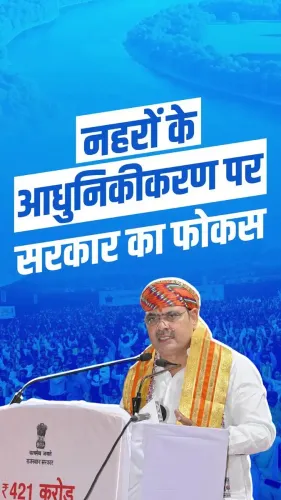
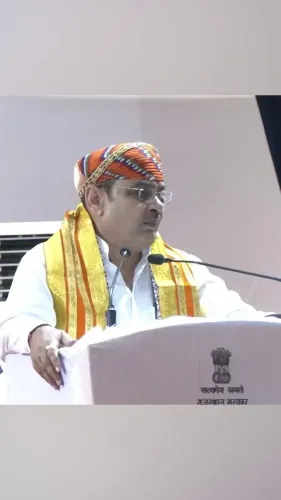
Chief Minister Bhajanlal Sharma, addressing a felicitation event at Birla Auditorium on 21 July 2026, linked Maharaja Ganga Singh's 1925 canal inaugurations to the Rajasthan government's 2025 foundation-laying for strengthening and modernising the Ganga and Indira Gandhi canals, framing both milestones under the Yamuna Water Agreement.
Key Takeaways
CM Bhajanlal Sharma addressed the Yamuna Water Agreement felicitation programme at Birla Auditorium on 21 July 2026 .
Maharaja Ganga Singh inaugurated the Ganga Canal and the Indira Gandhi Canal in 1925 .
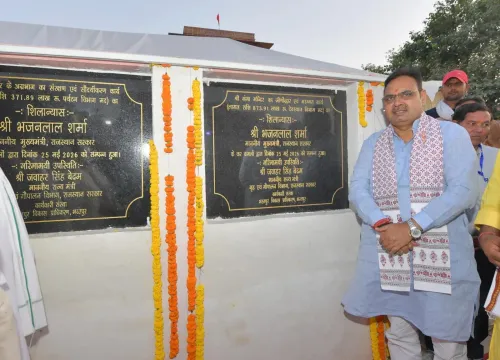
The Rajasthan government laid the foundation stone for canal strengthening and modernisation on the same date in 2025 , a century later.
The modernisation works are linked to the broader achievement of the Yamuna Water Agreement .
Key beneficiaries include farmers and communities in irrigation-dependent and arid western districts of Rajasthan.
Rollout timelines and funding releases for the canal works remain to be confirmed.
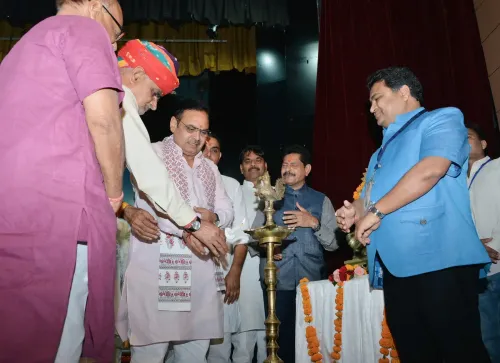
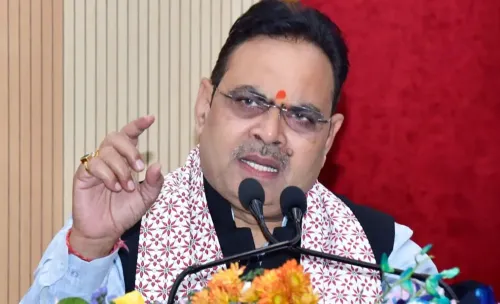
Chief Minister Bhajanlal Sharma of Rajasthan addressed a felicitation and gratitude programme at Birla Auditorium on 21 July 2026, convened to mark the achievement of the Yamuna Water Agreement. Speaking at the event, he drew a direct historical line between Maharaja Ganga Singh's landmark irrigation works of 1925 and the state's current canal modernisation push.
Context
Addressing the gathering, CM Bhajanlal Sharma stated that Maharaja Ganga Singh had inaugurated the Ganga Canal and the Indira Gandhi Canal in 1925. He noted that the present government chose the same calendar date in 2025 to lay the foundation stone for the strengthening and modernisation of these very canal systems — a symbolic gesture tying a century of water infrastructure together. In Hindi, he framed it as: 'हमने उसी तारिख को वर्ष 2025 में इन नहरों के सुदृढ़ीकरण एवं आधुनिकीकरण के लिए कार्यों का शिलान्यास किया' ('On that very date in 2025, we laid the foundation for the strengthening and modernisation of these canals').
Policy Backdrop
The Ganga Canal, conceived and inaugurated by Maharaja Ganga Singh of Bikaner, was a pioneering irrigation project that brought organised water supply to the arid Bikaner region and surrounding districts in the early twentieth century. The Indira Gandhi Canal, one of India's longest canal systems, later extended irrigation and drinking water access to the western districts of Rajasthan, including Barmer, Jaisalmer, and Bikaner.
Rajasthan has historically pursued both engineering upgrades to colonial-era infrastructure and inter-state water-sharing negotiations to address chronic water scarcity. The 2025 foundation-laying for canal strengthening was positioned as a direct continuation of this century-old effort, now energised by the recently concluded Yamuna Water Agreement.
Stakeholders and Impact
The primary beneficiaries of the canal modernisation works are farmers and rural communities across irrigation-dependent districts of Rajasthan, particularly in the arid western and north-western belt. Strengthening and modernising ageing canal infrastructure is expected to improve water delivery efficiency, reduce seepage losses, and expand the irrigated area available to cultivators.
The Yamuna Water Agreement provides the broader inter-state framework that underpins the state's confidence in augmenting downstream infrastructure. Any additional water secured through the accord would require robust canal capacity to be effectively distributed to end users.
What's Next
Attention will now turn to the rollout timelines and funding releases for the announced canal strengthening and modernisation works. Follow-up meetings of the Yamuna water-sharing mechanism will also be closely watched to assess whether the inter-state accord translates into measurable increases in water availability for Rajasthan. The state's ability to deliver on centenary infrastructure promises will be a key measure of the agreement's practical value for farmers and households dependent on these canal systems.
Point of View
The Bhajanlal Sharma government is making a deliberate symbolic argument: that its Yamuna Water Agreement is not an isolated diplomatic win but the latest chapter in Rajasthan's long arc of water security. This framing serves a dual political purpose — honouring a pre-independence ruler respected across caste lines in Bikaner, while anchoring a present-day policy achievement in historical legitimacy. The move also signals that the state intends to convert the inter-state accord into visible on-ground infrastructure, a critical step given that water agreements in India have often stalled at the diplomatic stage. Whether the canal modernisation works receive timely funding and meet their targets will ultimately determine whether the symbolism translates into tangible relief for Rajasthan's farming communities.
NationPress
20 Oct 2026
Frequently Asked Questions
What is the Yamuna Water Agreement and why is Rajasthan celebrating it?
The Yamuna Water Agreement is an inter-state water-sharing accord that Rajasthan has recently concluded. The state celebrated its achievement at a felicitation programme at Birla Auditorium on 21 July 2026, recognising it as a significant step towards addressing the state's long-standing water scarcity.
Who was Maharaja Ganga Singh and what did he do for Rajasthan's irrigation?
Maharaja Ganga Singh was the ruler of the princely state of Bikaner who inaugurated the Ganga Canal and the Indira Gandhi Canal in 1925, laying the foundation for organised irrigation in the arid regions of what is now Rajasthan.
What is the Ganga Canal in Rajasthan?
The Ganga Canal is a historic irrigation canal system inaugurated by Maharaja Ganga Singh in 1925. It was a pioneering project that brought structured water supply to the Bikaner region and surrounding districts in western Rajasthan.
What did CM Bhajanlal Sharma announce for canal modernisation in Rajasthan?
CM Bhajanlal Sharma stated that the Rajasthan government laid the foundation stone for the strengthening and modernisation of the Ganga Canal and the Indira Gandhi Canal in 2025, choosing the same date as Maharaja Ganga Singh's original 1925 inauguration.
How does the Yamuna Water Agreement benefit Rajasthan farmers?
The Yamuna Water Agreement provides an inter-state framework for increased water availability for Rajasthan. Combined with the planned canal modernisation works, it is expected to improve irrigation access for farmers, particularly in the arid western and north-western districts of the state.