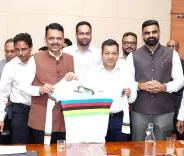
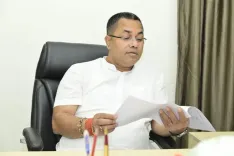
CM Bhajanlal Sharma approves ₹57.41 cr mandi upgrade
Synopsis
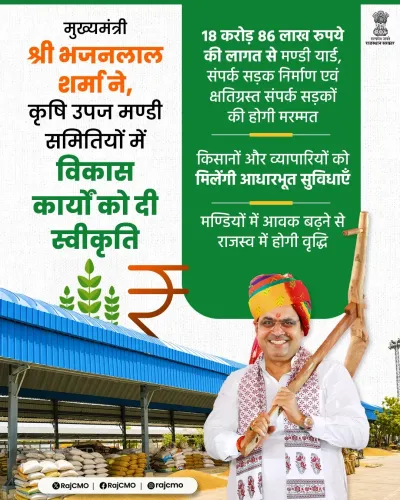
Chief Minister Bhajanlal Sharma has sanctioned ₹57.41 crore for infrastructure works — mandi yard construction, electrification, new connectivity roads, and road repairs — across Rajasthan's Agricultural Produce Market Committees, benefiting farmers and traders statewide.
Key Takeaways
₹57 crore 41 lakh approved by CM Bhajanlal Sharma for APMC infrastructure development across Rajasthan.
Works cover four areas: mandi yard construction , electrification , new connectivity roads , and repair of damaged roads .
Funds will flow through the Rajasthan Agricultural Marketing Board , which oversees mandis across all 33 districts .
The move continues a pattern of successive state governments investing in mandi physical infrastructure to reduce post-harvest losses and improve market access.
Specific mandis to benefit and rollout timelines have not yet been announced.
Integration with the central e-NAM platform remains a key policy variable to watch.
Rajasthan's agricultural markets are in line for a significant physical overhaul — Chief Minister Bhajanlal Sharma has approved development works worth ₹57 crore 41 lakh aimed at strengthening the infrastructure of the state's various Agricultural Produce Market Committees (APMCs), the Chief Minister's Office of Rajasthan announced on Tuesday, 29 September 2026.
What the ₹57.41 crore will build
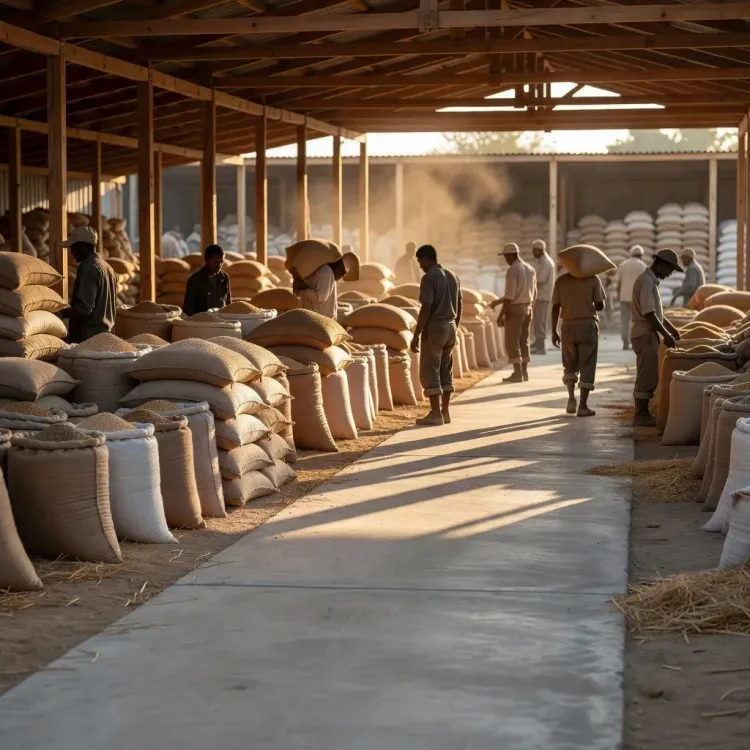
The sanctioned amount will fund four categories of work across multiple mandi committees: construction of mandi yards, electrification works, construction of new connectivity roads, and repair of damaged roads already serving mandi premises. The CMO's post, tagged under the state's development campaign hashtag #आपणो_अग्रणी_राजस्थान ('Our Leading Rajasthan'), frames the approval as part of the government's broader push to make rural markets more functional and accessible.
The four work-streams are tightly interlinked. A new mandi yard without reliable electricity cannot run cold-storage or weighing equipment; a mandi with poor road connectivity hemorrhages value before a farmer's produce ever reaches a buyer. By bundling yard construction, power works, and road infrastructure into a single approval, the state is trying to fix the full chain at once — not just patch individual weak points.
Rajasthan's mandi network and why connectivity gaps hurt farmers
Rajasthan's Agricultural Marketing Board oversees a sprawling network of regulated markets spread across the state's 33 districts — one of India's largest agri-market footprints by area. The state's agrarian economy, which depends heavily on crops like mustard, wheat, gram, and bajra, channels enormous volumes of produce through these yards each season. Yet physical infrastructure at many committees has historically lagged demand: crumbling approach roads raise transport costs, inadequate lighting and electrification reduce operating hours, and poorly constructed yards expose commodities to weather damage.
Successive Rajasthan governments have periodically released mandi-infrastructure funds under annual budgets and the state's Agricultural Marketing Development programme. CM Sharma's BJP administration, in office since December 2023, has positioned rural connectivity and agri-market upgradation as visible deliverables in its early governance record.
Farmers and traders watch the rollout
For the two groups who live or die by mandi conditions — farmers and mandi traders — the key question is which committees are selected first and how fast groundwork begins. The announcement does not specify which mandis will receive which works; that selection and sequencing, managed by the Rajasthan Agricultural Marketing Board, will determine whether the benefit concentrates in a handful of well-connected district headquarters or reaches the more remote, infrastructure-starved rural committees. Watchers will also track whether the investment eventually integrates with the central government's e-NAM (electronic National Agriculture Market) platform, which requires baseline physical and digital infrastructure at participating mandis.
Half a century of mandi policy in India shows that money sanctioned and money spent are two different milestones. The real test comes when farmers drive their tractor-trolleys over a freshly laid approach road that wasn't there last harvest season.
Point of View
Tangible governance signal from a BJP state government that entered office promising rural development delivery. By bundling yard construction, electrification, and road works into one approval, CM Bhajanlal Sharma avoids the criticism that past schemes fixed one infrastructure bottleneck while ignoring others. The announcement arrives under the hashtag campaign 'Aapno Agrani Rajasthan,' suggesting the administration is consciously building a narrative of state-led rural modernisation ahead of the political cycle. The harder test — whether rollout reaches remote mandis rather than district headquarters already plugged into better infrastructure — will define whether this becomes a genuine farmer-welfare milestone or a well-funded urban-rural photo opportunity.
NationPress
30 Sept 2026
Frequently Asked Questions
What has CM Bhajanlal Sharma approved for Rajasthan mandis?
CM Bhajanlal Sharma has approved development works worth ₹57 crore 41 lakh to strengthen infrastructure across various Agricultural Produce Market Committee (APMC) mandis in Rajasthan, covering yard construction, electrification, new roads, and road repairs.
Which mandis in Rajasthan will benefit from the ₹57 crore?
The specific mandis to receive funds have not been named in the announcement. The Rajasthan Agricultural Marketing Board is expected to manage the selection and rollout across the state's 33 districts.
What infrastructure works will be done at Rajasthan APMCs?
The four types of work sanctioned are: construction of mandi yards, electrification works, construction of new connectivity roads, and repair of existing damaged roads serving mandi premises.
Who oversees mandi development in Rajasthan?
The Rajasthan Agricultural Marketing Board is the state agency responsible for overseeing development and infrastructure projects at Agricultural Produce Market Committees across the state.
What is e-NAM and how does it connect to this mandi upgrade?
e-NAM (electronic National Agriculture Market) is the central government's online trading platform for agricultural commodities. Mandis must have adequate physical and digital infrastructure to join the platform, making the current infrastructure upgrade a potential enabler for Rajasthan mandis to integrate with e-NAM in future.