CM Bhajanlal Chairs Lokmanthan-2026 Meet, Leads Bhoomi Pujan
Synopsis
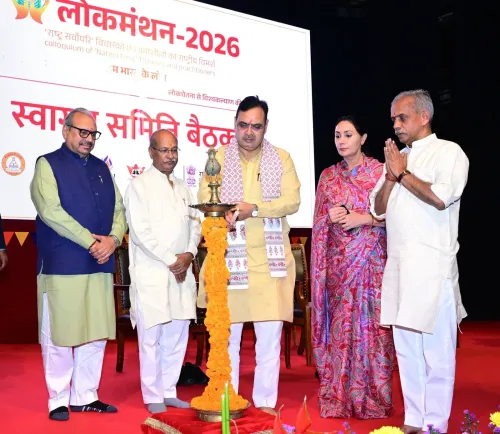
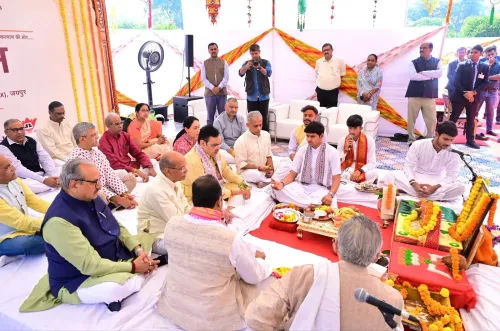
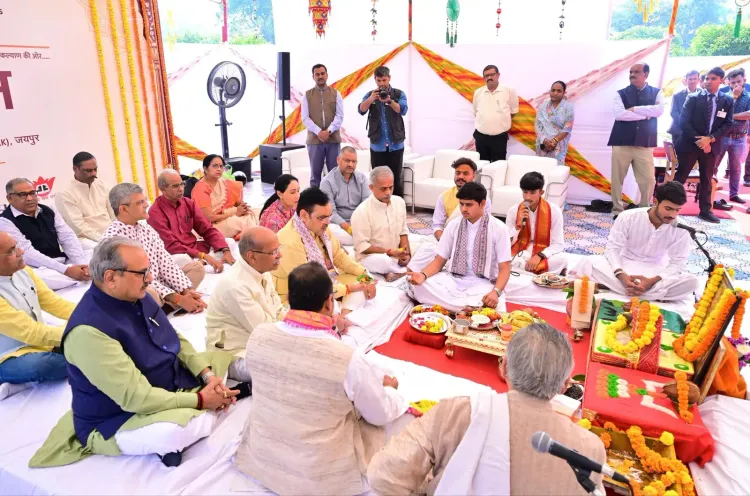
Rajasthan Chief Minister Bhajanlal Sharma performed the bhoomi pujan for Lokmanthan-2026 at Jawahar Kala Kendra, Jaipur, and chaired the welcome-committee meeting on 19 November 2026. The three-day conclave themed 'Hum Bharat Ke Log' is set for 4-6 December 2026.
Key Takeaways
Bhoomi pujan performed: CM Bhajanlal Sharma conducted a formal Vedic ground-breaking ritual at the Lokmanthan-2026 venue on 19 November 2026.
Event dates and venue: Lokmanthan-2026 runs from 4 to 6 December 2026 at Jawahar Kala Kendra, Jaipur .
Theme: 'Hum Bharat Ke Log' — centred on national consciousness and India's cultural heritage.
Key organisers present: Deputy CM Diya Kumari (organising committee chair), RSS regional Sanghchalak, and Vigyan Bharati's National Secretary Dr.
Stated goal: Carry traditions and national pride to every citizen and familiarise the next generation with India's glorious past.
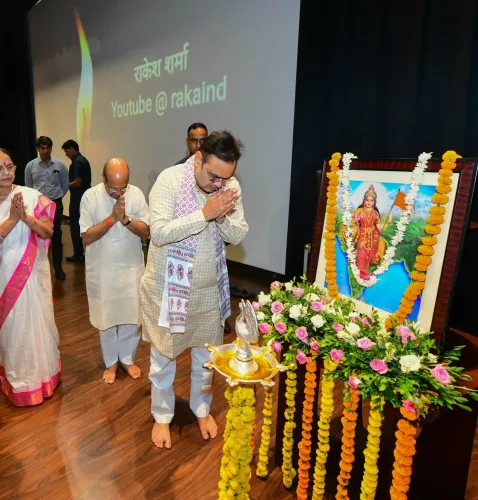
With Vedic chants filling the air at Jawahar Kala Kendra, Jaipur, Rajasthan Chief Minister Bhajanlal Sharma performed the formal bhoomi pujan (ground-breaking ritual) for Lokmanthan-2026 on Thursday, 19 November 2026 — consecrating the site ahead of a three-day cultural conclave that his government is positioning as a mass platform for national consciousness and civilisational pride.
A 'Nation First' conclave anchored at Jaipur's arts hub
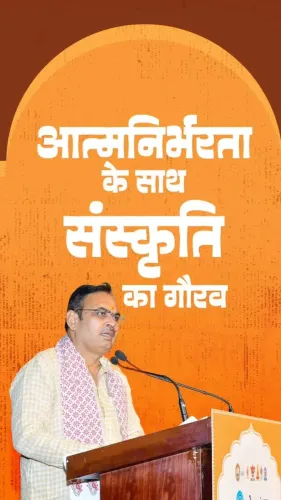
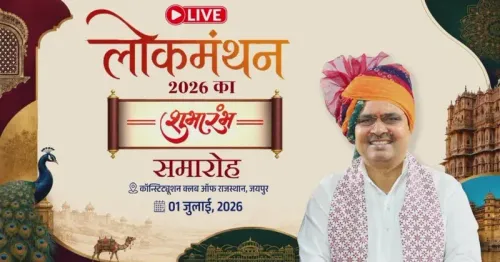
Themed 'Hum Bharat Ke Log' (We, the People of India), Lokmanthan-2026 is scheduled to run from 4 to 6 December 2026 at Jawahar Kala Kendra — Jaipur's landmark multi-arts centre. At the welcome-committee meeting that followed the ritual, CM Sharma presided as chairman and laid out the event's core purpose. 'The essential spirit of Lokmanthan,' he said, 'is to keep the idea of Rashtra Pratham — nation first — at the centre, and to advance our glorious culture, traditions, and knowledge heritage.' He added that the gathering would carry national consciousness and tradition to every citizen, while introducing the next generation to their 'glorious past and values.'
Diya Kumari, RSS, and Vigyan Bharati on the organising committee
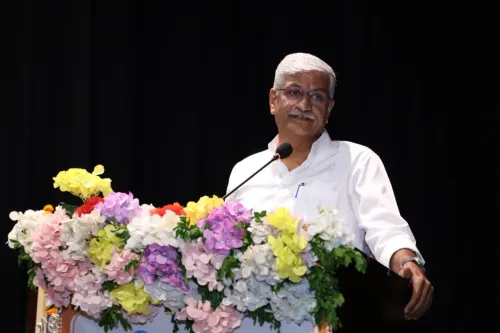
Deputy Chief Minister Diya Kumari — a member of the erstwhile Jaipur royal family and chairperson of the organising committee — was present at the meeting alongside the Rashtriya Swayamsevak Sangh's regional Sanghchalak, and Dr. Shivkumar, National Organisation Secretary of Vigyan Bharati, the science body that works to integrate traditional Indian knowledge with modern science. Saints, religious leaders, and intellectuals from various fields also attended.
BJP's Rajasthan chapter and the 'cultural governance' pattern
The BJP administration that took office in Rajasthan in December 2023 has consistently paired governance messaging with events that foreground Hindu cultural heritage and national unity — often in collaboration with RSS-affiliated organisations. Lokmanthan fits squarely into that pattern: a high-visibility state-backed conclave, co-organised with bodies like Vigyan Bharati, designed to reach youth and civil society simultaneously. The choice of Jawahar Kala Kendra — a prestige cultural venue built to celebrate India's artistic traditions — amplifies the symbolic weight the government is attaching to the event.
What the three days of programming will produce — resolutions, cultural charters, or follow-up initiatives — will be the real measure of the conclave's reach beyond the ceremonial curtain-raiser held today.
Point of View
The administration signals institutional depth beyond the ruling party alone. The 'Hum Bharat Ke Log' theme is a direct echo of the constitutional preamble, a rhetorical move that appropriates civic language for a culturally nationalist register. Whether the conclave translates into lasting youth engagement or remains a high-visibility ceremonial moment will shape how the BJP frames its cultural-governance record heading into future electoral cycles.
NationPress
19 Nov 2026
Frequently Asked Questions
What is Lokmanthan-2026?
Lokmanthan-2026 is a three-day cultural conclave themed 'Hum Bharat Ke Log' (We, the People of India), organised by the Rajasthan government and scheduled at Jawahar Kala Kendra, Jaipur, from 4 to 6 December 2026.
Who performed the bhoomi pujan for Lokmanthan-2026?
Chief Minister Bhajanlal Sharma performed the formal bhoomi pujan (ground-breaking ritual) at the Lokmanthan-2026 venue on 19 November 2026, offering the final oblation into the havan amid Vedic chants.
What is the theme of Lokmanthan-2026?
The theme is 'Hum Bharat Ke Log' — 'We, the People of India' — focused on national consciousness, cultural heritage, and passing India's traditions to the next generation.
Who is on the Lokmanthan-2026 organising committee?
Deputy Chief Minister Diya Kumari chairs the organising committee. The welcome-committee meeting also included the RSS regional Sanghchalak, Vigyan Bharati's National Organisation Secretary Dr. Shivkumar, and saints and intellectuals from various fields.
Where is Jawahar Kala Kendra located?
Jawahar Kala Kendra is a multi-arts centre in Jaipur, Rajasthan, established to promote visual and performing arts. It is the venue for Lokmanthan-2026.