CM Bhajanlal Sharma Meets Sambal Sakhi Young Professionals in Jaipur
Synopsis
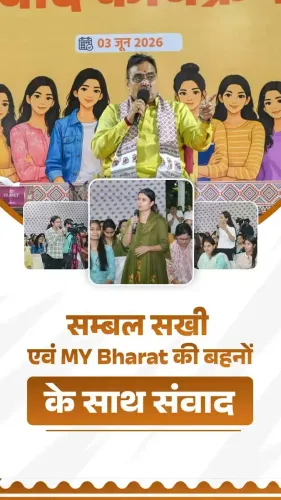
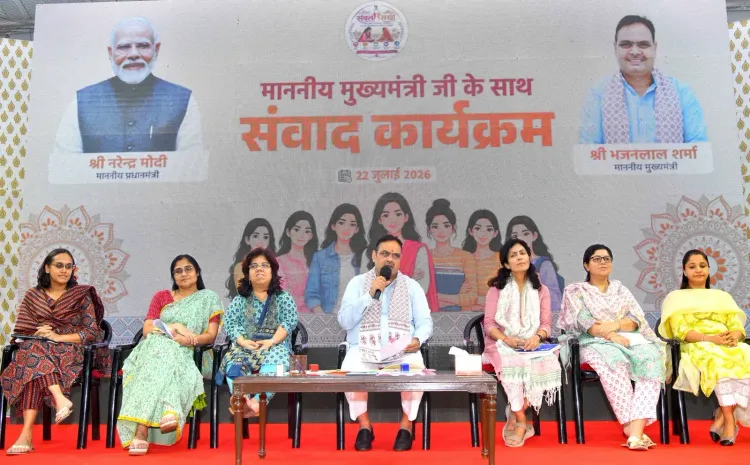
Chief Minister Bhajanlal Sharma met Sambal Sakhi Young Professionals at his Jaipur residence on 23 July 2026, stressing their role in women's empowerment, welfare scheme delivery, and the Viksit Rajasthan–2047 vision.
Key Takeaways
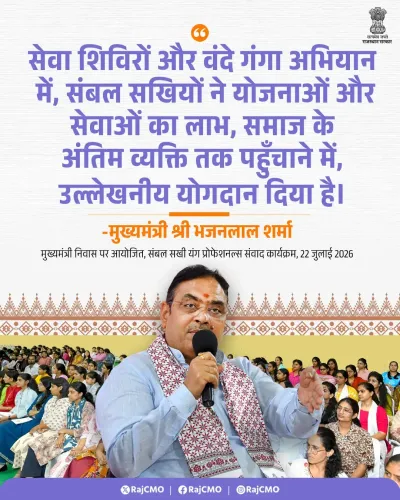
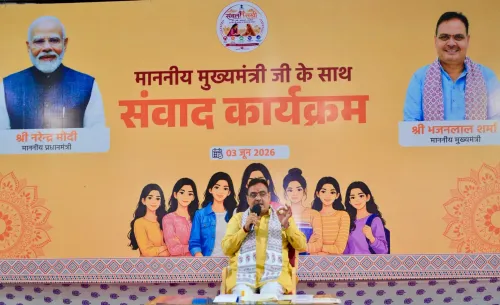
CM Bhajanlal Sharma held a direct interactive session with Sambal Sakhi Young Professionals at the Chief Minister's Residence in Jaipur on 23 July 2026 .
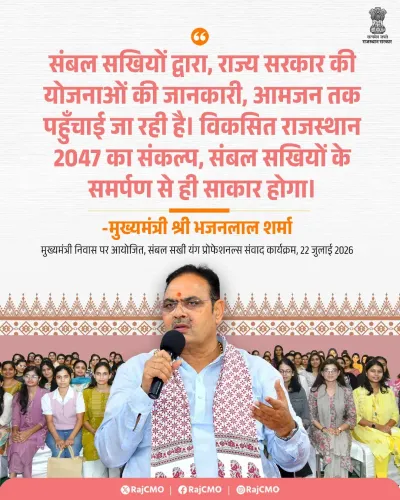
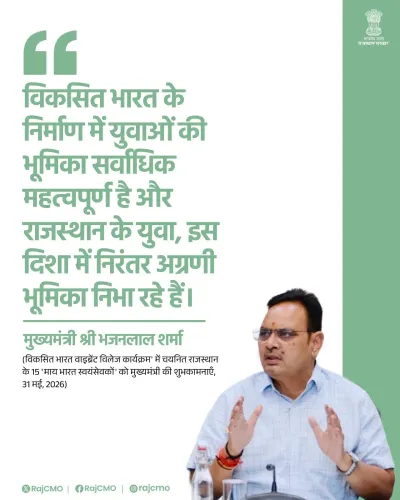
He emphasised the role of Sambal Sakhis in last-mile delivery of state welfare schemes and the Viksit Rajasthan–2047 vision.
The CM urged active participation in seva shivirs (service camps) and the Vande Ganga Abhiyan .
The Sambal Sakhi initiative is part of Rajasthan's broader strategy to deploy trained young women as frontline welfare facilitators.
The session reflects the BJP government's focus on participatory governance and gender inclusion since taking office in December 2023 .
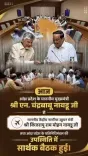
The Chief Minister's Office of Rajasthan announced on Thursday, 23 July 2026 that Chief Minister Bhajanlal Sharma held an interactive session with Sambal Sakhi Young Professionals at the Chief Minister's Residence in Jaipur, focusing on women's empowerment and last-mile delivery of state welfare schemes.
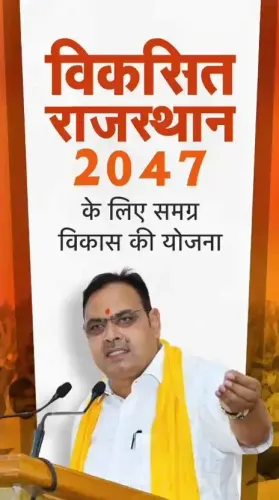
During the interaction, CM Sharma underscored the role of Sambal Sakhis in advancing the state's Viksit Rajasthan–2047 vision — Rajasthan's roadmap aligned with India's national Viksit Bharat @2047 goal. He urged the young professionals to actively participate in seva shivirs (service camps), the Vande Ganga Abhiyan, and the effective implementation of public welfare programmes, while also exchanging experiences with them directly.
Context
The Sambal Sakhi initiative represents Rajasthan's effort to recruit and deploy trained young women as frontline facilitators for state welfare delivery. CM Sharma, who took office in December 2023 following the BJP's victory in state assembly elections, has positioned participatory governance — particularly through women's networks — as a cornerstone of his administration's approach.
The session at Chief Minister's Residence was an opportunity for the government to hear ground-level feedback from these professionals and reinforce their mandate ahead of wider programme rollouts.
Policy Backdrop
Rajasthan has a documented history of women-centric welfare programmes, including the Mukhyamantri Rajshree Yojana, which has provided financial support for girl children over the past decade. The current BJP government has sought to build on this legacy by channelling trained young women into grassroots implementation roles.
The Viksit Rajasthan–2047 vision document mirrors the national Viksit Bharat @2047 framework, setting long-term development benchmarks across health, education, and economic inclusion. Sambal Sakhis are positioned as active agents in achieving these targets at the district and village level.
Stakeholders and Impact
The primary stakeholders are the Sambal Sakhi Young Professionals themselves — women drawn from across Rajasthan's districts — and the welfare scheme beneficiaries they serve. By engaging them directly, the Chief Minister's Office aims to strengthen accountability and enthusiasm within the network.
Broader beneficiaries include rural and semi-urban populations who depend on last-mile delivery of state programmes. Effective implementation by Sambal Sakhis could improve coverage of health, nutrition, and social security schemes in underserved areas of India's largest state by area.
What's Next
Observers will watch for any expansion of the Sambal Sakhi network in terms of numbers and geographic spread, as well as measurable improvements in welfare scheme coverage across Rajasthan's districts. State budget allocations and progress review meetings on the 2047 vision will signal how central this initiative remains to the government's development agenda.
The government's emphasis on antim vyakti tak pahunchana — reaching the last person — reflects a broader pattern across Indian states of using local women's networks to bridge the gap between policy design and on-ground delivery.
Point of View
Not merely a symbolic gesture. By tying the initiative explicitly to the Viksit Rajasthan–2047 roadmap, the administration is attempting to give these workers a long-term institutional identity and purpose. This mirrors a pattern visible across BJP-governed states of leveraging local women's groups to demonstrate programme reach ahead of election cycles. The real test will be whether the Sambal Sakhi network translates into measurable improvements in scheme coverage in Rajasthan's more remote districts.
NationPress
23 Jul 2026
Frequently Asked Questions
Who are Sambal Sakhi Young Professionals in Rajasthan?
Sambal Sakhi Young Professionals are trained young women deployed by the Rajasthan government to facilitate last-mile delivery of state welfare schemes and public campaigns at the grassroots level.
What is Viksit Rajasthan 2047?
Viksit Rajasthan–2047 is Rajasthan's state-level vision document aligned with India's national Viksit Bharat @2047 goal, setting long-term development benchmarks across health, education, and economic inclusion.
What did CM Bhajanlal Sharma discuss with Sambal Sakhis on 23 July 2026?
CM Bhajanlal Sharma discussed women's empowerment, effective implementation of public welfare schemes, and the role of Sambal Sakhis in achieving the Viksit Rajasthan–2047 vision, while also encouraging participation in seva shivirs and the Vande Ganga Abhiyan.
What is the Vande Ganga Abhiyan mentioned by CM Bhajanlal Sharma?
The Vande Ganga Abhiyan is a campaign referenced by CM Sharma in which Sambal Sakhis are encouraged to participate actively; its specific scope in the Rajasthan context is part of the state's broader public welfare outreach efforts.
When did Bhajanlal Sharma become Chief Minister of Rajasthan?
Bhajanlal Sharma became Chief Minister of Rajasthan in December 2023 following the BJP's victory in the state assembly elections.