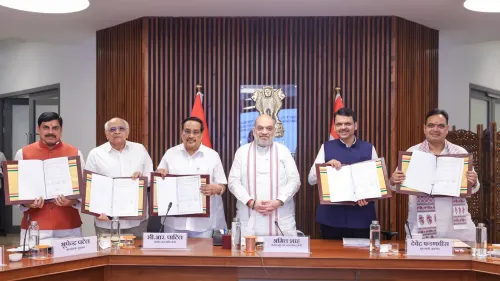
CM Bhajanlal Signs Historic Narmada Award Settlement Pact
Synopsis
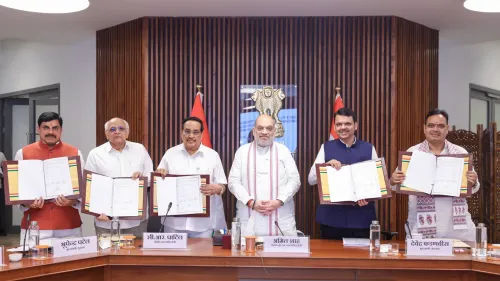
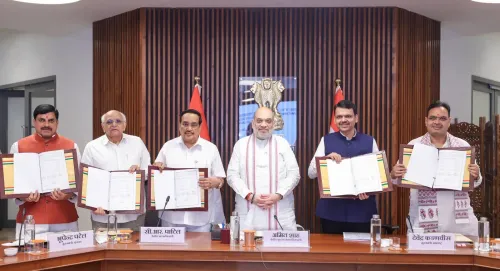
Chief Minister Bhajanlal Sharma joined counterparts from Maharashtra, Gujarat and Madhya Pradesh in New Delhi on 8 July 2026 to sign a historic one-time settlement resolving decades-old Narmada Award cost-sharing disputes over the Sardar Sarovar Project, with Union Minister Amit Shah presiding.
Key Takeaways
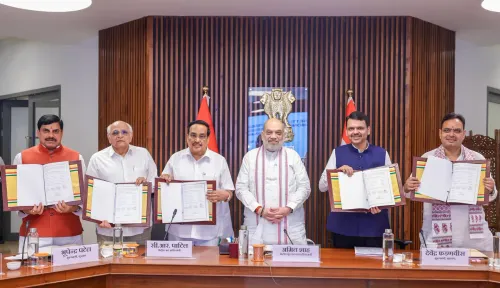
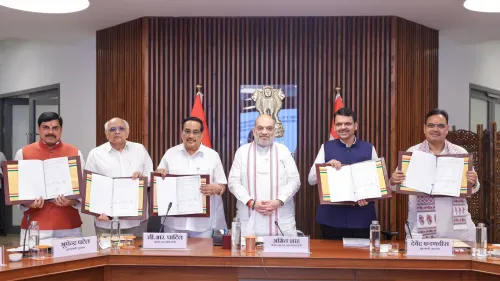
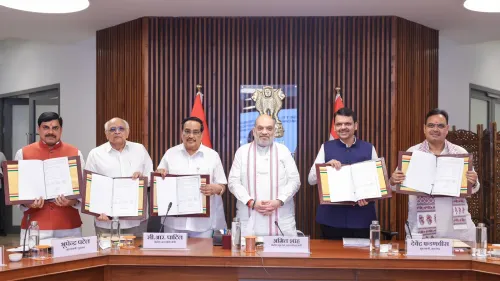
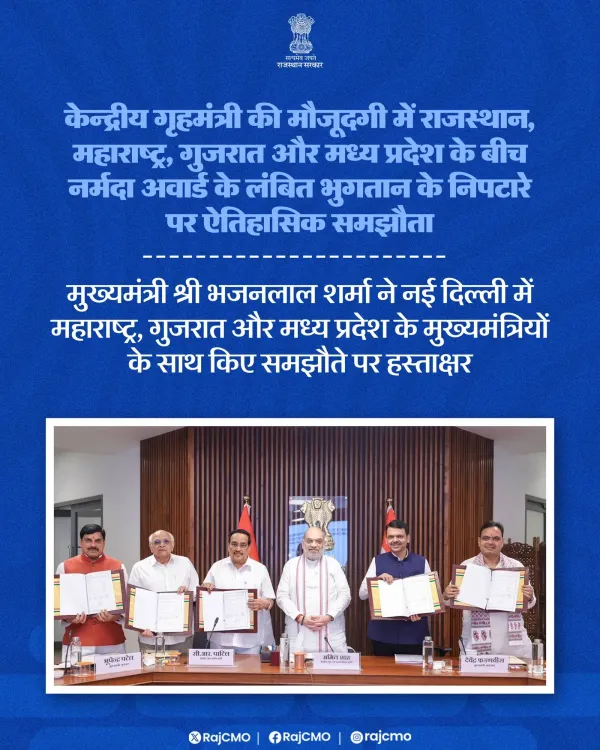
Chief Minister Bhajanlal Sharma signed a landmark inter-state agreement in New Delhi on 8 July 2026 alongside the CMs of Maharashtra, Gujarat and Madhya Pradesh.
The pact resolves long-pending disputes over states' shares of Sardar Sarovar Project construction costs under a one-time settlement framework.
Union Home Minister Amit Shah presided over the signing as the central government's facilitator.
The settlement is rooted in the Narmada Water Disputes Tribunal's 1979 Award , which had fixed water and cost-sharing ratios among the four riparian states.
The agreement is expected to enable better utilisation of Narmada River waters and unlock irrigation and water-supply projects across all four states.
The deal reflects India's cooperative federalism model for resolving legacy inter-state infrastructure disputes.
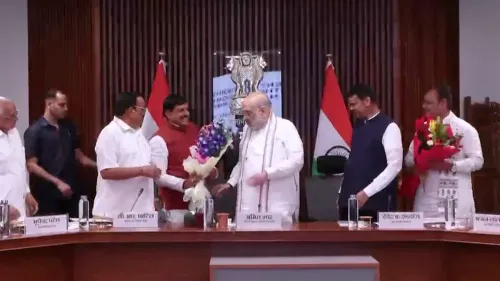
New Delhi, 8 July 2026: The Chief Minister's Office of Rajasthan announced on Wednesday that Chief Minister Bhajanlal Sharma signed a landmark inter-state agreement in New Delhi alongside the Chief Ministers of Maharashtra, Gujarat, and Madhya Pradesh to resolve decades-old pending dues related to the Narmada Award. The signing took place in the presence of Union Home and Cooperation Minister Amit Shah, who facilitated the settlement as the central government's representative.
Context
The agreement, described in the official post as 'ऐतिहासिक समझौता' (a historic agreement), settles long-pending disputes over each state's share of the Sardar Sarovar Project's construction costs — a financial deadlock that had persisted for years. The four riparian states — Madhya Pradesh, Gujarat, Maharashtra, and Rajasthan — reached the resolution through what the post calls 'सहभागिता एवं सहकारी संवाद' (participatory and cooperative dialogue). The settlement is structured as a one-time settlement (OTS), clearing the path for the final resolution of all pending Narmada river issues among the states.
Policy Backdrop
The roots of this dispute trace back to the Narmada Water Disputes Tribunal, constituted under the Inter-State River Water Disputes Act, which delivered its final Narmada Award in December 1979. The Award fixed water allocation shares and cost-sharing ratios among the four states for the Sardar Sarovar Project, a large multipurpose dam on the Narmada River. A 2014–2016 review by the Narmada Control Authority had already flagged accumulated arrears that states had failed to settle, and the Supreme Court had earlier, in its 2000–2001 orders, directed states to complete rehabilitation and cost contributions alongside phased dam-height increases.
Stakeholders and Impact
Farmers and communities across the Narmada basin stand to benefit most directly: the CMO's post explicitly states that the agreement will enable 'better utilisation of the waters of the Narmada River.' By converting long-pending cost liabilities into a one-time payment structure, the four state governments can unlock their full allocated water shares and plan downstream infrastructure such as canals and lift-irrigation schemes. The settlement also reinforces the principle of cooperative federalism, with the central government playing a facilitating rather than an adjudicating role — a model that has gained traction in resolving legacy inter-state infrastructure disputes.
What's Next
The immediate focus will shift to state budget provisions and the actual transfer of funds under the one-time settlement framework. Analysts will watch whether the reconciled financial positions translate quickly into new proposals for expanding irrigation networks and water-supply projects drawing on each state's Narmada allocation. Rajasthan, which has historically been the most water-scarce of the four riparian states, is expected to prioritise leveraging its share for agricultural and drinking-water projects in its arid western districts. The agreement signals that long-stalled inter-state water infrastructure disputes can be resolved through structured central facilitation rather than prolonged litigation.
Point of View
Allowing the central leadership — embodied by Amit Shah — to claim credit for unlocking a dispute that had defied resolution for over four decades. By framing the settlement as cooperative dialogue rather than arbitration, the Centre reinforces its preferred narrative of 'cooperative federalism' as a governance tool. For Rajasthan, which receives the smallest absolute water share under the 1979 Award, converting the financial deadlock into a one-time settlement is a prerequisite for any serious expansion of Narmada-fed irrigation. The timing — mid-2026, ahead of several state budget cycles — suggests the political will exists to translate the agreement into on-ground infrastructure spending quickly.
NationPress
8 Jul 2026
Frequently Asked Questions
What is the Narmada Award settlement signed in July 2026?
It is a one-time settlement agreement signed on 8 July 2026 by the Chief Ministers of Rajasthan, Maharashtra, Gujarat and Madhya Pradesh to resolve long-pending disputes over each state's share of the Sardar Sarovar Project's construction costs, as originally mandated by the 1979 Narmada Water Disputes Tribunal Award.
Who signed the Narmada Award agreement and where?
Chief Minister Bhajanlal Sharma of Rajasthan signed the agreement in New Delhi alongside the Chief Ministers of Maharashtra, Gujarat and Madhya Pradesh. Union Home and Cooperation Minister Amit Shah presided over the signing ceremony.
What is the Sardar Sarovar Project and why was its cost disputed?
The Sardar Sarovar Project is a large multipurpose dam on the Narmada River. The 1979 Narmada Award fixed cost-sharing ratios among the four riparian states, but accumulated arrears and disagreements over payments left the financial obligations unresolved for decades.
How will the Narmada settlement benefit Rajasthan?
By clearing the financial deadlock, Rajasthan can fully utilise its allocated share of Narmada waters, enabling expansion of irrigation and drinking-water infrastructure, particularly in the state's arid western districts.
What is the Narmada Water Disputes Tribunal?
It is a tribunal constituted under India's Inter-State River Water Disputes Act that delivered its final Award in December 1979, allocating Narmada River water shares and construction cost responsibilities among Madhya Pradesh, Gujarat, Maharashtra and Rajasthan.