CM Bhupendra Patel: ₹1,542 Cr Rail Projects Launched at Sabarmati

Synopsis
Union Minister Amit Shah inaugurated ₹1,542 crore worth of railway projects at Sabarmati on 27 September 2026, flagging off India's first dual-fuel LNG train and dedicating a ₹700 crore WAG-12 locomotive shed and a new Automatic Block Signalling system — milestones hailed by Gujarat CM Bhupendra Patel as historic.
Key Takeaways
₹1,542 crore worth of railway projects were inaugurated and foundation-stoned at Sabarmati, Ahmedabad on 27 September 2026 .
Union Minister Amit Shah flagged off India's first dual-fuel LNG train , designed to align 'economy and ecology.' A WAG-12 locomotive shed built at a cost of ₹700 crore was dedicated to the nation, boosting heavy freight capacity on western corridors.
A new Automatic Block Signalling (ABS) system was also commissioned, upgrading train management technology on the network.
Sabarmati station is already part of the Amrit Bharat Stations Scheme launched in 2023 for comprehensive redevelopment.
Gujarat CM Bhupendra Patel called the launches a 'historic milestone' in Gujarat's development journey and a sign of commitment to clean-green energy infrastructure.
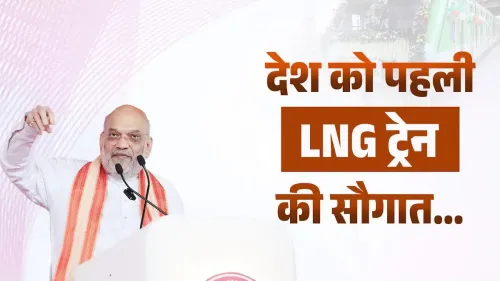
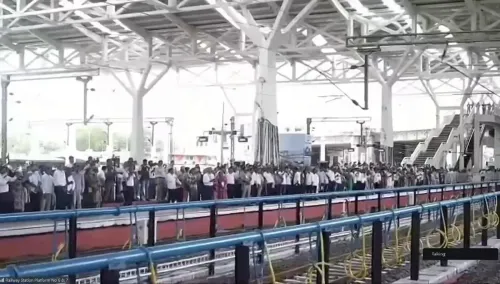
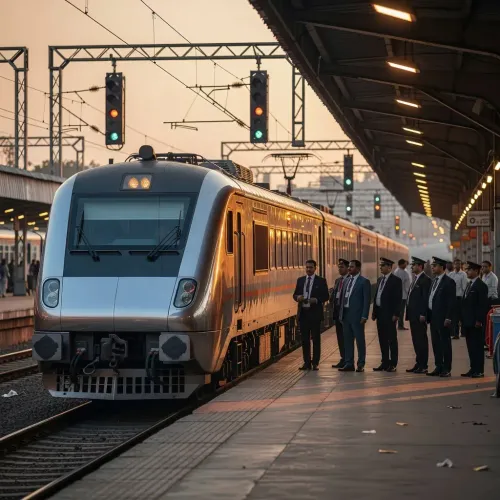
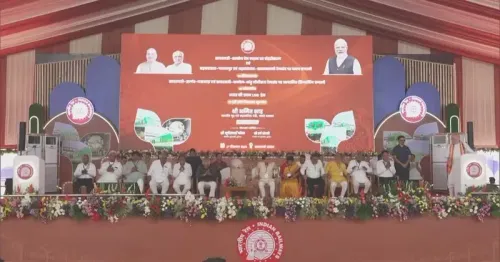
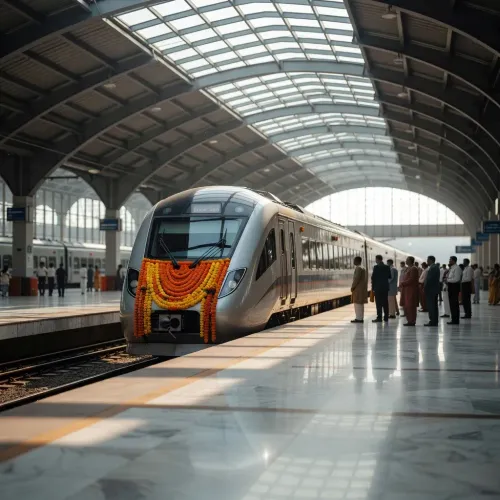
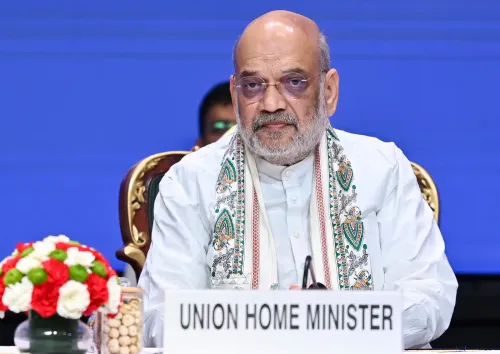
India's first dual-fuel LNG train rolled out of Sabarmati on Sunday, 27 September 2026 — a debut that Gujarat Chief Minister Bhupendra Patel called a historic milestone in the state's development journey. Union Home and Cooperation Minister Amit Shah flagged off the train and inaugurated a cluster of railway projects worth ₹1,542 crore at the Sabarmati site in Ahmedabad.
In a post on X, CM Patel described the occasion as 'ગુજરાતની વિકાસયાત્રામાં વધુ એક ઐતિહાસિક સોપાન' — 'yet another historic milestone in Gujarat's journey of development.' He highlighted that the LNG train embodies a vision of harmonising 'economy and ecology,' signalling a clean-energy push inside one of India's busiest rail networks.
India's First Dual-Fuel LNG Train Departs Sabarmati
The dual-fuel LNG locomotive is a landmark for Indian Railways, which has long sought lower-emission traction options to complement its near-complete electrification drive. Liquefied Natural Gas burns cleaner than diesel and cuts carbon emissions substantially — making it attractive for routes or freight hauls where full electrification remains challenging. Saturday's flagging-off from Sabarmati puts a working demonstration on track, with operational performance data now the key watch point for policymakers and freight operators alike.
₹700 Crore WAG-12 Locomotive Shed and Smart Signalling Go Live
Beyond the LNG train, Shah dedicated two other major assets. A WAG-12 locomotive shed, built at a cost of ₹700 crore, is now operational — providing maintenance and stabling infrastructure for India's heaviest electric freight locomotives, the backbone of high-capacity goods movement on western corridors. Alongside it, a new Automatic Block Signalling (ABS) system was commissioned, replacing older manual-signal sections with continuous, technology-driven train management that boosts both throughput and safety.
The WAG-12 is a 12,000-horsepower electric locomotive jointly developed for Indian Railways to haul heavy freight. A dedicated shed in Gujarat, sitting at the heart of the Western Dedicated Freight Corridor zone, ensures faster turnarounds and reduced downtime for the locomotives most critical to industrial supply chains running through the state.
Gujarat's Industrial Weight Draws Repeated Central Rail Investment
This is not the first time Sabarmati has been at the centre of a major rail upgrade. The station itself is part of the Amrit Bharat Stations Scheme, launched in 2023, which targets comprehensive redevelopment of hundreds of stations across India. Gujarat's outsized industrial base — from petrochemicals and pharmaceuticals to textiles and ports — makes its freight and passenger corridors strategically critical, drawing sustained central attention and capital.
Amit Shah's presence at the launch carries political weight too: as a long-standing Gujarat leader now anchoring national infrastructure rollouts in his home state, the event underscores the BJP's dual messaging of development delivery and regional pride ahead of any electoral cycle. CM Patel framed the projects explicitly as proof of the government's 'unbroken commitment' to clean-green energy and smart infrastructure.
Three distinct upgrades in a single day — a clean-fuel train first, a freight locomotive hub, and digital signalling — amounts to a compressed demonstration of Indian Railways' modernisation agenda. Whether the LNG pilot scales or stays a showcase, the Sabarmati launches move the needle on at least two fronts: capacity and cleaner traction. Gujarat's railways, it seems, are being asked to do more, move faster, and emit less — all at once.
Point of View
Heavy freight capacity, and digital signalling — into a single political moment, reinforcing the Centre's pattern of high-visibility infrastructure deliveries in BJP-governed states. The LNG train is the most symbolically freighted element: if it performs at scale, it offers a transitional bridge for diesel-heavy routes that electrification has not yet reached, potentially reshaping Indian Railways' decarbonisation roadmap. Amit Shah's personal presence elevates the event beyond a routine commissioning, linking Gujarat's industrial heft to the national freight and clean-energy agenda. For CM Bhupendra Patel, co-authoring a landmark 'first' in Indian Railways history bolsters the state government's development narrative heading into any future electoral reckoning.
NationPress
27 Sept 2026
Frequently Asked Questions
What is India's first dual-fuel LNG train?
India's first dual-fuel LNG (Liquefied Natural Gas) train is a locomotive that can run on both LNG and a conventional fuel, offering lower carbon emissions than standard diesel traction. It was flagged off from Sabarmati, Ahmedabad on 27 September 2026 by Union Minister Amit Shah.
What is the WAG-12 locomotive and why is the new shed significant?
The WAG-12 is a 12,000-horsepower electric freight locomotive — one of the most powerful in Indian Railways' fleet — used to haul heavy goods trains. The ₹700 crore shed at Sabarmati provides dedicated maintenance and stabling infrastructure, cutting downtime for freight operations on western corridors.
What is Automatic Block Signalling (ABS) in Indian Railways?
Automatic Block Signalling (ABS) replaces manual signal systems with technology-driven, continuous train-management controls. It allows trains to run closer together safely, increasing line capacity and reducing the risk of human error in signal operations.
What is the Amrit Bharat Stations Scheme and does it cover Sabarmati?
The Amrit Bharat Stations Scheme, launched in 2023, aims for the comprehensive modernisation and redevelopment of hundreds of railway stations across India. Sabarmati is among the stations included in the scheme.
Why does Gujarat receive major railway investments repeatedly?
Gujarat's large industrial base — spanning petrochemicals, pharmaceuticals, textiles and major ports — makes its freight and passenger rail corridors strategically critical. The state's position along the Western Dedicated Freight Corridor further concentrates central railway investment in the region.