CM Bhupendra Patel Attends Partition Remembrance Play in Amreli
Synopsis
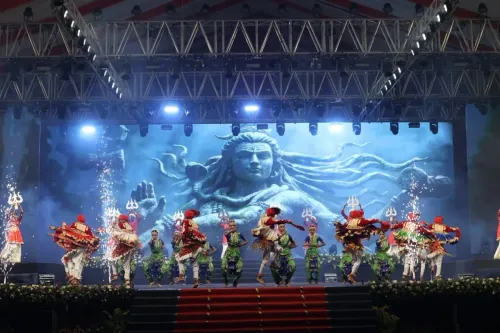
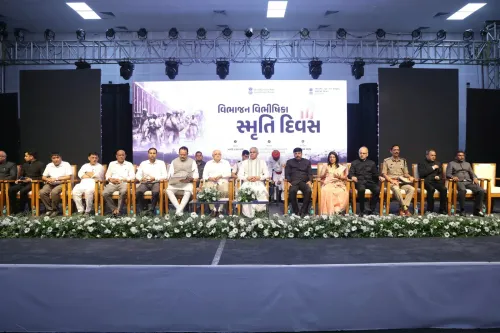
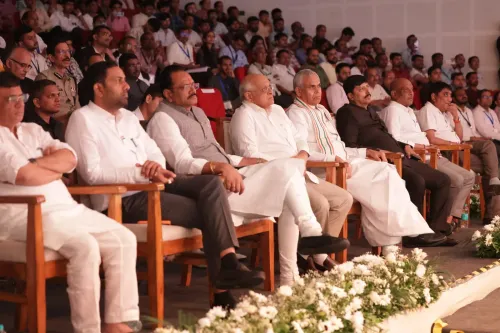
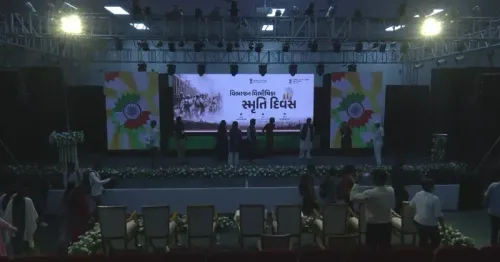
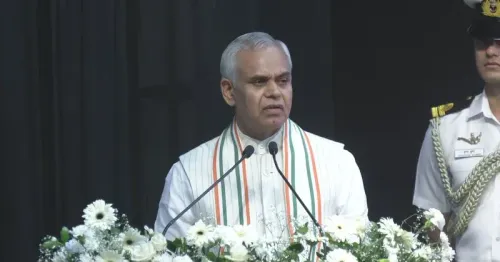
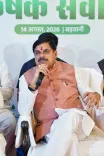
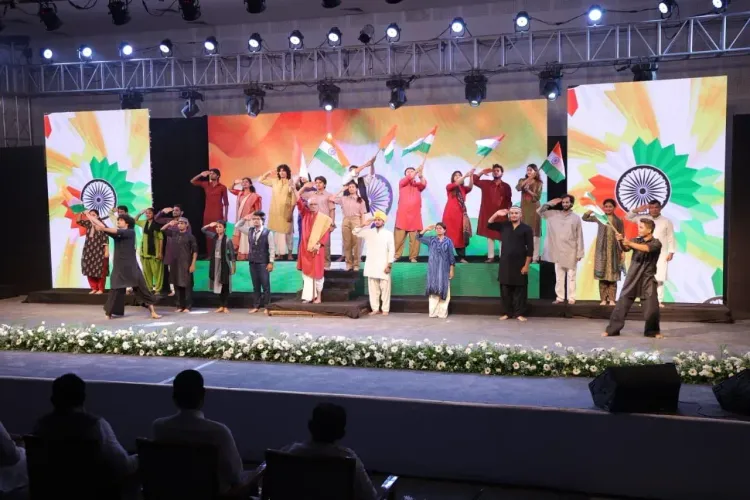
Gujarat Chief Minister Bhupendra Patel attended a moving theatrical presentation on Partition Horrors Remembrance Day in Amreli on 14 August 2026, the eve of India's 80th Independence Day, calling the 1947 Partition a tragic event in the lives of millions.
Key Takeaways
Gujarat CM Bhupendra Patel attended a Partition Horrors Remembrance Day theatrical event in Amreli on 14 August 2026 .
The day falls on the eve of India's 80th Independence Day , observed on 15 August .
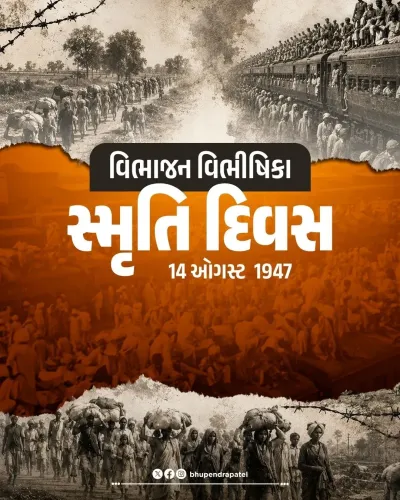
Partition Horrors Remembrance Day was declared by the Government of India in 2021 to mark the human cost of the 1947 India-Pakistan Partition.
CM Patel described the Partition as 'a tragic event in the lives of millions' and called the play 'heart-stirring.' Similar cultural commemorations are held annually across BJP-ruled states through plays, exhibitions, and official events.
Amreli is a district in Gujarat's Saurashtra region, an area with communities historically connected to the Partition's displacement.
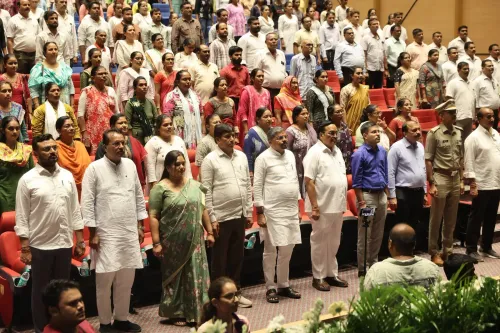
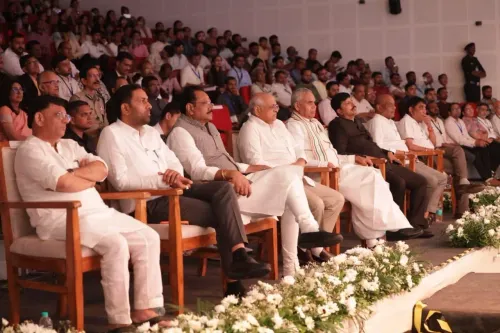
On the eve of India's 80th Independence Day, a theatrical performance in Amreli, Gujarat brought the grief of 1947's Partition back to life — and Gujarat Chief Minister Bhupendra Patel was in the audience, visibly moved. The occasion was Partition Horrors Remembrance Day, observed every year on 14 August to honour the millions displaced and killed when the subcontinent was divided.
Posting in Gujarati, CM Patel described the Partition as 'લાખો લોકોના જીવનની એક કરુણ ઘટના' — 'a tragic event in the lives of millions' — and called the dramatic presentation 'deeply touching' and 'heart-stirring.'A Day Born from a 2021 Declaration
The observance has a precise origin point. In 2021, the Government of India formally declared 14 August as Partition Horrors Remembrance Day — positioning it the day before Independence Day as a deliberate act of national memory. The idea: that the freedom of 15 August 1947 cannot be fully understood without reckoning with the violence and displacement that preceded it.
Since that declaration, state governments — particularly in BJP-ruled states — have marked the date with cultural programmes: plays, exhibitions, and official commemorations designed to keep the human cost of Partition in public consciousness. Amreli, a district in Gujarat's Saurashtra region, hosted one such event this year.
Why Theatre, and Why Now
The choice of a theatrical format is not incidental. Plays carry the emotional register that policy statements cannot — faces, voices, scenes of loss. For families whose grandparents crossed borders with nothing, a stage performance can surface memory in ways a government circular never will. CM Patel's presence at the Amreli event signals that this is not a quiet bureaucratic observance but a politically foregrounded act of remembrance.
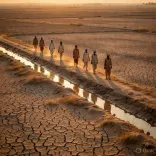
The Partition of 1947 displaced an estimated 10 to 20 million people and claimed hundreds of thousands of lives in communal violence — one of the largest and most traumatic forced migrations in recorded history. Gujarat, with its significant communities tracing roots to what is now Pakistan's Sindh province, carries its own specific memory of that rupture.
As India marks 80 years of independence, the annual return to that wound is both a solemn duty and a live political question about how a nation chooses to remember its most painful beginnings.
Point of View
Particularly in BJP-governed states, linking the trauma of 1947 to contemporary national identity. CM Patel's personal attendance at a theatrical event — rather than a formal ceremony — underscores a deliberate effort to emotionalise and broaden the reach of the commemoration beyond official circles. As India crosses the 80-year mark of independence, the political salience of Partition memory is clearly intensifying, with state governments investing in cultural formats to embed that history in younger generations. The Gujarat event reflects a broader pattern where remembrance and governance strategy are increasingly intertwined.
NationPress
15 Aug 2026
Frequently Asked Questions
What is Partition Horrors Remembrance Day?
Partition Horrors Remembrance Day is observed on 14 August each year to commemorate the victims of the 1947 India-Pakistan Partition. The Government of India formally declared the observance in 2021 .
Why is Partition Horrors Remembrance Day on 14 August?
14 August is the day before India's Independence Day on 15 August , placing the remembrance of Partition's human cost immediately before the celebration of freedom — a deliberate pairing of grief and independence.
What did CM Bhupendra Patel do on 14 August 2026?
Gujarat Chief Minister Bhupendra Patel attended a Partition Horrors Remembrance Day theatrical presentation in Amreli , Gujarat, on 14 August 2026 , calling it deeply heart-stirring.
Where is Amreli in Gujarat?
Amreli is a district in the Saurashtra region of Gujarat, located in the western part of the state.
How many people were displaced in the 1947 Partition of India?
The 1947 Partition of India and Pakistan is estimated to have displaced between 10 and 20 million people and caused hundreds of thousands of deaths in communal violence, making it one of the largest forced migrations in history.