CM Bhupendra Patel Backs Exam Integrity Bill Passed in Lok Sabha

Synopsis
The Lok Sabha passed the Public Examinations (Prevention of Unfair Means) Amendment Bill, 2026 on 29 July, tightening penalties against paper leaks and organised cheating. Gujarat CM Bhupendra Patel hailed the move as a landmark reform protecting student aspirations under PM Modi's leadership and the Viksit Bharat vision.
Key Takeaways
The Lok Sabha passed the Public Examinations (Prevention of Unfair Means) Amendment Bill, 2026 on 29 July 2026 .
The bill amends the Public Examinations (Prevention of Unfair Means) Act, 2024 , which first criminalised organised exam fraud in India.
Gujarat Chief Minister Bhupendra Patel welcomed the legislation, linking it to PM Modi's Viksit Bharat agenda.
The law targets paper leaks, organised cheating networks, and other unfair practices in public examinations and recruitment tests.
The bill must still clear the Rajya Sabha before it becomes enforceable law; state-level adoption will determine its nationwide reach.
The reform follows repeated exam integrity scandals, including controversies around NEET and state recruitment tests.
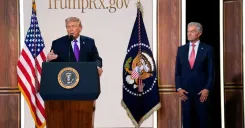
Millions of students who have lost sleep over paper leaks and rigged recruitments got a legislative answer on Wednesday, 29 July 2026, when the Lok Sabha passed the Public Examinations (Prevention of Unfair Means) Amendment Bill, 2026. Gujarat Chief Minister Bhupendra Patel welcomed the development, calling it a landmark step to protect the aspirations of India's youth.
What the 2026 Amendment Adds to the 2024 Law
The amendment builds on the Public Examinations (Prevention of Unfair Means) Act, 2024, which Parliament enacted to criminalise organised cheating and paper leaks in recruitment and entrance examinations. That original law was itself a direct response to a string of high-profile exam integrity scandals — including controversies around NEET and multiple state-level recruitment tests — that had shaken public confidence in the examination system. The 2026 amendment sharpens those provisions further, reinforcing that paper leaks, organised cheating, and related unfair practices will carry the strictest consequences.
CM Patel framed the legislation in unambiguous terms: 'those who seek to undermine the future of our youth through paper leaks, organised cheating or other unfair practices will face the strictest consequences.' The message is directed squarely at the networks — printers, middlemen, coaching-centre operators — that have historically monetised exam fraud at the expense of genuine aspirants.
A Pattern of Systemic Reform Under NEP
The bill does not emerge in isolation. The central government has pursued successive measures to address examination integrity as part of a broader push under the National Education Policy framework, which envisions a transparent and merit-based public education and recruitment ecosystem. CM Patel credited the legislation to the 'visionary leadership' of Prime Minister Narendra Modi, situating it within the government's Viksit Bharat (Developed India) agenda — the idea that a credible examination system is foundational to the skilled, merit-driven workforce that ambition requires.
For the millions of students who spend years preparing for competitive exams — UPSC, SSC, state PSCs, NEET, JEE — the law's symbolic weight is as significant as its penal teeth. Every paper leak does not merely deny a seat; it erodes the belief that hard work is enough. That erosion, once set in, is hard to reverse.
Next Stop: Rajya Sabha and State Adoption
The bill's passage in the Lok Sabha is the first legislative hurdle cleared. Its journey through the Rajya Sabha — and the framing of rules that determine how it is enforced on the ground — will be the real test of its reach. States, which conduct their own recruitment examinations, will need to align their frameworks with the central law for the reform to have nationwide bite. That alignment, or the absence of it, will define whether the 2026 amendment becomes a turning point or another well-intentioned statute that stops at New Delhi's border.
The aspirants watching the Rajya Sabha calendar already know the answer they want.
Point of View
Signalling that the 2024 Act alone was not enough to deter organised cheating networks. For CM Bhupendra Patel, publicly endorsing a central bill is also a political signal — Gujarat has faced its own state-level recruitment exam controversies, and aligning with a tough federal law helps reset that narrative. The real test will be Rajya Sabha passage and whether states build enforcement infrastructure to match the law's ambitions. If implementation lags, the reform risks becoming a statement of intent rather than a structural fix.
NationPress
29 Jul 2026
Frequently Asked Questions
What is the Public Examinations Amendment Bill 2026?
The Public Examinations (Prevention of Unfair Means) Amendment Bill, 2026 is legislation passed by the Lok Sabha on 29 July 2026 that strengthens penalties against paper leaks, organised cheating, and other unfair practices in public examinations and recruitment tests in India.
What was the original Public Examinations Act 2024?
The Public Examinations (Prevention of Unfair Means) Act, 2024 was enacted by Parliament to criminalise organised cheating and paper leaks in recruitment and entrance exams. The 2026 amendment builds on and sharpens those provisions.
Why did India need a new exam integrity law?
Repeated paper leak scandals in high-stakes exams such as NEET and various state recruitment tests eroded public trust in the examination system, prompting the government to legislate stricter deterrents for those who profit from exam fraud.
Has the Exam Integrity Bill 2026 become law yet?
As of its Lok Sabha passage on 29 July 2026, the bill still needs to clear the Rajya Sabha and receive Presidential assent before it becomes enforceable law across India.
What did Gujarat CM Bhupendra Patel say about the exam bill?
CM Bhupendra Patel said the bill's passage marks a 'significant step towards safeguarding the aspirations of millions of students' and that it sends a clear message that those who undermine youth futures through paper leaks or cheating will face the strictest consequences.