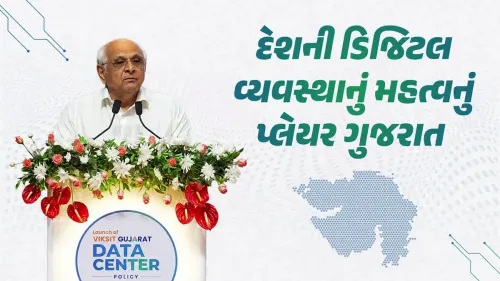
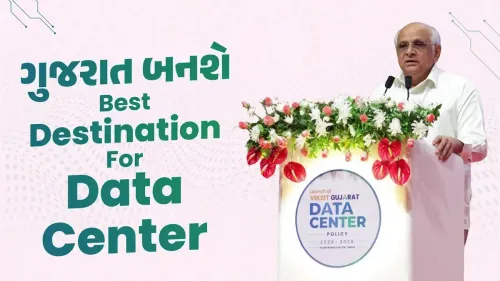
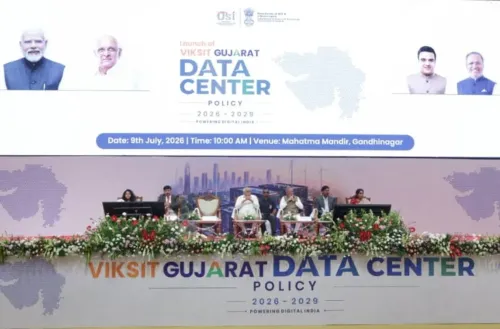
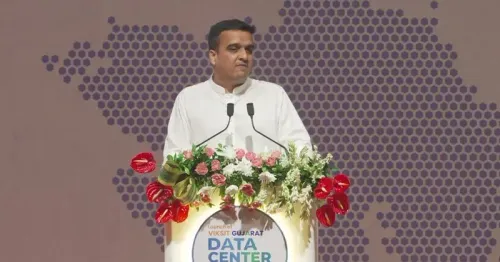
CM Bhupendra Patel Backs India's Data Centre Ambitions
Synopsis
Gujarat Chief Minister Bhupendra Patel amplified a piece on India's data centre ambitions on 14 July 2026, reinforcing the national push to transition from digital consumer to a globally trusted technology power, with Gujarat positioning itself as a key investment destination.
Key Takeaways
Gujarat Chief Minister Bhupendra Patel shared an article on 14 July 2026 via the NaMo App on India's data centre opportunity.
The post frames India's trajectory as a shift from digital consumer to a trusted technology power .
India's Digital India programme, launched in 2015 , laid the policy groundwork for domestic data infrastructure expansion.
Gujarat is actively competing to attract hyperscale data centre and semiconductor-adjacent investments.
States across India have offered power tariff and land incentives to draw global technology firms amid supply-chain diversification.
The broader push ties into India's data localisation goals and aspirations to be a credible partner in global digital trade.
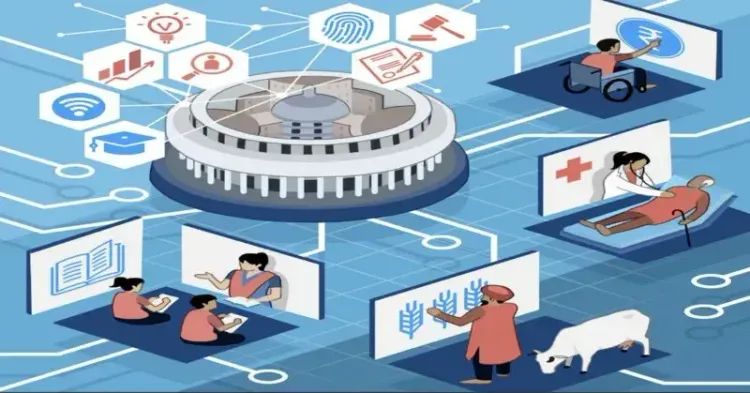
Gujarat Chief Minister Bhupendra Patel on Tuesday, 14 July 2026, shared an article on his official X account highlighting India's evolving role in global technology infrastructure, framing the country's trajectory as a shift from being a digital consumer to becoming a trusted technology power — with data centres at the centre of that transformation.
The post, shared via the NaMo App, linked to a piece titled 'Bharat's Data Centre Moment: From digital consumer to trusted technology power' — underscoring the Chief Minister's alignment with the broader national narrative of technology self-reliance championed by Prime Minister Narendra Modi.
Context
India's data centre sector has grown rapidly over the past decade, driven by expanding internet penetration, the rise of cloud computing, and government mandates around data localisation. The country's digital economy now generates enormous volumes of data, creating both a strategic opportunity and an infrastructure imperative. Gujarat, under Chief Minister Patel's leadership, has actively positioned itself as a preferred destination for technology investments, including data centres and semiconductor-adjacent projects.
The NaMo App, through which the post was shared, is closely associated with Prime Minister Modi's communication ecosystem and is frequently used by BJP leaders to amplify party and government messaging on development themes.
Policy Backdrop
India's push for digital infrastructure dates to the launch of the Digital India programme in 2015, which sought to build national digital capacity, expand e-governance, and reduce dependence on foreign technology platforms. In subsequent years, the Ministry of Electronics and Information Technology initiated discussions around a national data centre policy and incentive framework, signalling the Centre's intent to make India a global hub for data storage and processing.
Several Indian states have since rolled out competitive incentives — including reduced power tariffs and streamlined land allocation — to attract hyperscale data centre projects. This state-level competition has intensified as global technology companies diversify supply chains and seek trusted jurisdictions for data infrastructure, a trend accelerated by geopolitical realignments in the post-pandemic period.
Stakeholders and Impact
The data centre sector sits at the intersection of multiple stakeholder groups: domestic and international IT firms, cloud service providers, data centre developers, power utilities, and state governments competing for investment. For Gujarat specifically, attracting large-scale data infrastructure projects would mean jobs in construction, operations, and ancillary services, as well as increased demand for reliable power and connectivity.
For the broader Indian technology ecosystem, a credible domestic data centre base reduces exposure to foreign-controlled infrastructure and strengthens the country's hand in negotiations around cross-border data flows and digital trade agreements. The framing of India as a 'trusted technology power' also carries diplomatic weight, signalling reliability to global partners considering India as an alternative to other major data-hosting geographies.
What's Next
Attention will now turn to whether Gujarat announces specific state-level data centre incentives or investment commitments in the near term, and whether the Centre follows with fresh policy support for semiconductor and AI infrastructure clusters. Chief Minister Patel's amplification of this narrative suggests the state is keen to stay at the forefront of India's technology infrastructure story. As global demand for sovereign, trusted data hosting grows, India's ability to convert policy intent into operational capacity will determine whether this 'moment' translates into lasting strategic advantage.
Point of View
He is staking Gujarat's claim as the natural home for India's data centre ambitions — a competitive space where states are already jostling for hyperscale investment. The NaMo App distribution channel reinforces that this messaging is coordinated within the BJP's broader development communication strategy. If Gujarat follows with concrete incentives, this post may mark the opening move of a larger investment pitch.
NationPress
14 Jul 2026
Frequently Asked Questions
What did Gujarat CM Bhupendra Patel post about data centres?
On 14 July 2026, Chief Minister Bhupendra Patel shared an article titled 'Bharat's Data Centre Moment: From digital consumer to trusted technology power' on X via the NaMo App, highlighting India's growing ambitions in data infrastructure.
What is India's data centre policy?
India does not yet have a single comprehensive data centre policy, but the Ministry of Electronics and IT has been developing incentive frameworks since around 2020-2022, building on the Digital India programme launched in 2015 to expand domestic digital infrastructure.
Why is Gujarat important for data centres in India?
Gujarat has actively positioned itself as a destination for data centre and technology investments, offering competitive incentives and leveraging its existing industrial infrastructure and connectivity to attract domestic and global players.
What is the NaMo App and why is it used for political posts?
The NaMo App is a mobile platform associated with Prime Minister Narendra Modi's communication ecosystem and is widely used by BJP leaders to share government and party messaging on development and policy themes.
How does India's data centre push connect to digital self-reliance?
India's push for domestic data centres is part of a broader strategy to reduce dependence on foreign-controlled digital infrastructure, support data localisation requirements, and strengthen the country's position in global digital trade negotiations.