CM Bhupendra Patel Celebrates Sardar Sarovar Dam at Full Height
Synopsis
Gujarat CM Bhupendra Patel attended a Vedic water-worship at Ekta Nagar as the Sardar Sarovar Narmada Dam reached its maximum level of 138.68 metres for the seventh time, supplying water to crores of Gujaratis through the Sujalam-Sufalam and Sauni Yojana schemes.
Key Takeaways
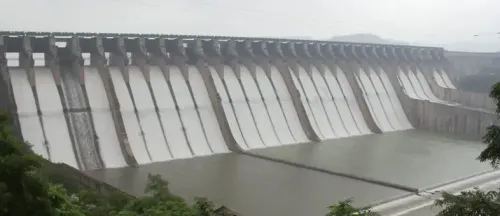
The Sardar Sarovar Narmada Dam reached its maximum level of 138.68 metres (455 feet) for the seventh time since its national dedication.
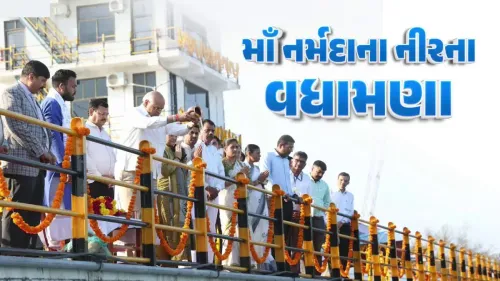
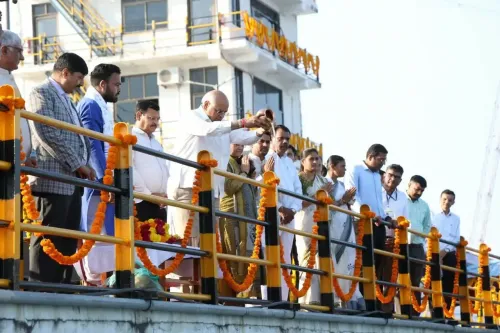
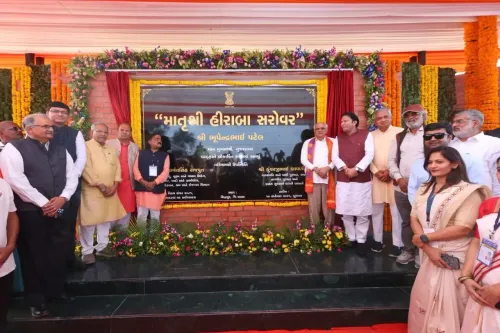
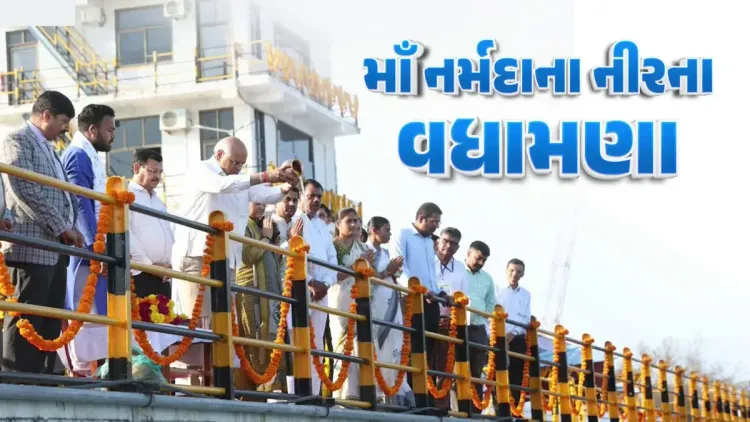
CM Bhupendra Patel performed a water-worship ceremony at Ekta Nagar on September 30, 2026 , accompanied by Vedic chanting.
The dam reportedly supplies drinking water to approximately 4 crore people across 10,453 villages , 191 towns , and 7 municipal corporations in Gujarat.
PM Narendra Modi is credited with approving gate installation and final dam works within 17 days of taking office as Prime Minister in 2014.
The Sujalam-Sufalam Yojana and Sauni Yojana distribute Narmada waters to recharge lakes and check dams in North Gujarat, Saurashtra, and Kutch .
CM Patel urged all citizens to use the water 'frugally and in a planned manner' as a collective responsibility.
For the seventh time since its national dedication, the Sardar Sarovar Narmada Dam has touched its maximum water level of 138.68 metres (455 feet) — and Gujarat Chief Minister Bhupendra Patel marked the milestone in person at Ekta Nagar on Wednesday, September 30, 2026, with a formal water-worship ceremony conducted to the sound of Vedic chants.
Posting in Gujarati, CM Patel opened with the invocation 'Vandan Maa Narmade!' ('Salutations, Mother Narmada!') and described the occasion as a moment of collective joy for the state. He credited Prime Minister Narendra Modi's 'far-sighted vision and firm leadership' — specifically, a decision taken within just 17 days of Modi assuming office as Prime Minister to grant approval for completing the dam's remaining construction and installing its gates — as the turning point that made today's full-reservoir milestone possible.
The dam that quenches a state's thirst
The numbers CM Patel cited are staggering in their reach. According to the post, the Sardar Sarovar Dam now supplies drinking water to roughly 4 crore (40 million) people across 10,453 villages, 191 towns, and 7 municipal corporations across Gujarat. That is not irrigation arithmetic — that is the arithmetic of daily survival for roughly a third of India's most industrialised state.
The dam, a multipurpose structure on the Narmada River, has been one of independent India's longest-running infrastructure projects. Its full height of 138.68 metres was achieved only after the gates were installed post-2014, and it was formally dedicated to the nation in September 2017.
Sujalam-Sufalam and Sauni: Water carried to the thirsty corners
The Sardar Sarovar's reach extends well beyond the main reservoir. CM Patel highlighted two state schemes — Sujalam-Sufalam Yojana and Sauni Yojana — that channel Narmada waters to recharge lakes, ponds, and check dams in historically water-scarce North Gujarat, Saurashtra, and Kutch. These arid regions, which once faced chronic droughts, have seen their local water bodies progressively replenished through these pipeline-linked networks.
The Sauni Yojana in particular was designed specifically to bring Narmada surplus water to Saurashtra's reservoirs through a grid of pipelines — an engineering feat that has transformed the agricultural calculus for farmers in the peninsula. Sujalam-Sufalam, meanwhile, has focused on recharging groundwater through a canal-and-check-dam system across the northern plains.
A call for conservation alongside celebration
CM Patel was careful not to let the celebration become complacency. 'Using this invaluable water frugally and in a planned manner is the collective responsibility of all of us,' he wrote — a pointed reminder, on the day of maximum abundance, that the reservoir's bounty is seasonal and finite.
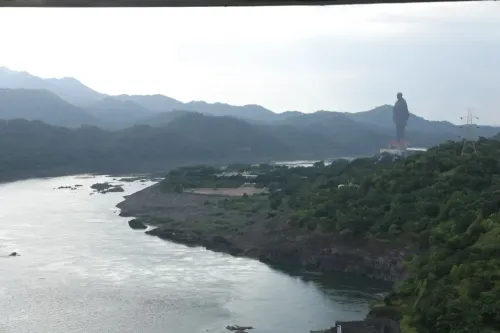
The kicker from Ekta Nagar — site of both the dam's watchful presence and the towering Statue of Unity nearby — is this: seven times at full capacity is proof the infrastructure works. Whether the distribution network, conservation culture, and downstream schemes keep pace with a changing climate is the question the next monsoon will begin to answer.
Point of View
CM Patel ties the dam's success directly to national-level BJP leadership rather than state-level stewardship alone. The dual emphasis on scale (4 crore beneficiaries) and responsibility (conservation) also signals a maturing of the water-politics discourse in Gujarat: the infrastructure win is now paired with a resource-management message, anticipating future climate-stress on the reservoir.
NationPress
1 Oct 2026
Frequently Asked Questions
How many times has the Sardar Sarovar Dam reached its maximum water level?
According to CM Bhupendra Patel's post, the dam has reached its maximum level of 138.68 metres (455 feet) for the seventh time since it was dedicated to the nation.
What is the full capacity height of the Sardar Sarovar Narmada Dam?
The Sardar Sarovar Narmada Dam has a maximum water level of 138.68 metres (455 feet) , a height achieved after the installation of its gates, which was approved after 2014.
How many people does the Sardar Sarovar Dam supply water to?
CM Patel stated that the dam supplies drinking water to approximately 4 crore (40 million) people across 10,453 villages, 191 towns, and 7 municipal corporations in Gujarat.
What are the Sujalam-Sufalam and Sauni Yojana schemes?
Sujalam-Sufalam Yojana is a Gujarat state scheme that recharges lakes, ponds, and check dams across North Gujarat. Sauni Yojana specifically channels surplus Narmada water through pipelines to replenish reservoirs in Saurashtra and Kutch.
Where did CM Bhupendra Patel perform the water-worship ceremony?
CM Patel performed the jal pujan (water-worship) ceremony at Ekta Nagar in Narmada district, Gujarat, the town adjacent to the Sardar Sarovar Dam.