Goyal Meets Rockwell Automation CEO, Eyes Industrial Automation Push
Synopsis
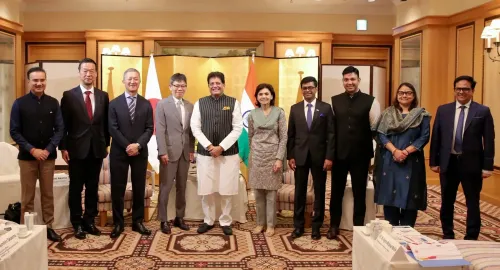
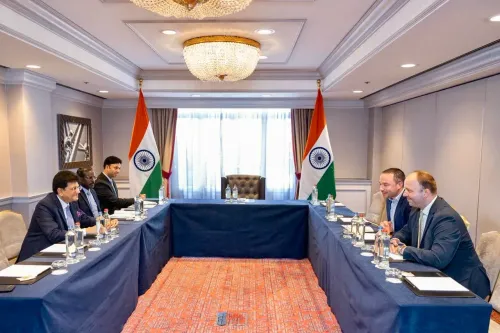
Union Commerce Minister Piyush Goyal met Rockwell Automation Chairman and CEO Blake Moret on September 30, 2026, inviting the US industrial automation giant to deepen its India engagement, leverage engineering talent, and help build tech-driven global supply chains under India's Make in India and PLI policy framework.
Key Takeaways
Piyush Goyal met Blake Moret , Chairman and CEO of Rockwell Automation , on September 30, 2026 .
The Minister invited Rockwell to leverage India's 'skilled engineering talent and supportive policy environment' for industrial automation collaboration.
Rockwell Automation is a US-headquartered leader in industrial control systems, automation hardware, and digital transformation.
The meeting aligns with India's Make in India (launched 2014 ) and PLI schemes (rolled out from 2020 ) policy framework for manufacturing FDI.
India is positioning itself as a stable manufacturing diversification destination amid ongoing global supply chain restructuring.
Follow-on investment announcements and PLI scheme participation by Rockwell Automation are the key metrics to watch.
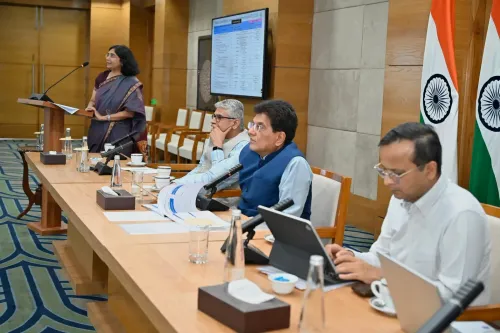
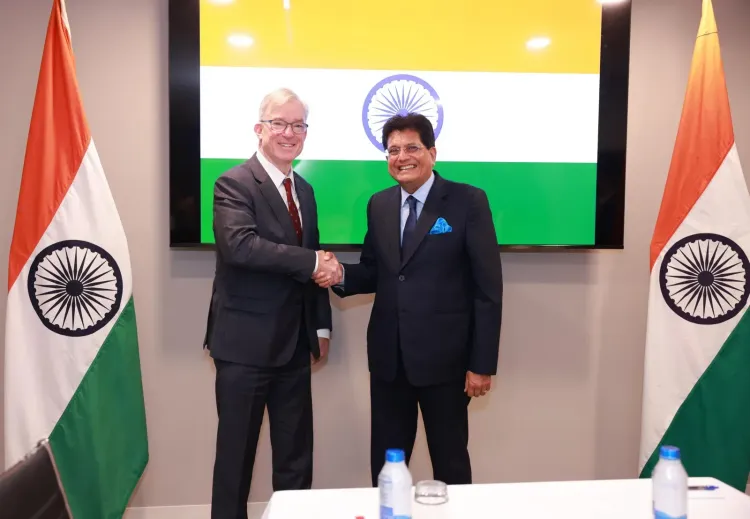
India's push to become a global manufacturing hub got a fresh corporate handshake on Wednesday, September 30, 2026, when Union Commerce and Industry Minister Piyush Goyal met Blake Moret, Chairman and CEO of Rockwell Automation, and made a direct pitch: bring your industrial automation and digital transformation capabilities to India, and help build supply chains for the world.
What Goyal Put on the Table
The Minister framed India's offer in three concrete planks — a 'rapidly evolving manufacturing landscape,' an 'expanding industrial base,' and 'strong technological capabilities.' He explicitly invited Rockwell Automation to tap India's 'skilled engineering talent and supportive policy environment' to build what he called 'resilient, tech-driven supply chains.' The message was unambiguous: India is not just a market; it is a production partner.
Rockwell Automation, headquartered in the United States, is among the world's leading players in industrial control systems, automation hardware, and factory digitalisation — precisely the technology stack India's manufacturing sector needs as it moves up the value chain.
The Policy Runway Behind the Pitch
This meeting does not happen in a vacuum. The Make in India initiative, launched in 2014, laid the foundation for attracting foreign investment into domestic manufacturing. The Production Linked Incentive (PLI) schemes, rolled out from 2020 onward across more than a dozen sectors, then added financial firepower — rewarding companies that scale production on Indian soil. Together, these two policy pillars have consistently been India's calling card to global industrialists, and Goyal is among their most visible advocates.
Engagements with automation-focused multinationals fit squarely into this arc. Higher-value, technology-intensive manufacturing requires automation infrastructure, and closing that gap is a prerequisite for India's ambition to graduate from low-cost assembly to high-complexity production.
Why Rockwell, Why Now
Global supply chains are still being restructured in the wake of years of geopolitical disruption — and India has positioned itself as a stable, scalable alternative for companies diversifying away from concentrated manufacturing nodes. An industrial automation giant like Rockwell Automation deepening its India engagement would validate that positioning in a sector — smart manufacturing — that is foundational to the next wave of industrial FDI.
The real test comes next: whether this ministerial meeting translates into investment commitments, PLI scheme participation, or engineering centre announcements from Rockwell Automation. Goyal has placed the invitation; the response will tell its own story.
Point of View
Supply the world' diplomacy — pairing the soft power of ministerial engagement with the hard incentives of PLI and Make in India. The choice of an industrial automation firm is telling: India knows that scaling up its manufacturing ambitions requires the digital and automation layer, not just cheap labour. If Rockwell converts this meeting into on-ground investment, it would add credibility to India's claim of being ready for high-complexity, tech-intensive production. The Commerce Ministry's consistent sequencing — policy first, then ministerial outreach to sector-specific multinationals — is a deliberate strategy to signal that India's manufacturing pivot is structural, not cyclical.
NationPress
1 Oct 2026
Frequently Asked Questions
Who is Blake Moret and why did he meet Piyush Goyal?
Blake Moret is the Chairman and CEO of Rockwell Automation , a US-based leader in industrial automation and control systems. He met Union Commerce Minister Piyush Goyal on September 30, 2026 to discuss expanding the company's engagement in India's manufacturing and digital transformation sectors.
What is Rockwell Automation's business focus?
Rockwell Automation is a US-headquartered company specialising in industrial automation, control systems, and digital transformation solutions for manufacturers worldwide.
How does this meeting connect to Make in India and PLI schemes?
India's Make in India initiative (launched 2014 ) and Production Linked Incentive (PLI) schemes (from 2020 ) form the policy backbone that Minister Goyal used as a pitch to attract Rockwell Automation's investment in domestic manufacturing and supply chains.
What did Piyush Goyal invite Rockwell Automation to do in India?
Minister Goyal invited Rockwell Automation to leverage India's skilled engineering talent and supportive policy environment to build 'resilient, tech-driven supply chains for the world,' focusing on industrial automation and digital transformation.
What should we watch for after this Goyal-Rockwell Automation meeting?
Key indicators to track include any formal investment announcements by Rockwell Automation in India, participation in PLI schemes, and potential engineering centre or manufacturing facility commitments by the company.