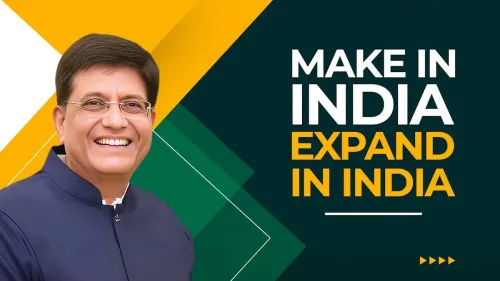
Piyush Goyal chairs manufacturing push meet, eyes 25% GDP share by 2047
Synopsis
Commerce Minister Piyush Goyal's manufacturing strategy session is more than a routine meeting — it is a checkpoint on India's most ambitious industrial target: lifting manufacturing's GDP share from 17% to 25% as the country races toward a $30–35 trillion economy by 2047. With capex up sixfold since 2014 and India ranked third globally as a manufacturing destination, the gap between ambition and execution is narrowing — but not yet closed.
Key Takeaways
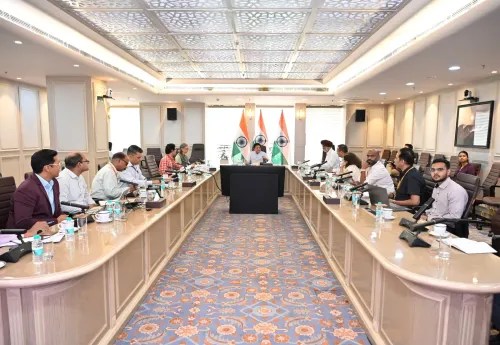
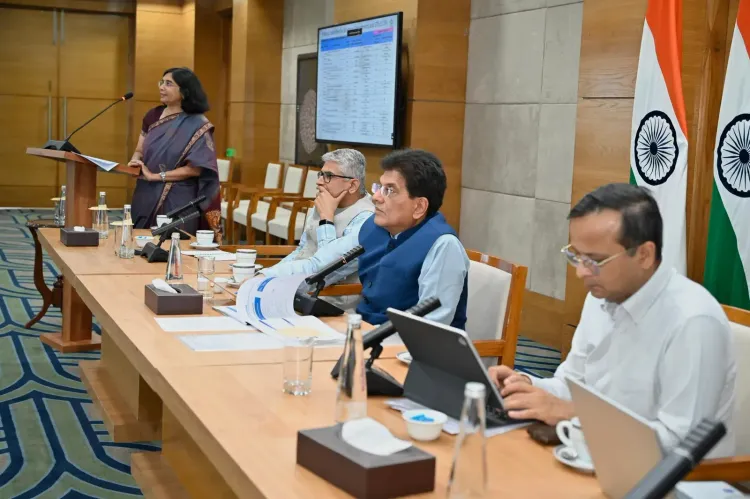
Commerce Minister Piyush Goyal chaired a manufacturing strategy meeting with ministry officials and industry leaders on 22 May in New Delhi .
India aims to raise manufacturing's share of GDP from 16–17% to at least 25% as part of the $30–35 trillion economy target by 2047 .
Government capital expenditure has risen from ₹2 lakh crore in FY2014–15 to ₹12.2 lakh crore in FY2026–27.
India is ranked the third most preferred manufacturing destination globally; medium- and high-tech activities account for 46.3% of manufacturing value added.
MSMEs — numbering 7.47 crore enterprises — contribute 35.4% of manufacturing output.
The Union Budget 2026–27 proposes three chemical parks, seven PM MITRA parks, and a ₹10,000-crore Biopharma SHAKTI initiative .
Commerce and Industry Minister Piyush Goyal on 22 May chaired a high-level brainstorming session in New Delhi with senior officials from key ministries and leading Indian industry associations, aimed at drawing up a concrete action plan to strengthen the country's manufacturing sector. The meeting signals renewed urgency around India's ambition to lift manufacturing's share of GDP from the current 16–17% to at least 25%.
What the Minister Said
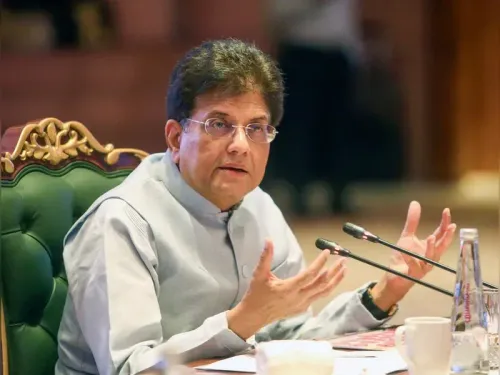
'Chaired a comprehensive and productive meeting with officials from key ministries and leading industry associations to strategize on boosting domestic manufacturing,' Goyal said in a post on X. He added that the government 'reaffirmed its commitment to working closely with industry to expand manufacturing capacities, enhance quality standards and strengthen global competitiveness for building an Aatmanirbhar Bharat.'
The Bigger Economic Picture
The meeting is set against the Centre's stated ambition of scaling India from a $3.7 trillion economy today to a $30–35 trillion economy by 2047, with manufacturing positioned as a central driver of that growth. To support this, government capital expenditure has been scaled up dramatically — from ₹2 lakh crore in FY2014–15 to ₹12.2 lakh crore in FY2026–27, according to an official statement issued on Tuesday.
Integrated Manufacturing Hubs at the Core
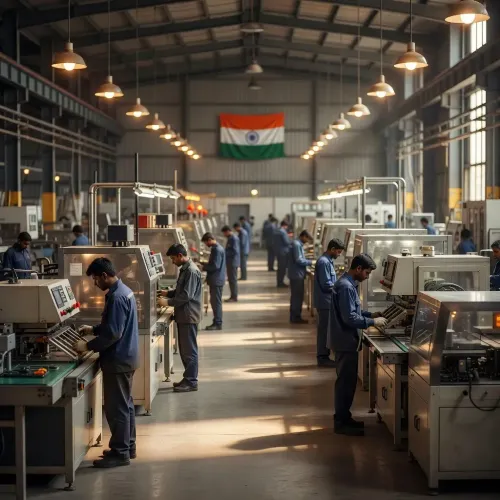
India's manufacturing strategy has increasingly pivoted toward integrated manufacturing hubs — spatial ecosystems that combine physical infrastructure, regulatory support, common facilities, and logistics connectivity. According to the official statement, policy has shifted from project-level execution to system-level planning, designed to reduce bottlenecks, improve logistics efficiency, and anchor long-term industrial activity within domestic and global production networks.
India is currently ranked as the third most sought-after manufacturing destination globally, according to the statement. Notably, medium- and high-technology activities now account for 46.3% of total manufacturing value added — a signal of gradual industrial upgrading.
MSME Role and Budget Proposals
Micro, small, and medium enterprises (MSMEs), which comprise 7.47 crore enterprises, account for 35.4% of manufacturing output and are central to hub-based industrial clusters. The Union Budget 2026–27 has proposed three chemical parks, seven PM MITRA parks, MSME clusters, and a ₹10,000-crore Biopharma SHAKTI initiative to accelerate industrial development.
What Comes Next
The action plan developed from Tuesday's session is expected to feed into formal policy frameworks governing hub development and sectoral incentives. With global supply chains continuing to diversify away from China, the window for India to capture a larger share of manufacturing investment remains open — but execution on infrastructure and regulatory ease will be the decisive variables.
Point of View
And the gap has barely moved. What is different now is the scale of infrastructure spending and the explicit pivot to integrated hub development, which addresses a structural weakness that project-level capex never could. The real question is whether Tuesday's brainstorming translates into enforceable timelines and verifiable milestones, or remains a statement of intent. With global supply-chain diversification creating a genuine window, India's risk is not ambition — it is the execution lag between policy announcement and ground-level industrial readiness.
NationPress
16 Oct 2026
Frequently Asked Questions
What was the purpose of Piyush Goyal's manufacturing meeting on 22 May?
Commerce and Industry Minister Piyush Goyal chaired a brainstorming session on 22 May with senior ministry officials and industry leaders to draw up an action plan for strengthening India's manufacturing sector. The meeting focused on expanding capacities, raising quality standards, and improving global competitiveness.
What is India's manufacturing GDP target and by when?
India aims to raise manufacturing's share of GDP to at least 25%, up from the current 16–17%, as part of its broader goal of becoming a $30–35 trillion economy by 2047. Manufacturing is expected to be a central pillar of that growth.
How much has India's government capital expenditure grown?
Government capital expenditure has expanded from ₹2 lakh crore in FY2014–15 to ₹12.2 lakh crore in FY2026–27, according to an official statement issued on Tuesday. This sixfold increase is aimed at building the infrastructure backbone for manufacturing hubs.
What is India's global ranking as a manufacturing destination?
India is currently ranked as the third most sought-after manufacturing destination worldwide, according to the official statement. Medium- and high-technology activities now account for 46.3% of total manufacturing value added.
What manufacturing-related proposals are in the Union Budget 2026–27?
The Union Budget 2026–27 has proposed three chemical parks, seven PM MITRA parks, MSME clusters, and a ₹10,000-crore Biopharma SHAKTI initiative to accelerate industrial development across the country.