CM Bhupendra Patel Disburses Rs 646 Cr to 4.72 Lakh Students

Synopsis
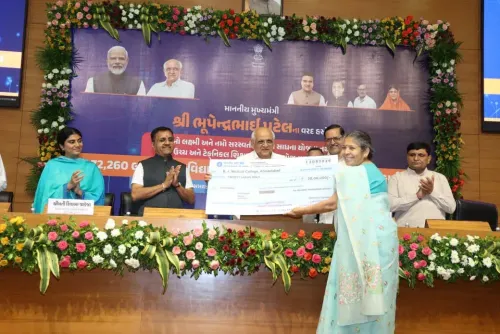
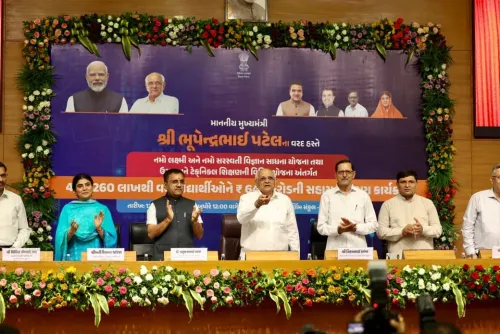
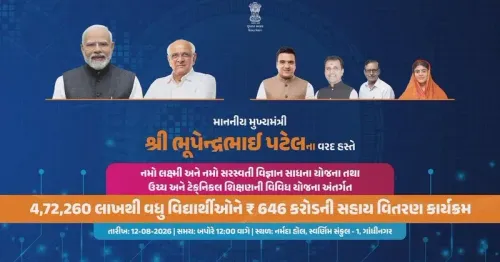
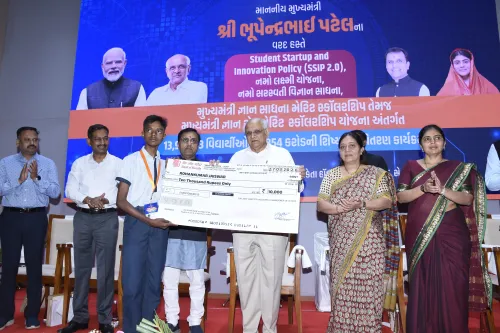
Gujarat CM Bhupendra Patel disbursed over Rs 646 crore to more than 4.72 lakh students via DBT at a Gandhinagar event on 12 August 2026, covering Namo Lakshmi Yojana, Namo Saraswati Vigyan Sadhana Yojana, and higher and technical education scholarships.
Key Takeaways
Rs 646 crore disbursed in a single event to over 4.72 lakh Gujarat students on 12 August 2026 .
Funds transferred via Direct Benefit Transfer (DBT) , ensuring direct, leakage-free delivery to student bank accounts.
Three schemes covered: Namo Lakshmi Yojana (girl students), Namo Saraswati Vigyan Sadhana Yojana (science stream), and higher and technical education scholarships.
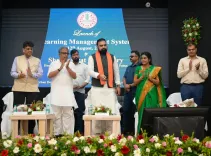
Event held in Gandhinagar , the capital of Gujarat, and presided over by CM Bhupendra Patel .
The disbursement continues Gujarat's multi-year pattern of using targeted, DBT-linked scholarships to support student access to education.
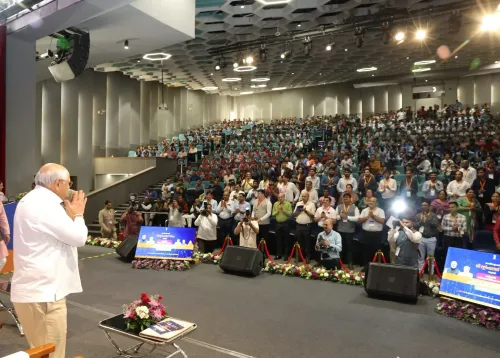
More than 4.72 lakh students across Gujarat woke up to a direct deposit on 12 August 2026 — scholarship funds landing straight in their bank accounts, no middleman, no delay. Gujarat Chief Minister Bhupendra Patel presided over the disbursement event in Gandhinagar, channelling over Rs 646 crore through the Direct Benefit Transfer (DBT) mechanism under three flagship education schemes.
Three schemes, one big push for Gujarat's classrooms
The funds flowed through Namo Lakshmi Yojana, Namo Saraswati Vigyan Sadhana Yojana, and a cluster of higher and technical education scholarships. Namo Lakshmi targets girl students in secondary education with financial support to keep them in school. Namo Saraswati is aimed squarely at science stream students — a signal that Gujarat is deliberately funnelling resources toward STEM pathways. Together, the two schemes plus the higher-education scholarships cover a wide arc: from a girl in class nine to an engineering student in her final year.
CM Patel, posting in Gujarati, called it 'શિક્ષણ થકી નવી પેઢીના ઘડતરનો ઉત્સવ' — 'a celebration of shaping the new generation through education' — and blessed students to 'study wholeheartedly and bring glory to their family and country through learning.'
Why DBT matters: plugging the leakage
The choice of DBT is not incidental. Since the mid-2010s, the central government's push for direct electronic transfers has been precisely about eliminating the skimming that plagued older scholarship pipelines. When Rs 646 crore moves through DBT to over 4.72 lakh accounts, the audit trail is clean and the beneficiary gets the full amount. Gujarat has consistently used this architecture for welfare delivery, and this disbursement is the latest — and largest recent — expression of that approach in education.
The state has run merit-based scholarship programmes across multiple years, but the scale here — nearly half a million students, more than six billion rupees in a single event — marks a notable concentration of resources in one disbursal.
The students at the centre of it
Behind the numbers are individual trajectories: a first-generation college student in Saurashtra, a science-stream girl in a small town who would otherwise have dropped out, a polytechnic student in Surat whose tuition just got covered. Gujarat's higher education enrollment has been a policy focus for years; scholarships at this scale are one of the levers the state is pulling to move those numbers.
What to watch next: whether subsequent budget cycles sustain or expand these allocations, and whether enrollment and retention data in Gujarat's higher and technical institutions reflect the cumulative effect of this multi-year scholarship push.
Half a million futures, funded — the question now is whether the classroom keeps them.
Point of View
DBT-linked scholarship events serve a dual function: substantive welfare delivery and a visible, auditable demonstration of governance efficiency. The emphasis on Namo Saraswati, specifically for science students, signals a deliberate effort to shape the pipeline toward STEM — consistent with both state industrial ambitions and the broader national skill-development agenda. Whether enrollment and retention data eventually validate the investment will be the real test of the programme's depth.
NationPress
12 Aug 2026
Frequently Asked Questions
What is Namo Lakshmi Yojana in Gujarat?
Namo Lakshmi Yojana is a Gujarat state scholarship scheme that provides financial assistance to girl students in secondary education to support their continued schooling.
What is Namo Saraswati Vigyan Sadhana Yojana?
Namo Saraswati Vigyan Sadhana Yojana is a Gujarat government scheme offering financial support specifically to students pursuing science education, aimed at encouraging STEM learning in the state.
How much scholarship money did Gujarat disburse in August 2026?
Gujarat CM Bhupendra Patel disbursed over Rs 646 crore to more than 4.72 lakh students at a Gandhinagar event on 12 August 2026.
What is DBT and how does it help scholarship recipients?
DBT, or Direct Benefit Transfer, is a government mechanism that sends funds electronically straight to a beneficiary's bank account, eliminating intermediaries and reducing the risk of funds being siphoned before reaching students.
Who is Bhupendra Patel and what is his role in Gujarat education schemes?
Bhupendra Patel is the Chief Minister of Gujarat and a BJP leader who assumed office in 2021. He has presided over the rollout and expansion of state scholarship programmes including Namo Lakshmi and Namo Saraswati Yojana.